Meet Ethan: A High School Student Who Got Into MIT with AI/ML Skills
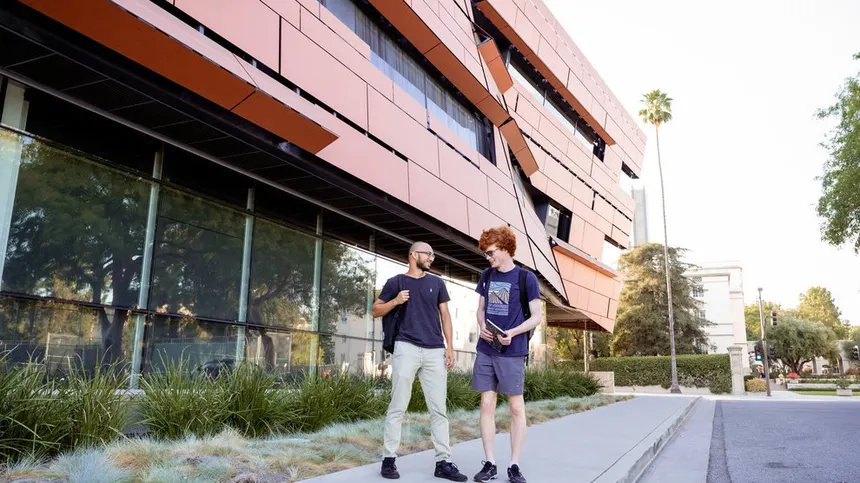
Ethan Thompson, a high school junior from California, always had a passion for technology. But like many students, he wasn’t sure how to stand out when applying to top-tier colleges like MIT, Stanford, or Harvard. That changed when he discovered Better Mind Labs’ AI/ML Certification Bootcamp.
Ethan enrolled in our program, where he learned the fundamentals of artificial intelligence and machine learning. He didn’t just learn theories—he built real-world projects. His AI-powered wildfire detection model caught the attention of college admissions officers. Not only did he showcase it in his college application, but he also presented it at a national science fair, winning awards and recognition.
When he applied to MIT, Ethan’s AI/ML experience made his application shine. He wasn’t just another student with good grades; he was an AI innovator solving real-world problems. Today, Ethan is a proud freshman at MIT, majoring in Computer Science and Artificial Intelligence.
Why Learning AI/ML in High School Gives You a Competitive Edge in College Admissions
In today’s competitive college admissions landscape, having high grades and test scores is no longer enough. Top colleges are looking for students who demonstrate initiative, creativity, and problem-solving skills—qualities that AI/ML projects showcase perfectly.
Here’s how learning AI/ML can set you apart:
Demonstrates Innovation: Building AI/ML projects shows admissions officers that you can apply knowledge to solve real-world problems.
Enhances STEM Applications: If you’re applying for Computer Science, Engineering, or any STEM field, AI/ML experience proves your passion and expertise.
Provides Research Opportunities: Many colleges value students who have conducted independent research. AI/ML can be the perfect domain to do that.
Helps with Scholarships & Competitions: Learning AI/ML in high school can help you qualify for prestigious competitions like Regeneron Science Talent Search, Google Science Fair, and Intel ISEF, increasing your chances of securing scholarships.
Tips for Using AI/ML to Boost Your College Applications
Want to leverage AI/ML for your college journey? Here are some expert tips:
1. Build a Strong AI/ML Portfolio
Start with beginner-friendly projects like image recognition, chatbot development, or stock market prediction.
Document your projects on GitHub or a personal website.
2. Participate in AI/ML Competitions
Join platforms like Kaggle, AI4ALL, and Google’s AI Challenge.
Competing in hackathons or science fairs gives you recognition and experience.
3. Write About Your AI/ML Journey
Showcase your learning process in a blog or Medium post.
College admissions officers love students who reflect on their experiences.
4. Network with AI Experts & Mentors
Join AI/ML communities, such as Better Mind Labs Bootcamp, AI4ALL, or local coding meetups.
Having mentors can open doors to internships and research opportunities.
5. Use Free AI/ML Learning Resources (But Know Their Limitations)
If you’re just getting started, free resources like Google’s Machine Learning Crash Course, Fast.ai, and Coursera’s AI for Everyone can be helpful. However, these resources lack:
Structured mentorship: You won’t have expert guidance to correct mistakes.
Project-based learning: Most free courses focus on theory, not application.
Internship assistance: They don’t provide career support or help you get internships.
Why Better Mind Labs’ AI/ML Bootcamp is the Best Choice
At Better Mind Labs, we don’t just teach AI/ML—we help high school students use these skills to transform their future.
✅ Expert Mentorship: Learn directly from AI professionals and top educators.
✅ Real-World Projects: Build AI models that solve real problems and boost your portfolio.
✅ College Application Support: Get guidance on how to present AI/ML experience to impress admissions officers.
✅ Internship Opportunities: We help students land their first AI/ML internship.
🚀 Take the First Step Toward Your Dream College Today!
If you want to stand out in college applications, land your first internship, and build cutting-edge AI projects, our bootcamp is the perfect place to start.
Are you a high school student ready to explore exciting fields like research, STEM, or other cool areas? Whether you dream of building rockets, solving medical problems, or diving into the humanities, plenty of programs are designed just for you. In this post, we’ve compiled a list of top programs to help you find the best fit for your future. Think of this list as your starting point to research each program and find the one that matches your goals and interests! Let’s get you on the path to success.
STEM Focused Programs
Research Science Institute (RSI)
Application Deadline: January 12, 2025
Area: STEM (varied disciplines)
Program Dates: June 23 – August 3, 2025
MIT’s Minority Introduction to Engineering and Science (MITES)
Application Deadline: February 1, 2025
Cost: Free
Area: Engineering & Science
Program Dates: June 22 – August 2, 2025
Stanford University’s High School Summer College
Application Deadline: March 1, 2025
Cost: $16,000 (financial aid available)
Area: Various STEM and Humanities courses
Program Dates: June 22 – August 18, 2025
Pre-Medical Programs
Stanford Medical Youth Science Program (SMYSP)
Application Deadline: March 1, 2025
Cost: Free
Area: Pre-Med
Program Dates: July 6 – August 3, 2025
National Institutes of Health (NIH) High School Summer Internship Program
Application Deadline: February 1, 2025
Cost: Free (stipend provided)
Area: Biomedical Research
Program Dates: Varies by project (generally 8 weeks in summer) General Research & Leadership Programs
Summer Science Program (SSP)
Application Deadline: March 3, 2025
Cost: $5,950 (financial aid available)
Area: Astrophysics, Biochemistry
Program Dates: June 22 – July 31, 2025
Yale Young Global Scholars (YYGS)
Application Deadline: January 10, 2025 (Priority), February 6, 2025 (Final)
Cost: $6,500
Area: Interdisciplinary (STEM, Humanities, Social Sciences)
Program Dates: June 16 – August 2, 2025
Carnegie Mellon Summer Academy for Math and Science (SAMS)
Application Deadline: March 15, 2025
Cost: Free (includes room, board, and supplies)
Area: STEM, Math, Science
Program Dates: July 6 – August 9, 2025
Princeton University Summer Journalism Program
Application Deadline: February 15, 2025
Cost: Free (travel included)
Area: Journalism
Program Dates: August 1 – August 14, 2025
Boston University Research in Science & Engineering (RISE)
Application Deadline: February 28, 2025
Cost: $5,150
Area: STEM
Program Dates: July 7 – August 15, 2025
Cornell Summer College
Application Deadline: March 1, 2025
Cost: $6,310 per course (financial aid available)
Area: Various STEM, Humanities, and Pre-Law
Program Dates: June 24 – August 6, 2025
University of Chicago’s Pathways in Molecular Engineering
Application Deadline: February 29, 2025
Cost: $3,250 (financial aid available)
Area: Molecular Engineering
Program Dates: July 8 – July 28, 2025
Columbia University Summer Immersion Program
Application Deadline: March 15, 2025
Cost: $11,000
Area: Interdisciplinary (STEM, Humanities, Arts)
Program Dates: June 24 – August 2, 2025
Northwestern University College Prep Program
Application Deadline: May 1, 2025
Cost: $8,300
Area: STEM, Humanities, Business
Program Dates: July 1 – August 4, 2025
California State Summer School for Mathematics and Science (COSMOS)
Application Deadline: February 1, 2025
Cost: $4,550 (financial aid available)
Area: STEM
Program Dates: July 7 – August 3, 2025
University of Michigan Math and Science Scholars
Application Deadline: March 15, 2025
Cost: $3,950 per session
Area: Math and Science
Program Dates: July 8 – July 27, 2025 (Session 1)
University of Pennsylvania’s Summer Academy in Applied Science and Technology (SAAST)
Application Deadline: March 5, 2025
Cost: $7,495
Area: STEM (Applied Science & Tech)
Program Dates: July 7 – July 27, 2025
Duke University’s Summer Session for High School Students
Application Deadline: April 1, 2025
Cost: $7,745
Area: STEM, Humanities
Program Dates: July 10 – August 1, 2025
Brown University Pre-College Programs
Application Deadline: Rolling until May 15, 2025
Cost: $4,200 per session
Area: Interdisciplinary
Program Dates: June 26 – August 3, 2025
Vanderbilt University’s Summer Academy
Application Deadline: March 1, 2025
Cost: $4,250
Area: STEM, Humanities, Business
Program Dates: July 6 – July 27, 2025
Stevens Institute of Technology Pre-College Program
Application Deadline: April 1, 2025
Cost: $2,700
Area: Engineering, Technology
Program Dates: July 8 – July 28, 2025
University of Notre Dame’s Leadership Seminars
Application Deadline: January 24, 2025
Cost: Free
Area: Humanities, Social Justice
Program Dates: July 13 – August 3, 2025
Carleton Liberal Arts Experience (CLAE)
Application Deadline: April 1, 2025
Cost: Free
Area: Liberal Arts
Program Dates: July 7 – July 14, 2025
Boston Leadership Institute
Application Deadline: Rolling until June 1, 2025
Cost: $2,200 per session
Area: STEM, Medicine, Business
Program Dates: Varies by session (3-week and 1-week options available)
University of Southern California’s Bovard Scholars Program
Application Deadline: January 19, 2025
Cost: Free
Area: College Prep, Leadership
Program Dates: July 8 – July 28, 2025
George Washington University Pre-College Program
Application Deadline: April 1, 2025
Cost: $3,500 per session
Area: Interdisciplinary
Program Dates: July 7 – August 2, 2025
Wake Forest University Summer Immersion Program
Application Deadline: Rolling until June 1, 2025
Cost: $2,500 per session
Area: STEM, Business, Law
Program Dates: June 25 – July 29, 2025 (Multiple sessions)
Aspire High School Program (UCLA Extension)
Application Deadline: May 15, 2025
Cost: $4,500
Area: Interdisciplinary
Program Dates: July 10 – August 7, 2025
Marist Pre-College Programs
Application Deadline: June 1, 2025
Cost: $3,700
Area: Business, Fashion, STEM
Program Dates: July 14 – August 2, 2025
Washington University in St. Louis Pre-College Programs
Application Deadline: March 15, 2025
Cost: $6,000 per course
Area: Interdisciplinary
Program Dates: July 7 – August 2, 2025
Smith College Summer Science and Engineering Program
Application Deadline: March 1, 2025
Cost: $5,500
Area: STEM (Science & Engineering)
Program Dates: July 5 – July 31, 2025
Spelman College Early College Program
Application Deadline: April 15, 2025
Cost: $3,500
Area: Humanities, STEM
Program Dates: July 1 – July 29, 2025
Barnard College Pre-College Programs
Application Deadline: April 10, 2025
Cost: $5,700
Area: Humanities, Arts
Program Dates: June 30 – July 25, 2025
The Experiment Digital: Global Issues
Application Deadline: May 1, 2025
Cost: $1,250
Area: Humanities, Social Justice
Program Dates: July 9 – August 2, 2025
Wake Forest University Summer Immersion Program
Application Deadline: Rolling until June 1, 2025
Cost: $2,500 per session
Area: STEM, Business, Law
Program Dates: June 25 – July 29, 2025 (Multiple sessions)
Aspire High School Program (UCLA Extension)
Application Deadline: May 15, 2025
Cost: $4,500
Area: Interdisciplinary
Program Dates: July 10 – August 7, 2025
Marist Pre-College Programs
Application Deadline: June 1, 2025
Cost: $3,700
Area: Business, Fashion, STEM
Program Dates: July 14 – August 2, 2025
Washington University in St. Louis Pre-College Programs
Application Deadline: March 15, 2025
Cost: $6,000 per course
Area: Interdisciplinary
Program Dates: July 7 – August 2, 2025
Smith College Summer Science and Engineering Program
Application Deadline: March 1, 2025
Cost: $5,500
Area: STEM (Science & Engineering)
Program Dates: July 5 – July 31, 2025
Spelman College Early College Program
Application Deadline: April 15, 2025
Cost: $3,500
Area: Humanities, STEM
Program Dates: July 1 – July 29, 2025
Barnard College Pre-College Programs
Application Deadline: April 10, 2025
Cost: $5,700
Area: Humanities, Arts
Program Dates: June 30 – July 25, 2025
The Experiment Digital: Global Issues
Application Deadline: May 1, 2025
Cost: $1,250
Area: Humanities, Social Justice
Program Dates: July 9 – August 2, 2025
Joining a research program as a high school student is an amazing way to discover your passions, gain real-world experience, and make your college application shine. With this list of diverse opportunities, there’s something for everyone—whether you’re interested in science, art, leadership, or anything in between. Time is ticking, so start your applications today and take that first step toward an exciting and successful future!
At BetterMindLabs, we’re here to guide you through every step of your college prep journey. Our tailored programs help you explore research opportunities, refine your application materials, and build the skills that will set you apart. Whether you’re looking for advice on choosing the right program or need assistance with your application, BetterMindLabs is your go-to resource for turning your college dreams into reality. Let’s work together to make sure you stand out and reach your goals!
In recent years, Artificial Intelligence (AI) has shifted from the realm of science fiction to a tangible part of our daily lives. While the term “AI” might conjure images of robots or complex algorithms, the reality is much more accessible. AI is subtly woven into many aspects of our everyday routines, enhancing convenience, efficiency, and overall quality of life. Let’s explore how AI is already making a difference in your life without you even realizing it.
Sarah, a busy professional, uses AI throughout her day without even realizing it. She wakes up in the morning and asks her voice assistant, Alexa, for the weather forecast. Alexa, powered by AI, not only provides the weather but also suggests the best outfit based on her schedule. Later, Sarah browses Netflix and notices that the platform has already recommended a movie she might like, all thanks to AI analyzing her past preferences. As she heads out for work, Sarah uses Google Maps, which uses AI to find the quickest route, saving her time by avoiding traffic.
Key Features That Improve AI in Everyday Life
Personalized Recommendations
AI suggests products, movies, and music based on your interests.
Voice Assistants
AI-powered assistants like Alexa help with reminders and tasks.
Smart Home Devices
AI adjusts home settings like temperature and lights for you.
Healthcare Innovations
AI tracks health data and offers reminders.
Financial Tools
AI detects fraud and offers money management tips.
Navigation
AI finds the fastest routes and avoids traffic.
Social Media Feeds
AI shows content you care about based on your activity.
Education
AI adapts to your learning pace and style.
Online Shopping
AI predicts what products you’ll like and need.
Content Creation
AI tools like Grammarly help improve writing.
AI’s integration into our daily lives is both profound and often invisible. From the way we shop, communicate, and travel to how we manage our health and homes, AI enhances efficiency, personalization, and convenience. As AI evolves, its impact on our lives will only deepen, offering smarter, more connected experiences.
At BetterMind Labs, we embrace the power of AI to innovate and improve lives. We believe in harnessing technology to create smarter solutions for everyday challenges. Stay tuned with us for more insights into how AI can transform your world!
Computer engineering is a rapidly growing field, driving innovation in artificial intelligence, cybersecurity, robotics, and much more. A computer engineering degree offers you the opportunity to work on cutting-edge technology and contribute to shaping the future.
But with so many options out there, how do you choose the right program?
In this guide, we highlight the 12 best computer engineering schools in 2025, helping you make an informed decision on where to pursue your education.
When selecting a computer engineering school, consider these key factors:
Reputation and Ranking: Top-ranked schools usually offer the best resources, faculty, and research opportunities.
Research Opportunities: Look for programs with strong research initiatives, particularly in areas like AI, robotics, and machine learning.
Industry Connections: Strong ties to the tech industry can provide valuable internships, co-op programs, and job placements.
Curriculum: Ensure the program covers essential topics such as coding, computer architecture, embedded systems, and software engineering.
Faculty: Experienced professors who are leaders in the field can provide valuable mentorship and research opportunities.
Why: MIT leads in AI, robotics, and quantum computing research. It offers unparalleled research opportunities and a high post-graduation salary.
Acceptance Rate: ~4aa%
BetterMind Labs Student Success Spotlight: MIT students and applicants often distinguish themselves through impactful research and technical projects. A notable example is Said A, who developed Context Generator for MEET. His work demonstrates the combination of technical excellence, research ability, and real-world impact that top institutions like MIT value.
Why: It is located in a tech hub with strong programs in embedded systems and cybersecurity.
Acceptance Rate: ~48%
Getting into a top computer engineering program requires excellent academic performance, particularly in subjects like mathematics, physics, and computer science. High standardized test scores, a strong portfolio of personal projects or research, and relevant extracurricular activities like coding clubs or internships will give you an edge. Additionally, crafting a standout personal statement and securing strong letters of recommendation will enhance your application.
Similar STEM Programs to Consider
If you’re interested in other technology fields, consider programs in:
Software Engineering
Data Science
Electrical Engineering
Robotics
Cybersecurity
These programs share a similar foundation to computer engineering, providing excellent career opportunities in tech.
Case Study: From AI Projects to MIT
One BetterMind Labs student, Said Azahiah, developed Context Generator, an AI-powered system designed to generate context of meeting sessions using natural language processing and machine learning. The project combined technical rigor with meaningful social impact, addressing an important challenge affecting young people in MEET.
Through mentorship, project development, and continuous refinement, Said transformed an idea into a sophisticated AI application that demonstrated real-world problem-solving ability. Beyond learning machine learning concepts, he gained experience in research, data analysis, model development, and communicating technical findings.
The lesson is clear: top universities are not simply looking for students who excel in classes. They are looking for students who use their skills to create meaningful solutions. Strong projects often become the bridge between academic excellence and exceptional college outcomes.
FAQs
What is the best university for computer engineering?
MIT, Stanford, Carnegie Mellon, UC Berkeley, and Caltech are widely considered among the strongest computer engineering programs because of their research opportunities, faculty expertise, and industry connections.
What GPA do I need for a top computer engineering school?
Most highly selective programs expect excellent academic performance, often with GPAs near the top of a student’s graduating class. Strong coursework in mathematics, physics, and computer science is especially important.
Do computer engineering schools value projects and research?
Yes. Many top universities evaluate applicants holistically and often look for evidence of initiative, innovation, and technical curiosity. Research projects, AI applications, engineering designs, and coding portfolios can strengthen an application significantly.
How can high school students prepare for computer engineering?
Students should focus on mathematics, programming, problem-solving, and hands-on technical projects. Participating in robotics teams, coding competitions, research programs, and engineering initiatives can provide valuable experience.
How does BetterMind Labs help students interested in computer engineering?
BetterMind Labs helps students build real-world AI and machine learning projects through structured mentorship and project-based learning. Students gain experience in fields such as artificial intelligence, computer vision, cybersecurity, healthcare technology, and software development while building portfolio-ready projects.
Can BetterMind Labs help with college applications?
While college admissions are never guaranteed, BetterMind Labs helps students develop meaningful technical projects that can strengthen applications. Students learn how to showcase their work through portfolios, research presentations, project documentation, and competition submissions that demonstrate initiative and technical ability.
BetterMindLabs: A Unique Path to build around AI/ML
While attending a top computer engineering school is an excellent way to kickstart your career, it’s also important to explore alternative learning platforms. BetterMindLabs offers specialized AI/ML programs that empower students of all ages to learn cutting-edge technology. Through their interactive and child-friendly approach, BetterMindLabs introduces kids and young adults to AI, machine learning, and coding, laying the groundwork for a future in computer engineering.
BetterMindLabs stands out by offering hands-on learning experiences that encourage problem-solving, creativity, and innovation, skills essential for success in computer engineering. Whether you’re looking to deepen your understanding of AI or build foundational skills before applying to a top university, BetterMindLabs provides a flexible and comprehensive learning experience.
Choosing the right computer engineering school is critical for launching a successful tech career. The 12 schools listed above are leaders in the field, offering world-class programs that provide unmatched research opportunities and industry connections. For students who want to get a head start, platforms like BetterMindLabs offer a fantastic opportunity to learn AI and machine learning at any age, providing a strong foundation for future studies in computer engineering.
In today’s digital world, Artificial Intelligence (AI) is shaping industries like healthcare, robotics, and entertainment. By 2027, AI will be everywhere, and understanding it will be essential for future success. This is where BetterMindLabs comes in. Their AI/ML programs for kids offer an interactive, hands-on learning experience that equips children with the knowledge and skills needed to thrive in an AI-powered world.
Why AI Classes for Kids is Important
As AI becomes more integrated into our daily lives, children must learn about it at an early age. AI education not only introduces kids to coding, machine learning, and data science but also encourages critical thinking, problem-solving, and creativity. These skills are invaluable for the jobs of tomorrow, especially in tech-driven fields like AI, robotics, and software engineering.
How BetterMindLabs Stands Out
1. Fun, Interactive Sessions
BetterMindLabs offers engaging, easy-to-understand programs that make learning AI and machine learning exciting for kids. Through hands-on projects like building chatbots or creating AI-powered games, children apply what they learn in real-world scenarios.
2. Age-Appropriate Curriculum
BetterMind Labs’ AI programs are tailored to various age groups, from beginners to advanced learners. Whether your child is just starting or has some coding experience, BetterMindLabs offers programs that match their skill level.
3. Expert Guidance
The platform provides access to AI experts who guide kids through each lesson, offering personalized feedback and mentorship. This helps students grasp complex concepts like deep learning and neural networks in a fun, digestible way.
4. Future-Ready Skills
BetterMindLabs prepares kids for a future driven by AI. Through machine learning projects and coding, children gain skills that are highly valued in emerging fields such as data science, AI programming, and robotics.
Why Choose BetterMindLabs?
BetterMindLabs offers a comprehensive, child-friendly AI curriculum that not only teaches technical skills but also promotes creativity and innovation. Their programs equip kids with the tools to succeed in a world where AI is becoming a fundamental part of everyday life. With thousands of successful college applications and overwhelmingly positive responses from students and parents alike, BetterMindLabs is making a significant impact on the college application process. By fostering critical thinking, problem-solving abilities, and technical proficiency, their programs enhance students’ academic profiles, giving them a competitive edge in college admissions and paving the way for future success.
As AI classes for kids become more important in 2027artificial intelligence, BetterMindLabs is the ideal place to introduce your child to the fascinating world of artificial intelligence. By learning AI and machine learning at a young age, your child will be well-prepared for the future.
Explore BetterMind Labs’ AI/ML Program today and give your child the competitive edge they need to succeed in tomorrow’s tech-driven world.
Since technology enters every aspect of modern life, artificial intelligence (AI) is no longer limited to adults. Children are also finding it to be an interesting and significant subject! Increasingly, parents and teachers are recognizing the importance of preparing children for a future filled with tech. AI classes for kids are a great way to show them how AI works while also boosting their skills in thinking critically, being creative, and solving problems.
Why Should Kids Learn AI?
AI is changing everything, from healthcare to entertainment, and understanding it is becoming an important skill. Here’s why kids should start learning AI early:
Future Jobs: AI will play a big part in many jobs, so learning it early gives kids a head start.
Problem Solving: AI classes help kids learn how to think critically and find solutions to problems.
Creativity: Kids can create cool AI projects like games and chatbots, which boosts their creativity.
Fun Learning: Many AI classes make learning fun with interactive games and tools.
Top AI Classes for Kids in 2027:
BetterMind Labs AI Program
Age Group: 12-16 years
Format: Online (live classes)
USP: 10 live sessions with industry experts, personalized mentorship (12-16 calls), project resources, and exclusive alumni community access.
Create & Learn AI Explorers
Age Group: 9-12 years
Format: Online (live classes)
Price: $25 per session
USP: Hands-on projects, small class sizes, and expert instructors.
Kodeclik AI Classes
Age Group: 6-18 years
Format: Online (live classes)
Price: $299 per course
USP: Personalized feedback, small group sessions, and hands-on projects.
AI World School
Age Group: 7-18 years
Format: Online (self-paced)
Price: $99 per course
USP: Affordable, project-based learning with a focus on real-world applications.
How to Choose the Best AI Class for Your Child
With many AI classes available, here are some tips to help you find the perfect fit for your child:
1. Age-Appropriate Content: Choose a class that matches your child’s age and skill level.
2. Interactive Learning: Look for classes with fun games, projects, and hands-on activities to keep your child engaged.
3. Qualified Instructors: Check the instructors’ qualifications and read reviews from other parents.
4. Cost and Flexibility: Consider your budget and whether the class offers flexible scheduling options.
Choosing the right AI class for your child can make a huge difference in their educational journey. Whether they’re just starting or looking to dive deeper into the world of AI, plenty of programs fit their needs. By considering factors like age, learning style, instructor quality, and budget, you can find the perfect class to inspire your child’s curiosity and skills in AI.
BetterMind Labs takes it a step further by offering personalized mentorship and real-world experiences, ensuring that your child learns and applies their knowledge in meaningful ways. With expert-led sessions and hands-on projects, BetterMind Labs will help your child develop critical skills and stand out in the tech field, giving them the foundation they need to succeed academically and professionally.
Navigating high school can feel like venturing into uncharted territory, especially when it comes to preparing for college. Terms like “college prep classes,” “AP classes,” and “SAT prep” are thrown around, leaving many students and parents wondering: What do these classes mean, and how do they fit into the college admissions puzzle? In this article, we’ll break down the components of college prep, explain why each element is crucial, and offer practical strategies to help you manage the process. Whether you’re just beginning your high school journey or already immersed in the hustle, this guide will provide you with the clarity and confidence needed to succeed.
What Are College Prep Classes?
College prep classes are high school courses aimed at preparing students for the academic challenges of college. These courses focus on key subjects like:
Math – Algebra, Geometry, and Calculus
Science – Biology, Chemistry, and Physics
English – Literature, Writing, and Grammar
Social Studies – History, Government, and Economics
They often follow a more advanced curriculum and encourage critical thinking, research, and independent learning—skills that are crucial for college success.
Stronger College Applications – Colleges prefer students who have taken challenging coursework.
Higher Test Scores – Prepares students for standardized tests like the SAT and ACT.
Improved Time Management – Helps students handle a heavier academic workload.
Boosts Confidence – Prepares students mentally and academically for the next step.
How to Choose the Right College Prep Classes
Align with Your Goals – Pick courses based on your intended major or field of interest.
Challenge Yourself – Take advanced courses (like AP or IB classes) if possible, but don’t overburden yourself.
Balance Your Schedule – Ensure a good mix of challenging and manageable subjects.
Seek Guidance – Talk to school counselors and teachers for recommendations.
How to Succeed in College Prep Classes
Stay Organized – Use planners and digital tools to track assignments and deadlines.
Ask for Help – Don’t hesitate to reach out to teachers or tutors when needed.
Develop Good Study Habits – Create a study schedule and stick to it.
Take Practice Tests – Prepare for standardized tests early.
The journey through college prep classes can seem complex and overwhelming at first glance. However, by understanding the different components—from core academics and Honors/AP classes to test prep and electives—you can demystify the process and build a solid foundation for your future. Embrace the challenges as opportunities for growth and remember that balancing rigorous academics with personal well-being is key to long-term success. With proper planning, a strategic course load, and a focus on developing both hard and soft skills, you’ll be well-prepared not just for college admissions, but for a successful and fulfilling college experience.
BetterMind Labs supports high schoolers in navigating the college prep process by offering tailored internship opportunities that complement their academic journey. As students tackle challenging college prep classes and standardized test prep, BetterMind Labs provides them with real-world experiences that strengthen their resumes and boost their college applications. By engaging in internships relevant to their interests, students gain practical skills, enhance their problem-solving abilities, and demonstrate initiative—all of which are crucial for standing out in the competitive college admissions landscape. With BetterMind Labs, students are better equipped to succeed academically and professionally.
What separates a college applicant who “took AP Computer Science” from one who actually built something? Most high school students with coding experience list the same courses, the same clubs, and the same scores. Admissions readers at top universities have confirmed it plainly: a GPA and a transcript tell them what a student studied; a real project tells them what a student can do.
Python projects for high schoolers are not just resume filler. They are the fastest, most accessible way to move from passive learning to active creation. Python’s readable syntax removes the friction that stops beginners, while its professional-grade libraries power everything from NASA data tools to Google’s internal scripts. The five projects below are specifically chosen because each one teaches a transferable concept, produces a working artifact, and opens a clear path to more advanced AI and machine learning work — the kind that actually differentiates applicants in 2025 and beyond.
Table of Contents
Why Python Is the Perfect First Language for High Schoolers
Five Fun Python Projects for High Schoolers
Student Spotlight: Trisha Rai’s Code Efficiency Web App
Frequently Asked Questions
Why Python Is the Perfect First Language for High Schoolers
Python is consistently ranked the most popular programming language in the world. According to the 2024 Stack Overflow Developer Survey, Python has held its position as the most-used language among learners for the third consecutive year, with over 51% of respondents who are learning to code choosing it as their primary language. Its clean syntax means beginners spend less time debugging punctuation and more time learning how programs actually think.
For high schoolers specifically, Python’s ecosystem is unmatched. A student can move from a two-line “Hello, World” program to a functioning data visualization or a working chatbot within weeks. That trajectory matters. The Google for Education research team notes that students who complete self-directed coding projects demonstrate measurably stronger computational thinking skills than those who complete only structured coursework alone.
The projects below are sequenced intentionally: each one introduces a new programming concept while building on the previous one. Together, they form a cohesive portfolio.
Want to see where these skills lead? Explore how Texas students are already applying them in real-world AI projects.
Five Fun Python Projects for High Schoolers
Project 1: Build a Personal Budget Tracker
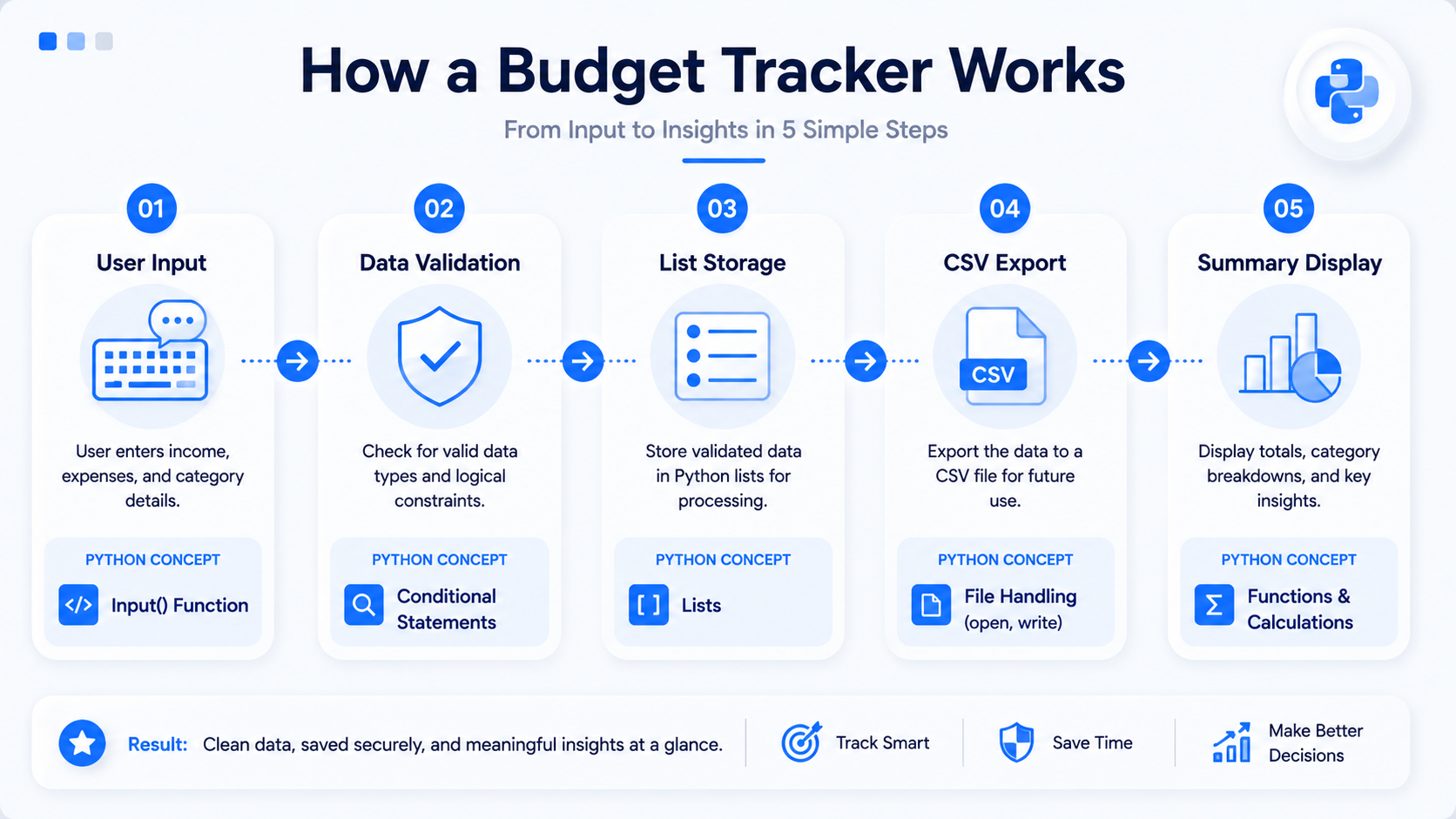
A budget tracker is one of the best first Python projects because it teaches input handling, lists, loops, and file storage, all in a single, genuinely useful program. Students typically complete a working version in four to six hours.
What you’ll learn: Variables, lists, conditional logic (if/elif/else), and basic file I/O with .csv files.
How it works: The program prompts the user to enter income and expense categories, stores them in a Python list, performs running calculations, and saves the data to a CSV file that can be opened in Excel or Google Sheets.
Key concepts this project covers:
input() for collecting user data
float() and int() for numeric conversions
csv module for reading and writing structured data
while loops for menu-driven interfaces
A common student extension is connecting this to a Google Sheets API, which introduces the concept of third-party library integration, a direct prerequisite for more advanced AI/ML work. The logic of “take in data, process it, output a structured result” is the same architecture used in production machine learning pipelines.
This project is deceptively simple on the surface. The act of designing a user-facing program, thinking about error handling, clear output formatting, and data persistence, builds the product mindset that distinguishes strong engineers from hobbyists. That mindset feeds directly into the next project’s challenge.
Project 2: Create a Weather Data Visualizer
A weather data visualizer introduces students to APIs and data visualization libraries, two skills that appear in virtually every data science and machine learning workflow. A basic working version can be built in a weekend using publicly available weather data.
What you’ll learn: API calls with the requests library, JSON parsing, and data visualization with matplotlib or plotly.
How it works: Students query the OpenWeatherMap API (which offers a free tier) to pull real-time or historical weather data for any city, then generate line charts, bar graphs, or scatter plots from that data.
Steps to build it:
Register for a free OpenWeatherMap API key
Use requests.get() to fetch JSON weather data
Parse the JSON response to extract temperature, humidity, and wind speed
Use matplotlib.pyplot to plot the data across a date range
Add pandas for optional data cleaning and aggregation
This is the first project that pulls live, real-world data, and that shift changes how coding feels. Students stop working with invented numbers and start working with the same data feeds that professional meteorologists, climate researchers, and urban planners use.
The jump from static data to live APIs is significant. Once a student understands API calls, they can query virtually any dataset on the planet, stock prices, sports statistics, NASA satellite imagery, or public health records. That realization tends to accelerate motivation considerably.
Project 3: Design a Simple Chatbot
A rule-based chatbot teaches control flow, string manipulation, and program architecture, and it provides a clear conceptual foundation for understanding how large language models like GPT-4 actually work at a higher level.
What you’ll learn: String methods, dictionaries, function definitions, and basic natural language pattern matching.
How it works: Students build a chatbot that responds to user input by matching keywords to pre-written responses stored in a Python dictionary. More advanced versions use nltk (Natural Language Toolkit) for basic text processing.
A minimal version needs only these components:
A dictionary mapping keywords to responses
A while loop that keeps the conversation running
String .lower() and .split() methods for basic normalization
A default fallback response for unrecognized input
What makes this project particularly educational is the gap between what it does and what modern AI chatbots do. A rule-based chatbot is deterministic; a GPT-style model is probabilistic. Seeing that difference firsthand, understanding why “if the user types ‘hello’” is fundamentally different from a model that learned from 500 billion tokens, is one of the most effective introductions to AI theory available. Students who have built this project tend to ask dramatically better questions when they begin exploring machine learning.
The chatbot project is also naturally extensible. A Streamlit front end turns it into a shareable web app. A Gemini or OpenAI API integration replaces the rule engine with a real language model. That progression mirrors exactly what professional developers do when prototyping AI products.
Project 4: Build a Quiz Game with a Leaderboard
A quiz game with a persistent leaderboard combines object-oriented programming, file handling, and user experience design in a single project. It is one of the most complete beginner applications a student can build independently.
What you’ll learn: Classes and objects, JSON file storage, randomization, and basic game loop design.
How it works: The game presents multiple-choice questions from a JSON file, tracks correct answers, calculates a score, and writes the result to a leaderboard file sorted by high score.
This project introduces object-oriented programming (OOP), which is the architectural pattern behind most production software.
Concepts include:
Defining a Question class with attributes and methods
Using random.shuffle() to randomize answer order
Reading and writing leaderboard data with json.dump() and json.load()
Sorting leaderboard entries with Python’s built-in sorted() function
Students who finish this project often realize they have accidentally learned software architecture. A quiz game has a data layer (the JSON questions file), a logic layer (the scoring and randomization), and a presentation layer (the terminal interface). That three-layer structure appears in every major application framework from Django to React. The leap from quiz game to real-world app is shorter than most students expect, as projects built during winter break have shown students who push further each season.
Project 5: Make a Basic Web Scraper
A web scraper collects structured data from public websites automatically, and it teaches students how the internet actually works while giving them a powerful tool for research, journalism, sports analytics, and more.
What you’ll learn: HTTP requests, HTML structure, BeautifulSoup parsing, and ethical data collection practices.
How it works: Students use the requests library to download a web page’s HTML, then use BeautifulSoup to parse the document tree and extract specific data points, prices, headlines, sports scores, or any other public information.
A beginner-friendly starting point is scraping a public data source such as:
Wikipedia tables (using pd.read_html() for tabular data)
Public government data portals that lack direct CSV downloads
This project also introduces one of the most important concepts in data science: data acquisition. A model is only as good as the data it trains on. Students who have built web scrapers understand firsthand why data collection, cleaning, and validation are the most time-consuming parts of any real-world ML project. That practical understanding is something no textbook chapter adequately conveys.
The ethical dimension matters too. Discussing robots.txt files, rate limiting, and terms of service teaches responsible engineering, a quality that stands out in any application or internship interview.
Student Spotlight: How Trisha Rai Built a Real AI-Powered Tool
These five projects are powerful starting points. But what happens when a student takes these foundational skills and pushes them into genuine AI territory?
Trisha Rai, a student enrolled in the BetterMind Labs program, built a Code Efficiency Web App that demonstrates exactly that progression. Her application checks Python code for errors and common inefficiency patterns using two professional-grade technologies:
Streamlit — a Python framework for building interactive web apps without needing to write HTML or JavaScript
Gemini API — Google’s multimodal AI model, used here to analyze code and provide intelligent feedback
The app takes a Python code snippet as input, sends it to the Gemini API with a structured prompt, and returns a formatted analysis identifying bugs, anti-patterns, and optimization opportunities. It is a genuine AI-powered developer tool — the kind of project that could be expanded into a standalone product.
What makes this project significant is not its technical complexity alone, but its arc. Trisha started with the same foundational Python skills covered above. Structured mentorship, a clear curriculum, and a real project brief gave her the scaffolding to go from “I know some Python” to “I built a working AI tool.” That gap, from learner to builder, is the one that changes how admissions officers read a resume.
Frequently Asked Questions
Q1: What Python projects for high schoolers are best for college applications? Projects that solve a real problem and use a third-party API or library carry the most weight. A weather visualizer, a web scraper, or an AI-powered tool built with Streamlit and a language model API shows genuine initiative. Admissions readers value demonstrated output over coursework claims.
Q2: Do I need any prior coding experience to start these projects? No prior experience is required for Projects 1 and 4. A free Python course on Khan Academy or Codecademy covers all prerequisites in under ten hours. The projects are sequenced so each one builds on the skills from the last.
Q3: How does structured mentorship improve the quality of a student’s Python project? Mentorship cuts debugging time by 60 to 70 percent according to research from the University of Washington’s CS Education Lab. A mentor helps students make architectural decisions early, preventing common structural mistakes that would require rebuilding later. The result is a cleaner, more defensible project.
Q4: Can these projects lead to actual AI or machine learning work? Yes, directly. The chatbot project introduces NLP concepts; the weather visualizer introduces data pipelines; the web scraper introduces data acquisition. These are the three foundational skills for any ML project. Students who want to go further can explore hands-on AI project ideas as clear next steps.
Q5: How important is project-based learning for developing real programming skills? Extremely important. A 2023 meta-analysis published in Computers & Education found students who learned programming through project-based curricula demonstrated 34% stronger problem-solving transfer than lecture-only cohorts. Building something forces a student to resolve ambiguity independently, which is the core skill of professional software development.
Q6: How long does it take a high schooler to finish one of these Python projects? Projects 1 and 4 typically take one focused weekend (six to ten hours). Projects 2, 3, and 5 take two to three weeks with two to three hours of daily work. Adding mentorship and a structured brief can reduce completion time by roughly half, while also improving final code quality.
Conclusion
A Python tutorial finished is not a Python project built. The difference between a student who completed a course and one who shipped a working application is the difference between potential and evidence. Top universities and competitive internship programs are not running short on applicants who took computer science. They are genuinely short on applicants who did something with it.
The five projects above provide a concrete starting path. Trisha Rai’s Code Efficiency Web App demonstrates where that path leads when a student pairs foundational skills with expert guidance, a structured curriculum, and a real project brief. That combination is not accidental.
BetterMind Labs builds exactly that structure for 8th through 12th grade students. The program pairs students with mentor engineers, delivers project-based AI and ML curriculum, and guides each student to a completed, deployable project they genuinely own. No generic coursework. No passive video lectures. Real tools, real mentors, real outcomes.
If you are ready to move from learning Python to building with it, explore the BetterMind Labs program at blog.bmldesk.com/. Your project brief is waiting.
In today’s AI-driven world, data science is transforming industries by enabling automation, predictive analytics, and better decision-making. Whether you’re a beginner or an advanced learner, working on real-world projects is the best way to improve your skills. This list of data science project ideas will help you gain hands-on experience and build a strong portfolio.
Objective: Discover trends and patterns in datasets.
How to Do It:
Choose a dataset from Kaggle or the UCI Machine Learning Repository.
Clean the data using Pandas, handling missing values and duplicates.
Create visualizations using Matplotlib and Seaborn to analyze distributions and relationships.
Tools: Pandas, Matplotlib, Seaborn
1. Movie Recommendation System
Objective: Build a system that suggests movies based on user preferences.
How to Do It:
Use the MovieLens dataset to collect user ratings.
Implement collaborative filtering or content-based filtering.
Train the model using Scikit-learn or the Surprise library.
Evaluate performance using RMSE (Root Mean Square Error).
Tools: Pandas, NumPy, Scikit-learn, Surprise
2. Sentiment Analysis of Social Media Posts
Objective: Analyze the sentiment of tweets or social media posts.
How to Do It:
Collect tweets using the Twitter API and Tweepy.
Preprocess text by tokenizing and removing stop words.
Use TextBlob or VADER for sentiment classification.
Visualize results with word clouds and bar charts.
Tools: Tweepy, NLTK, TextBlob, Matplotlib
3. Stock Price Prediction
Objective: Predict stock prices based on historical data.
How to Do It:
Gather historical stock data from APIs like Yahoo Finance or Alpha Vantage.
Perform feature engineering using moving averages and volume trends.
Train models such as linear regression or LSTMs.
Evaluate accuracy using mean absolute error (MAE).
Objective: Group customers based on purchasing behavior.
How to Do It:
Use e-commerce transaction data to analyze shopping patterns.
Apply K-means clustering to segment customers.
Use Principal Component Analysis (PCA) to visualize the clusters.
Tools: Pandas, Scikit-learn, Matplotlib
6. COVID-19 Data Analysis and Visualization
Objective: Track and analyze COVID-19 trends over time.
How to Do It:
Collect data from Johns Hopkins University datasets.
Analyze infection rates, recovery rates, and vaccination progress.
Create interactive maps and time-series graphs with Plotly and Folium.
Tools: Pandas, Matplotlib, Plotly, Folium
Why Work on Data Science Project Ideas?
Gain practical experience and improve technical skills.
Build a strong portfolio to showcase your expertise.
Prepare for job interviews with real-world applications.
BetterMind Labs helps high schoolers dive into the world of data science by offering internships that provide hands-on experience with real-world projects like those mentioned in this article. Students can work on exciting tasks such as exploratory data analysis, building recommendation systems, or analyzing sentiment from social media posts. With personalized guidance, BetterMind Labs ensures that students not only sharpen their technical skills in tools like Python, Pandas, and Scikit-learn, but also build impressive portfolios that can set them apart when applying to top universities. These internships provide the perfect opportunity to apply classroom learning to meaningful projects, boosting both academic and career prospects in the rapidly growing field of data science.
Most students join clubs that already exist. The students who stand out create something of their own.
In 2027, colleges are looking beyond participation. They’re looking for initiative. Anyone can attend meetings. Far fewer students can identify a problem, gather a team, and build a community around a shared interest.
That’s why starting a club can be one of the most valuable things you do in high school. A well-run club demonstrates leadership, commitment, creativity, and the ability to bring ideas to life. Whether you’re passionate about science, business, the arts, healthcare, or social impact, there’s a club idea that can help you explore your interests while making a difference in your school community.
Table of Contents
Section 1: 15 high school club ideas
Section 2: Why Starting a Club Matters More Than Ever
Section 3: Taking Your Interests Beyond the Club
Section 4: FAQs
Section 5: Conclusion
Here are 15 high school club ideas that can help spark your passion in 2027.
1. STEM Exploration Club
Science and technology are shaping every industry, from healthcare to climate science. A STEM club gives students the chance to move beyond the classroom through hands-on projects, coding workshops, engineering challenges, robotics competitions, and science demonstrations.
Students can organize hackathons, invite industry professionals to speak, or collaborate on projects that solve real-world problems.
2. Young Entrepreneurs Club
Many successful founders started exploring business ideas as teenagers. A Young Entrepreneurs Club can teach students how to develop business concepts, create marketing strategies, manage budgets, and pitch ideas.
Hosting startup competitions or Shark Tank-style events can make entrepreneurship both educational and fun while building valuable communication and leadership skills.
3. Future Physicians Club
For students interested in medicine, healthcare, or biomedical sciences, this club can provide exposure to medical careers long before college.
Activities might include guest talks from doctors, healthcare case discussions, anatomy workshops, public health awareness campaigns, and volunteering opportunities within the community.
4. Book Lovers Society
Reading remains one of the best ways to develop critical thinking and communication skills.
A Book Lovers Society can explore everything from classic literature to modern fiction, while also organizing reading challenges, author discussions, book drives, and literary events that encourage a culture of reading across the school.
5. Debate and Public Speaking Club
Strong communication skills are valuable regardless of career path.
Students can participate in debates, mock trials, extemporaneous speaking contests, and discussion panels while learning how to think critically, articulate ideas clearly, and present arguments with confidence.
6. Photography and Film Club
In today’s digital world, visual storytelling is more important than ever.
A Photography and Film Club can teach students photography techniques, video editing, filmmaking, and content creation while documenting school events and producing creative media projects.
7. Creative Writing Club
For students who enjoy expressing themselves through words, a writing club provides the perfect outlet.
Members can write short stories, poetry, screenplays, blogs, and articles while collaborating on publications, literary magazines, and writing competitions.
8. Art for Impact Club
Art has the power to inspire change.
This club can focus on using creative expression to raise awareness about social, environmental, or community issues through murals, exhibitions, digital campaigns, and collaborative art projects.
9. Music and Production Club
Music today extends far beyond traditional instruments.
Students can explore songwriting, music production, beat-making, audio engineering, and digital composition while collaborating on performances and original recordings.
10. Drama and Improv Club
Drama helps students develop confidence, creativity, and teamwork.
From producing plays and skits to practicing improvisation exercises, members gain valuable public speaking and performance skills while bringing stories to life.
11. Cultural Exchange Club
Schools are becoming increasingly diverse, making cultural awareness more important than ever.
A Cultural Exchange Club can celebrate traditions from around the world through events, presentations, language exchanges, food festivals, and discussions that promote global understanding.
12. Model United Nations (MUN) Club
MUN remains one of the most respected high school activities for students interested in international relations, law, public policy, or political science.
Students research global issues, represent countries, draft resolutions, and participate in conferences that simulate real diplomatic negotiations.
13. Foreign Language Club
Learning a language becomes much more engaging when practiced outside the classroom.
Students can organize conversation groups, cultural celebrations, language challenges, and exchange opportunities that help members improve fluency while learning about different cultures.
14. World History Enthusiasts Club
History comes alive when students move beyond textbooks.
This club can explore historical events, host debates, analyze current events through historical perspectives, and examine how past decisions continue to shape the modern world.
15. AI and Innovation Club
Artificial intelligence is rapidly transforming industries ranging from healthcare and finance to education and engineering.
An AI and Innovation Club can introduce students to emerging technologies through hands-on projects, AI tools, coding challenges, and discussions about the future of technology. Members can build simple machine learning models, explore ethical questions surrounding AI, and create projects that address real-world problems.
For students interested in future-focused careers, this can become one of the most impactful clubs on campus.
Why Starting a Club Matters More Than Ever
The most successful students don’t simply collect extracurricular activities. They create opportunities.
Starting a club demonstrates leadership in a way that joining one often cannot. It shows colleges that you identified a need, took initiative, and committed to building something meaningful. Whether your club grows to ten members or one hundred, the experience teaches valuable lessons in communication, teamwork, organization, and problem-solving.
More importantly, clubs can become launching pads for larger projects, community initiatives, research opportunities, and career exploration.
Taking Your Interests Beyond the Club
A club is often just the beginning.
Students who make the strongest impression on college admissions officers typically combine leadership with tangible outcomes. That might mean conducting research, developing a project, creating a product, organizing a community initiative, or building a portfolio around their interests.
Programs like BetterMind Labs help students take that next step. Through mentorship and project-based learning, students can explore fields such as artificial intelligence, healthcare, business, and technology while building real-world projects that showcase their skills and interests.
The combination of leadership through clubs and hands-on project experience creates a powerful foundation for future academic and career success.
FAQs
What is the best club to start in high school?
The best club is one that aligns with your genuine interests and allows you to create meaningful activities or projects. Passion and consistency matter more than choosing a club that simply sounds impressive.
Do colleges value students who start their own clubs?
Yes. Starting a club demonstrates initiative, leadership, and commitment—qualities that admissions officers often look for when evaluating applicants.
How many students do I need to start a club?
Requirements vary by school, but many schools allow clubs to begin with a small group of interested students and a faculty advisor.
Can a club help me explore future career interests?
Absolutely. Clubs provide hands-on opportunities to learn about fields such as healthcare, engineering, business, technology, law, and the arts before choosing a college major or career path.
Conclusion :
The best club isn’t necessarily the most popular one. It’s the one that gives you a chance to explore your interests, take initiative, and create something meaningful.
Whether you’re passionate about healthcare, technology, business, the arts, or social impact, starting a club can help you develop leadership skills and discover what truly excites you. But the students who stand out don’t stop at participation—they turn their interests into real projects, research, and tangible outcomes.
That’s where programs like BetterMind Labs can help. By combining mentorship with hands-on, project-based learning, students can go beyond club activities and build portfolios that showcase both passion and practical skills. If you’re looking to take your interests further, BetterMind Labs can help you transform an idea into something you can proudly share with colleges, future employers, and the world.