Tag: AI Applications

  • AI Passion Projects: The Ultimate Extracurricular for Top College Admissions in 2025

    As you and your teen navigate the increasingly competitive world of college admissions, the question of extracurriculars looms large. For years, the advice was to be “well-rounded”—President of one club, treasurer of another, varsity athlete on a team, and volunteer in the community.

    But in 2025, the game has changed.

    Top colleges are no longer looking for students who do a little bit of everything. They are looking for students who do one thing with exceptional depth, passion, and impact.

    The Big Shift for College Admissions: From “Well-Rounded” to “Spiky”

    Admissions officers today talk about building a “well-rounded class,” not a class of well-rounded students. They want a class composed of unique specialists: a future biologist who has done novel research, a budding filmmaker who has created a documentary, a future policymaker who has tackled a local community issue.

    This is the “spiky” profile: a student who has a clear, demonstrated passion in a specific area. Why is this so valuable? Because it shows:

    • Authenticity: A deep dive into a subject proves genuine interest, not just resume-padding.

    • Initiative: It shows the student can identify a problem and work independently to solve it.

    • Impact: It demonstrates they can create tangible outcomes.

    So, What is the Single Best Extracurricular for Top Colleges in 2025?

    The single most powerful extracurricular for top colleges in 2025 isn’t a club, a sport, or a standard volunteer role.

    It’s the Independent Impact Project.

    An impact project is a student-led endeavor that aims to solve a problem, explore a deep curiosity, or create something new. It’s the ultimate “show, don’t tell” for a college application.

    Why an Independent Passion Project Beats the Standard Extracurricular List

    A passion project moves a student from a participant to a creator. Instead of just joining the coding club, they build an app. Instead of joining the environmental club, they design a sensor to monitor local water quality.

    This approach is powerful because it’s deeply personal and cannot be easily replicated. It gives your teen a unique story to tell—a story of challenge, discovery, and growth. That’s why programs that help students build these projects—like those at BetterMind Labs—focus on mentorship to help turn a spark of an idea into a powerful portfolio piece.

    How Your Teen Can Build a Standout AI Passion Project for Their College Admissions

    Getting started is more about mindset than genius. Here’s a simple framework to help your teen build an extracurricular project that colleges will notice.

    Step 1: Find a Problem, Not Just a Subject

    Encourage your teen to look around them. What problems exist in their community, their school, or in a field they love?

    • Interested in healthcare? The problem could be how to help the elderly remember to take their medication.

    • Interested in finance? The problem might be the spread of financial misinformation online.

    • Interested in biology? It could be the challenge of antibiotic resistance.

    Step 2: Use a Modern Tool to Create a Unique Solution (Like AI)

    This is where your teen can truly stand out. Using a modern tool like Artificial Intelligence shows they are a forward-thinking problem-solver. AI isn’t just for coders; it’s a powerful tool that can be applied to almost any field.

    At BetterMind Labs, we guide students through this exact process, and the results speak for themselves. These are the kinds of impact projects that define a “spiky” profile:

    • Alexei Manuel didn’t just study biology; he used AI to analyze chiral molecules, a project aimed at disrupting biology and creating more effective medicines.

    • Saksham Srivastava tackled one of medicine’s biggest threats by building an AI to fight antibiotic resistance.

    • Ishita Sabbineni addressed a societal problem by creating an AI Medical Misinformation Detector to find false cures and claims online.

    These students didn’t just join a club. They identified a major problem and used high-level skills to build a solution. That is the story top colleges want to hear.

    Step 3: Document the Journey and Share the Story

    The final step is to communicate the project’s impact. This can be a simple website, a detailed blog post, a GitHub repository for code, or even a short video. Documenting the process—the challenges, the failures, and the breakthroughs—is just as important as the final product.

    From Idea to Impact: A BetterMind Labs Alumni’s Story

    Meet Ishita Sabbineni. Like many of her peers, she was concerned about a growing real-world problem: the spread of dangerous medical misinformation online. She saw how fake cures and false claims could harm people and decided she wanted to do something about it.

    This is the perfect starting point for an impactful AI passion project for college admissions. But an idea is different from a plan.

    Through the BetterMind Labs AI ML program, Ishita was able to turn her concern into a concrete project. Working with mentors, she learned the advanced AI skills needed to tackle the problem. The program provided her with the structure and technical guidance

    to design, build, and train a sophisticated AI model.

    The result? An AI Medical Misinformation Detector. It’s a tool designed to analyze online health content and flag false or unsubstantiated claims before they can mislead people.

    This isn’t just a science fair project. It’s a real solution to a pressing societal issue. It’s a story of initiative, technical skill, and a desire to make a positive impact. This is the narrative that cuts through the noise of thousands of applications and makes an admissions officer pause and take notice.
    Ready to help your teen move beyond the checklist and build an extracurricular with real impact?

    Explore the BetterMind Labs AI Internship and discover how a passion project can transform their future.


    Relevant Links

  • Why AI Education Is Essential for Your Teen’s Future

    Let’s Face It: The Future Won’t Wait

    Your teen is growing up in a world where AI isn’t optional—it’s foundational.

    From Netflix recommending movies to hospitals detecting diseases early, artificial intelligence is shaping nearly every aspect of life. And as AI continues to power industries—from healthcare to climate, from gaming to law—the next generation must not just be consumers of this tech but creators and critics of it.

    So the big question is: Is your teen ready?

    The Risk of Not Learning AI Early

    Let’s not sugarcoat it—teenagers who graduate without basic AI literacy may find themselves:

    • Behind in college admissions, especially for competitive majors like CS, business, or bioengineering

    • Less employable, even for internships or entry-level roles

    • Unaware of how AI affects privacy, equity, and ethics in their daily lives

    • Less confident in using tools that will soon be as common as Google Docs or Excel

    This isn’t just about “techies.” AI is now a life skill, like reading or math.

    The Payoff of AI Education for Teens

    Here’s what AI education does for your teen… whether or not they want to major in computer science:

    1. Builds Real-World Skills

    AI helps students become better problem-solvers. Whether it’s training a model to detect mental health signals in tweets or optimizing traffic in their hometown, students gain hands-on experience that translates into any career.

    2. Boosts Cognitive Growth

    Understanding algorithms, pattern recognition, and model training strengthens critical thinking, logic, and creativity. These skills help in SATs, college essays, and interviews.

    3. Supercharges College Applications

    Top universities no longer look just for grades—they want students who create impact. A high schooler who builds an AI project around education inequality or healthcare access stands out in a sea of cookie-cutter applications.

    4. Shapes Future Citizens

    Teens who understand AI are more likely to engage with ethical debates around surveillance, misinformation, or climate modeling. That’s how we raise thoughtful, empowered humans—not just employees.

    Real Students. Real Impact.

    At BetterMind Labs, we’ve seen teens build incredible AI projects that matter:

    • Ananya, 11th grade, created an AI model to classify malaria types, inspired by her mom who works in public health.

    • Shaun, 10th grade, built a Crypto Sentiment Tracker after noticing how fake news manipulated prices.

    • Alexei, a biochemistry hopeful, used AI to generate protein-folding simulation datasets, helping him understand his dream major before college.

    None of these students were coding geniuses at first.

    What they had was mentorship, structure, and a reason to build.

    How Can You Introduce AI to Your Teen?

    Here’s a step-by-step plan any family can follow:

    1. Start with Free Resources

    YouTube channels like 3Blue1Brown or CodeBullet make AI entertaining.

    Try courses like Coursera’s AI for Everyone or Kaggle Micro-Courses.

    2. Build a Small Project

    Train an image classifier to sort cats and dogs. Use Python to detect spam in emails.

    These aren’t just projects—they’re confidence boosters.

    3. Join a Guided Program

    That’s where BetterMind Labs comes in.

    We guide high schoolers from idea → research → model → impact while helping them build standout college portfolios.

    Schools Are Catching Up—But Not Fast Enough

    Yes, AI is making its way into school curriculums.

    States like California and New York are integrating it into science and math.

    But let’s be honest:

    • Teachers are undertrained

    • Resources are limited

    • Projects are often generic or outdated

    Your teen needs beyond-the-classroom exposure to understand how AI works in the real world—alongside mentors, peers, and actual use cases.

    Common Myths (Busted)

    “My teen isn’t into coding.”

    AI isn’t just for coders. At BetterMind Labs, students interested in psychology, business, biology, and even writing have created meaningful AI tools.

    “It’s too early.”

    Middle and high school is actually the perfect time—the brain is flexible, and the stakes are low. Better to experiment now than wait until college.

    “It’s all just hype.”

    AI is now integrated into hiring, education, law, agriculture, sports analytics, and even music composition. It’s not hype—it’s reality.

    Final Thoughts: AI Is Not Just a Skill—It’s a Mindset

    We don’t teach AI just to help teens learn to code.

    We teach it so they can dream smarter, solve bigger problems, and think for themselves.

    Whether your teen wants to become a doctor, architect, journalist, or entrepreneur, understanding AI makes them future-proof.

    And in a world that’s constantly evolving, that might be the best gift you can give them.

    Ready to Get Started?

    BetterMind Labs’ AI/ML Internship for High School Students—is now accepting applications.

    We pair teens with mentors to help them build passion projects that not only impress colleges but impact the world.

    Apply now: https://blog.bmldesk.com/


    Relevant Links

  • How AI Is Changing the World and What That Means for Gen Z

    A few years ago, the idea of talking to a robot, generating art with a click, or automating entire businesses felt like science fiction. Today, it’s reality. At the center of this shift is Artificial Intelligence, or AI. While AI is transforming nearly every part of society, the generation that will feel its full impact the most is Gen Z, those born between 1997 and 2012.

    If you’re a high school student right now, AI isn’t just a buzzword. It’s shaping your future.

    So what exactly is AI doing to the world, and how can Gen Z prepare for the AI revolution in education, careers, and everyday life? Let’s explore.

    The World Is Being Rewired by AI

    AI is no longer locked in tech labs or reserved for startups. It’s now being used to:

    • Diagnose diseases with more accuracy than human doctors

    • Predict financial markets in real time

    • Write code, generate music, and create realistic videos

    • Drive cars, screen job applicants, and detect cyber attacks

    Industries like healthcare, finance, education, agriculture, and space exploration are being redefined by AI tools. The future of work is being reshaped, and Gen Z will need new skills to thrive in it.

    Take this real-world example. In 2023, Google DeepMind used AI to predict the 3D structures of over 200 million proteins. This groundbreaking research is already speeding up drug development and could lead to cures for diseases we never thought we’d solve. Imagine being part of something that powerful while you’re still in high school.

    That’s not just a dream; students are already doing it. At BetterMind Labs, a high school student built a project called Exoplanet Data Explorer under the mentorship of an AI expert. The project used machine learning to analyze thousands of NASA exoplanet entries and helped visualize which planets might be most Earth-like. It’s a powerful example of how AI and space exploration can come together in hands-on ways, even for teens.

    Why Gen Z Needs to Understand AI Now

    You’re the first generation to grow up with smartphones, YouTube, and now tools like ChatGPT and DALL·E. Whether you dream of becoming an artist, entrepreneur, scientist, or activist, learning how AI works will give you a huge advantage.

    Here’s why AI fluency matters for Gen Z.

    1. Careers of the Future Require AI Skills

    According to the World Economic Forum, AI could generate 97 million new jobs by 2025. These new roles might include:

    • Prompt engineers

    • AI ethicists

    • Machine learning consultants

    • Data storytellers

    • AI product designers

    Even if you don’t plan on coding, AI is going to touch your career. Marketers use AI for customer insights. Journalists use it to analyze public data. Designers use it to generate concepts. AI for high school students is no longer optional, it’s essential.

    2. AI Is Revolutionizing Education

    AI-powered education platforms like Khanmigo and Google Gemini are transforming how Gen Z learns. Instead of one-size-fits-all classes, students now get personalized learning experiences.

    AI in education helps you:

    • Learn faster by adapting to your pace

    • Receive instant feedback on your work

    • Access global knowledge on any subject

    • Use real-world data to build school projects

    The way you study is changing, and those who embrace AI tools will be better prepared for college and beyond.

    3. AI Boosts Creativity, It Doesn’t Replace It

    There’s a myth that AI kills creativity, but Gen Z is proving the opposite. AI tools like Runway ML, Midjourney, and ChatGPT are helping students:

    • Animate short films

    • Launch startups from their bedrooms

    • Write books and scripts

    • Design fashion collections

    A high school student recently used AI to build a mental health chatbot to support her classmates. She ended up speaking at a national tech conference. That’s the power of combining creativity with AI.

    But AI Isn’t All Positive

    With every breakthrough comes new challenges. Gen Z needs to be aware of the risks that come with an AI-driven world.

    1. Bias and Fairness

    AI learns from data, and data can be biased. This has led to real-world problems like:

    • Hiring algorithms that discriminate

    • Predictive policing tools that target minorities

    • Chatbots that spread harmful stereotypes

    Understanding AI ethics is just as important as knowing how the tech works. The future needs leaders who will keep AI fair and inclusive.

    2. Job Displacement

    While AI creates opportunities, it can also automate routine tasks. Roles in customer service, data entry, and manufacturing are already being replaced. Gen Z needs to develop uniquely human skills like:

    • Empathy

    • Leadership

    • Critical thinking

    • Complex problem solving

    These skills will be harder for AI to replicate and will give you a long-term advantage in the job market.

    3. Digital Overload

    Being surrounded by AI-powered screens and apps can lead to burnout and comparison culture. Managing screen time, setting boundaries, and focusing on mental health will be crucial in this AI-powered age.

    How Gen Z Can Prepare for the AI Era

    You don’t need to be a tech genius to get started. Here’s how high school students can begin exploring AI and future careers.

    Start with Curiosity, Not Code

    Tools like Teachable Machine and Scratch with ML make it easy to build AI projects with no coding background. Try them out and see what’s possible.

    Build Passion Projects

    AI isn’t just for science fair winners. You can use it to:

    • Build an AI-powered music generator

    • Create a website that predicts sports stats

    • Design AI-driven fashion recommendations

    Passion projects show colleges and employers that you’re thinking ahead and thinking creatively.

    Understand the Ethics

    Follow AI researchers like Timnit Gebru or groups like AI Now Institute. Read about algorithmic bias, surveillance, and how deepfakes work. Gen Z has the power to create ethical AI systems that work for everyone.

    Collaborate and Connect

    The best AI ideas come from collaboration. Join online hackathons. Start clubs at school. Look for internships or volunteer roles where you can work on real-world problems. AI for teens isn’t just about skills; it’s about building a mindset of innovation.

    Final Thoughts

    Artificial Intelligence is not just another tech trend. It’s the engine transforming how we live, learn, and work. Gen Z isn’t just a passive generation watching it unfold. You’re building the future.

    You don’t need to have all the answers today. But you do need to stay curious, ask bold questions, and keep learning. AI is here to stay, and those who embrace it thoughtfully will help shape a smarter, more creative, and more human-centered world.


    Relevant Links:

    https://deepmind.google/discover/blog/a-glimpse-of-the-next-generation-of-alphafold/

    https://www.weforum.org/stories/2025/01/future-of-jobs-report-2025-jobs-of-the-future-and-the-skills-you-need-to-get-them/

    https://www.khanmigo.ai/teachers

    https://edu.google.com/intl/ALL_au/workspace-for-education/add-ons/google-workspace-with-gemini/

    https://runwayml.com/

    https://www.vidcruiter.com/interview/intelligence/ai-bias/

    https://www.cigionline.org/articles/the-promises-and-perils-of-predictive-policing/

    https://en.wikipedia.org/wiki/Timnit_Gebru

    https://en.wikipedia.org/wiki/AI_Now_Institute

    https://teachablemachine.withgoogle.com/

  • AI in Education: How High Schoolers Are Leading a Personalized Learning Revolution

    Why Education Needs AI More Than Any Other Domain

    Every sector is evolving fast—from manufacturing and medicine to finance and warfare. Artificial intelligence is driving massive change everywhere. But one space still craving that transformation is education.. It’s a domain that shapes every future industry, yet it remains one of the most underserved when it comes to leveraging the power of AI.

    Education needs AI—not just for speed and efficiency, but to restore the personal touch that has been lost in scale.

    AI in Education for High School Students: A Shift Back to Personalized Learning

    Let’s go back in time.

    In ancient India, there was the Gurukul system, a residential education model where a student (shishya) would live with and learn from a teacher (guru). It was deeply personalized, spiritual, and character-based.

    Similarly, ancient Greece had the Socratic method—dialogue-based, mentor-driven learning. These systems focused on small groups, often just 5 to 10 students, and were centered on tailored learning experiences.

    But such personalized education came at a price. Only the elite could access it. The masses were left behind.

    With the rise of industrialization, education systems had to scale—and in doing so, they lost the personal touch.. One teacher for 40 students. Standardized tests. Fixed curricula. Students now go through conveyor-belt style learning, regardless of their interests, pace, or understanding.

    How AI Can Bring Back Personalized Learning at Scale

    AI in education for high school students isn’t about replacing teachers—it’s about augmenting their ability to reach every student where they are.

    Here’s how AI is making an impact:

    1. Adaptive Learning Platforms

    AI systems like Knewton and Squirrel AI personalize the learning journey for each student. They analyze how a student interacts with material and adjust the difficulty, pace, and style accordingly. Imagine learning math with a tutor who knows exactly when you’re struggling and jumps in with extra help—without you even having to ask.

    2. Automating Repetitive Tasks for Educators

    Grading assignments, tracking attendance, preparing lesson plans—AI can automate these time-consuming tasks. For example, tools like Gradescope (used in many universities) use machine learning to grade handwritten answers. This gives educators more time to connect with students emotionally and intellectually.

    3. Early Intervention with Predictive Analytics

    AI can analyze patterns in student behavior to detect who might be falling behind—way before the final exam reveals it. Platforms like DreamBox and AltSchool use real-time data to suggest interventions. Teachers can then reach out early and offer help.

    4. Language Support & Accessibility

    Students learning a second language or with learning disabilities benefit massively from AI. Tools like Speechify, Grammarly, or AI tutors like Duolingo’s GPT-powered chatbot offer real-time feedback and assistance in a way that’s tailored, non-judgmental, and always available.

    5. Virtual Mentorship at Scale

    Mentors have always been central to deep learning—but there are never enough of them. AI can act as a bridge. At BetterMind Labs, for instance, students are guided by mentors, and they also use AI models to learn coding, test projects, and explore data. With a combination of real mentors and AI-powered learning aids, students get the best of both worlds.

    The Emotional Element: Can AI Teach with Empathy?

    Many argue that education requires emotion, empathy, and understanding—things AI can’t replicate. True, but AI is not meant to replace these qualities. It’s meant to remove the heaps of admin, repetition, and inefficiency that burn out educators and make them less available to their students.

    It’s also important to note that students today relate to technology emotionally. From talking to AI chatbots to learning via immersive simulations, technology itself has become an emotional tool.

    AI allows educators to focus on what they do best: inspiring, listening, and guiding students.

    Real-World Use Cases of AI in Education

    • Carnegie Learning: An AI-based math platform that adapts to each student’s understanding level.

    • Content Technologies, Inc.: They use AI to create customizable textbooks for different student needs.

    • Querium: Uses AI to help students master STEM skills by giving step-by-step guidance on solving problems.

    These companies are backed by millions in funding—and for good reason. They’re solving real education gaps with real technology.

    What High School Students Can Do

    You don’t have to wait for universities or companies to use AI in education. High school students can start now.

    Projects You Can Build as a Student

    1. AI-Powered Class Schedule Optimizer: Help schools and students automatically schedule. based on energy levels, interests, or commute times.

    2. Homework Assistant Chatbot: An AI tutor that explains math problems or history concepts.

    3. Emotion Detection in Online Classes: Use computer vision to detect student attention or engagement via webcams (with permission).

    Student Spotlight: Concept‑Map Generator for Smarter Studying

    When one of our students from a small school in North Carolina struggled to retain complex science concepts during exam prep, he didn’t turn to flashcards or YouTube summaries. Instead, he built something extraordinary.

    “I realized I was good at remembering stories, not disjointed facts,” he said. “So I wondered—what if my textbook could tell me how ideas are connected, like a map?”

    This thought led him to build an AI-powered Concept‑Map Generator—a tool that reads large chunks of text from a textbook or article and visually displays how the ideas are related.

    Using natural language processing (NLP), the tool extracts key terms from the content. Then it calculates how often these concepts appear together to determine their relationship strength, drawing a concept graph with edge weights based on co‑occurrence.

    The result? A way to turn static content into dynamic visual learning tools—especially useful for visual learners, students with ADHD, or those preparing for finals under pressure.

    His classmates began using it. His teacher shared it with two other schools. The project wasn’t just a great portfolio addition—it was a tool that solved a problem for many.

    This is the kind of project that BetterMind Labs helps students build—not just flashy demos, but passion-driven tools with real-world relevance.

    Why This Matters for T20 Colleges

    Top universities aren’t looking for the same cookie-cutter projects. They want proof of innovation. A project that improves learning for even 10 people is more valuable than 100 LeetCode problems.

    Our AI/ML summer program helps students:

    • Identify problems that matter

    • Learn the tools to solve them

    • Create projects that reflect their values and curiosity

    And all of it is guided by real mentors—not tutorials.

    Conclusion: The Future of Education is Personal—and Powered by AI

    Education is not about standardization anymore. It’s about personalization at scale, and AI is the only technology that can make that possible.

    If you’re a student who believes in meaningful learning, in solving problems, and in changing how the system works—not just for yourself but for others—then AI is your toolkit.

    Applications for BetterMind Labs’ High School AI Internship are open. Let’s build the next big thing in education, together.

    AI in Education for High School Students isn’t the future. It’s the now. Are you ready to be part of it?


    Relevant Links

  • Beyond the Classroom: How High School Students Are Learning & Using AI to Change the World

    Why High School Students Must Learn AI —And Use It to Change the World

    In 2025, the way high school students learn AI has drastically evolved. No longer limited to theory, today’s students are building real AI tools—tools that save lives, redefine credit systems, and support public health efforts.

    Earlier, it wasn’t like this. AI was mostly about symbolic reasoning and rule-based programming to encode human knowledge into machines. But today, it’s the opposite: we enhance human knowledge through machines. AI is no longer a helper—it’s a partner in thinking.

    Today, AI has become a formal part of education. AI literacy is now a core component of high school curricula, with states like California mandating its inclusion across math, science, and social sciences. But theory isn’t enough.

    Students need to go beyond just reading and memorizing. They must use their knowledge to build things that solve real problems and impact society.

    Real Student-Led Impact From BetterMind Labs

    1. Waste Management Chatbot

    Project Name: Warehouse Buddy

    Inspired by the growing inefficiency in warehouse waste management, BetterMind Labs alumni Sanvi Rao built Warehouse Buddy—an AI-powered chatbot that helps warehouses streamline waste collection and storage. By simply asking questions in the chatbot, managers can instantly get insights on item tracking and waste consumption, making warehouse operations faster and more sustainable.

    1. Legal Document Assistant

    Project Name: LawMate

    Frustrated by how expensive and inaccessible legal consulting can be, BetterMind Labs alumni William Hardee built LawMate—an AI-powered assistant that helps people without legal knowledge analyze lengthy, complex documents. The chatbot can process multiple text files and provide tailored insights, giving users a clearer understanding of contracts, policies, and other legal materials.

    Designed, coded, and published independently, this project was fully created and presented by William as a one-person effort.

    1. Employee Retention AI

    Project Name: StaySense

    Noticing how costly and disruptive employee turnover can be for companies, BetterMind Labs alumni Aman Sreejesh created StaySense—a machine learning system that predicts whether an employee is likely to leave. The project involved exploratory data analysis, feature selection, and logistic regression modeling, all integrated into a Streamlit web app.

    By providing HR teams with actionable insights, StaySense serves as a practical tool for improving decision-making and workforce retention planning.

    Can You Do This Alone?

    Yes—but it’s hard. Exploring a new domain alone means spending time figuring out what matters, what works, and what doesn’t. That’s why having a mentor saves time, effort, and energy.

    Want to Try Solo First? Here Are 3 Great Open Resources:

    1. Fast.ai – Practical deep learning for coders.

    2. Google AI Education – Beginner-friendly modules from Google.

    3. Kaggle Datasets + Notebooks – Explore datasets and community-built models.

    Conclusion

    Whether you’re working alone or with mentors, the key is building something that matters—not just something that looks good on an application. At BetterMind Labs, we help you bridge the gap between learning and action.

    We are still accepting applications. Join us and build a project that changes lives, starting with yours.

    You don’t just need AI skills. You need a mission. Let’s build it together.


    Relevant Links

  • AI for Global Hunger: How High Schoolers Can Help Solve Food Waste

    Every night, while millions scroll through food photos online, nearly 800 million people go to bed hungry. Imagine an entire continent sleeping on an empty stomach. And yet—we produce more than enough food for everyone on Earth. So why are so many still starving? The answer lies in a broken system. But there’s hope, and AI might just be the unlikely hero.

    • Around 733 million people, almost 1 in 11 globally were undernourished in 2023.

    • Despite producing enough food for 10 billion people, 1.5 times our current population, nearly 800 million still don’t get enough to eat.

    Why This Paradox?

    1. Mismanagement in the Supply Chain:

      Food often spoils during farming, storage, transport, and at retail due to a lack of tracking and demand forecasting.

    2. Huge Food Waste:

      Globally, 1.3 billion tonnes (around 30–40%) of food are wasted—nearly a third of all food produced, contributing trillions in losses and CO₂ emissions.

    3. Distribution Gaps & Access Issues:

      Political instability, poverty, and logistics mean food often fails to reach those who need it most.

    How AI for Global Hunger Is Making a Difference

    1. Shelf Engine & Afresh

    AI-driven ordering systems helped reduce grocery-store food waste by 14.8% in pilot programs—preventing ~900,000 tons of waste and saving $2 billion.

    2. Winnow Vision

    Kitchen AI cameras identify waste with more than 80% accuracy—outperforming human staff—and have helped dramatically cut waste in restaurants.

    3. Too Good To Go

    This app connects surplus food to consumers—200 million meals saved so far across 62 million users.

    These initiatives show real, measurable impact—comparing favorably to entire small-country populations.

    How High Schoolers Can Help

    AI isn’t just for big organizations. Students can contribute by tackling problems such as:

    1. Local Food Demand Prediction

      Use ML to forecast demand at food banks, reducing excess and shortages.

    2. Smart Redistribution Tools

      Build ML-driven apps to notify NGOs when surplus food is available nearby.

    3. Waste Recognition App

      Use computer vision to flag spoiled produce in school cafeterias or local stores.

    Student Impact Story

    A student from San Antonio, Texas, noticed excessive food waste at their local shelter. After our AI/ML program, they built a surplus-alert chatbot, which alerted volunteers via SMS when the shelter’s inventory exceeded thresholds.

    The result? 30% less food thrown away, helping feed hundreds more families. This proves how impactful AI for global hunger can be—especially when young minds are part of the solution.

    “I didn’t build this for college apps. I built it to help my neighbors.” — Our Alumni

    Colleges Are Watching Real Impact

    Top universities (T20) are moving beyond generic AI projects. They now look for work that solves real community issues. Hunger reduction models like these show purpose, empathy, and innovation.

    Learn & Build With Mentorship

    Free resources (Kaggle, YouTube, World Bank datasets) are great—but pairing them with one-on-one mentorship is transformative. At BetterMind Labs, students combine theory, coding, and guidance to build projects that matter—not just lines on a resume.

    How You Can Start Today

    1. Learn the basics: Python, Pandas, scikit‑learn.

    2. Find datasets: USDA food bank stats, WFP supply data.

    3. Start small: Build a demand forecasting model.

    4. Join a mentor-driven program—like BetterMind Labs—to bring your ideas to life.

    Conclusion: From Idea to Impact

    Kids, not corporations, can be at the forefront of solving world hunger—if equipped with AI, passion, and mentorship. Build something that matters. Let AI be the tool that turns your compassion into change.

    Apply to the AI/ML Certification Program at BetterMind Labs and start feeding real impact with real solutions.

    Together, we can end hunger—one line of code at a time.


    Relevant Links

  • How High School Students Are Using AI to Make Space Research NASA-Worthy Discoveries

    How High Schoolers Are Using AI in Space Research

    “I used to think space was out of reach, but now I’m training AI models to discover things I never imagined,” 

    said one of our students with a grin. Like them, millions of students today are realizing they can use artificial intelligence to make a real impact in the space industry — from analyzing telescope data to identifying patterns no human eye could detect.

    A prime example is Matteo (Matthew) Paz. Using AI-powered data analysis during his research at Caltech, he uncovered 1.5 million previously unknown objects in space. This breakthrough not only expanded the potential of a NASA mission but also earned him a single-author, peer-reviewed scientific paper, a rare achievement for someone his age.

    Astronomer and IPAC senior scientist Davy Kirkpatrick, who has spent the last five summers mentoring high school students alongside undergraduates, citizen scientists, and graduate fellows, guided Paz through this journey.

    “Meeting Davy was a game-changer,” 

    Paz said. “He gave me the freedom to experiment with AI tools and follow my curiosity without limits. That’s how I grew as both a coder and a scientist.”

    When students are supported by mentors who encourage exploration, whether in coding, AI, or astronomy, they stop setting limits for themselves. The line between what’s possible and what’s not begins to blur, and groundbreaking research like this becomes reality.

    Projects Born From Passion

    Inspired by stories like this, we’ve been mentoring our own students the same way—with openness and encouragement. Some of our favorite space + AI projects include:

    • Asteroid Classification Tool using NASA datasets and clustering algorithms

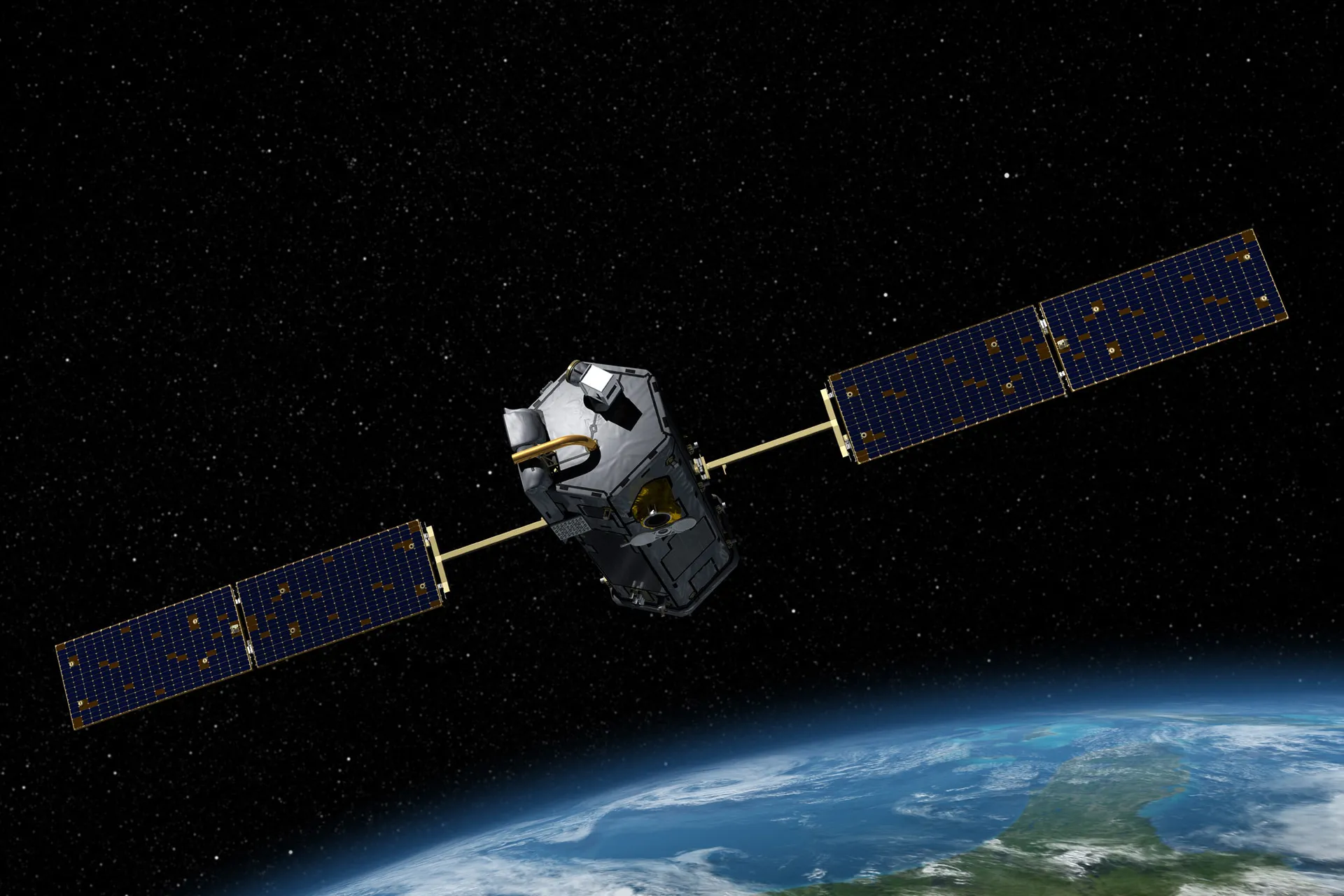
    • Satellite Health Prediction using LSTM models

    • A Space Image Enhancer that sharpens low-resolution telescope imagery using GANs

    How AI is Revolutionizing Space Research

    AI has become the rocket fuel behind major space research. Leading agencies like NASA and ESA are using it extensively:

    1. NASA’s Frontier Development Lab

    They use AI for:

    • Lunar terrain analysis

    • Planetary defense simulations

    • Deep learning-based asteroid tracking

    They’ve partnered with tech giants like Intel and Google to explore ways AI can predict hazardous asteroid impacts, optimize rover paths, and even simulate space environments.

    2. European Space Agency (ESA)

    ESA uses AI to:

    • Analyze satellite imagery for climate monitoring

    • Detect exoplanets through light curve classification

    • Enhance telescope data resolution with AI-based super-resolution models

    The technical stack includes CNNs, autoencoders, and edge AI models running on low-power satellites.

    Can High Schoolers Join This Mission?

    Absolutely. Just like Paz, anyone with drive and curiosity can start small and grow into a space innovator.

    Here’s a Roadmap to Get Started:

    1. Learn AI Basics – Start with Python, scikit-learn, and basic data science concepts.

    2. Understand Astronomy Fundamentals – Explore Khan Academy, NASA’s Open Learning platforms.

    3. Try Open Datasets – Use datasets from NASA, Kaggle, and ESA.

    4. Build Mini Projects – Start with notebooks before moving to full apps.

    5. Join a Mentor Program – This is where transformation happens.

    Project Ideas for High School Students:

    1. Galaxy Image Classifier – Use CNNs to sort galaxy shapes.

    2. Satellite Trajectory Predictor – Predict ISS location using time series.

    3. Solar Flare Alert System – Classify solar flare images from SOHO.

    4. Star Brightness Estimator – Use regression to analyze variable stars.

    5. Asteroid Risk Index Calculator – Rank known asteroids by size, speed, and orbit proximity.

    Why Mentorship Changes Everything

    Building these projects alone can be challenging. At BetterMind Labs, you’ll join a small group of up to three students, each guided by an experienced mentor. This way, you get personalized support while working alongside peers. Whether you’re decoding starlight or tracking asteroids, we’ll guide you every step of the way.

    In Conclusion: The Sky Isn’t the Limit

    High school students today don’t need to wait. With the right support, tools, and mindset, they can create space solutions that once seemed like science fiction. We’ve seen students make NASA-worthy projects with just a few weeks of mentorship.

    If you’re dreaming big, the time to start is now.

    Join our July AI/ML Internship at BetterMind Labs and bring your own space project to life.

    Your journey to the stars starts now.


    Relevant Links

    AI Use Cases at NASA – 2024 Report

    https://www.nasa.gov/organizations/ocio/dt/ai/2024-ai-use-cases/

    The Power of AI in Space Exploration – ESA Blog

    https://blogs.esa.int/exploration/the-power-of-ai-in-space-exploration/

    Exploring Space with AI – Caltech

    https://www.caltech.edu/about/news/exploring-space-with-ai

    Machine Learning Research in Astronomy – Harvard-Smithsonian Center for Astrophysics

    https://pweb.cfa.harvard.edu/research/topic/machine-learning

    NASA Open Data Portal

    https://data.nasa.gov/

    High School Space Exploration Projects – Science Buddies

    https://www.sciencebuddies.org/science-fair-projects/science-projects/space-exploration/high-school

  • AI in Cybersecurity: From WannaCry to Building Your First Phishing Detector

    How a 10$ Kill Switch Saved the World: AI and the Fight Against Malware & Phishing

    The Day the World Froze: May 12, 2017

    On May 12, 2017, the world paused. Banks, stock markets, hospitals, government offices—more than 200,000 computers across 150 countries became useless overnight. From FedEx to Honda, Nissan, and the UK’s National Health Service (NHS), even global giants were scrambling. Ambulances were rerouted, patient data vanished, and millions were lost every minute.

    The culprit? A cryptic digital invader: WannaCry.

    The Anatomy of WannaCry

    WannaCry was a worm-type ransomware that spread like wildfire through Windows machines using a vulnerability known as EternalBlue, an exploit leaked by a mysterious hacking group called The Shadow Brokers. This group had been releasing powerful cyberweapons from U.S. intelligence arsenals into the wild since 2016.

    The name “WannaCry” reportedly came from the malware’s internal file strings—hinting at the emotional pain of its victims.

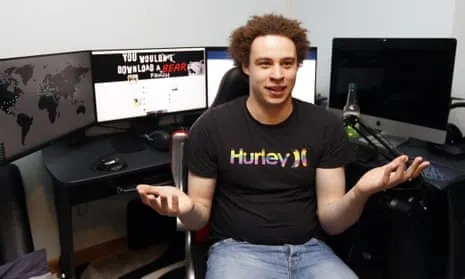
    As systems encrypted and ransom notes popped up, a strange twist brought unexpected relief. Marcus Hutchins, a security researcher, discovered a peculiar domain hardcoded into the malware: iuqerfsodp9ifjaposdfjhgosurijfaewrwergwea.com. The domain was unregistered. Out of curiosity—and luck—he registered it for $10.69.

    That act inadvertently triggered a kill switch, stopping WannaCry’s execution wherever it attempted to ping the now-active domain. While it didn’t undo damage, it stopped the spread.

    Estimated damages? Over $4 billion globally, all because of a tiny .kb-sized file.

    How Attackers use AI in Cyber Attacks

    The WannaCry crisis set the stage for a new era in digital warfare. Fast forward to the Fifth Industrial Revolution, where AI is being used on both sides of the cyber battlefield.

    As per Morgan Stanley, attackers are using AI to:

    • Write highly convincing phishing emails with generative models

    • Evade detection by mutating malware signatures

    • Scan and exploit vulnerabilities at machine speed

    • Launch voice cloning and deepfake scams to bypass security layers

    Meanwhile, defenders are striking back with AI-powered solutions:

    • IBM is safeguarding hybrid cloud environments using AI that adapts in real time to threat behavior.

    • CrowdStrike combines threat intelligence with AI to provide predictive protection, catching threats before they strike.

    From WannaCry to Action: How a High Schooler Is Fighting Cybercrime

    When a student at BetterMind Labs learned how much damage the WannaCry attack had caused, he knew he had to do something. So, he decided to build a phishing URL detector, from the ground up.

    Week 1: The Spark

    After discovering how WannaCry shut down systems around the world, a high school student at BetterMind Labs asked himself:

    “What if I could stop something like that?”

    That question sparked everything. His curiosity, problem-solving mindset, and love for coding were the perfect starting point for a real-world AI project.

    Week 2: Learning with Mentors & Teammates

    We connected him with experienced mentors and a team of students who were just as excited to build. Inside our AI/ML program, they shared ideas, gave each other feedback, and worked side by side to bring the project to life.

    Week 3: Building with AI

    With support from the team, he learned how to:

    • Use NLP to scan email content for red flags

    • Apply TF-IDF to spot suspicious patterns in URLs

    • Train models like Logistic Regression and Decision Trees to detect phishing links

    • Everything was hands-on—with real datasets and real results.

    Week 4: Turning It Into a Tool

    He put it all together into a simple Chrome extension that flags risky links in real time.

    It wasn’t just a class project anymore—it became something that could help protect people from real online threats.

    Want to see how it works? Watch the full project explanation video here.

    5 AI + Cybersecurity Projects for High School Innovators

    Want to try something like that? Here are 5 impactful beginner-friendly ideas:

    1. AI-Based Phishing Email Classifier – Train a model using spam/ham datasets to flag suspicious content.

    2. URL Safety Scorer – Build a tool that scores URLs based on domain trust, SSL, and content.

    3. Voice Scam Detector – Use voice AI to spot deepfakes or cloned voices.

    4. Intrusion Detection System (IDS) – Use AI to monitor traffic patterns and flag anomalies.

    5. Password Strength Predictor – Create a model that evaluates password safety using past breach data.

    Each of these projects can be built in teams of 1–3 with the right mentorship, guidance, and tools—just like we do at BetterMind Labs.

    Ready to Build Real AI Projects?

    AI in cybersecurity isn’t optional anymore—it’s the front line. If you’re a high schooler who wants to do more than just learn about threats—but actually stop them—then this is your call to action.

    Our AI/ML internship at BetterMind Labs is designed to help students build real projects with real-world mentors.

    Whether it’s phishing defense or anomaly detection, it’s time for your first contribution to global safety.

    Let’s build the future. Securely. Together.


    Relevant Links

    What is AI for Cybersecurity? – Microsoft

    https://www.microsoft.com/en-in/security/business/security-101/what-is-ai-for-cybersecurity

    What is WannaCry Ransomware? – Akamai

    https://www.akamai.com/glossary/what-is-wannacry-ransomware

    Advanced Phishing Detection Using AI Techniques – NCS

    https://www.ncs.co/en-sg/make-tomorrow/digital-trust/advanced-phishing-detection-ai-techniques/

    AI-Based Malware Detection – ManageEngine Academy

    https://www.manageengine.com/academy/ai-based-malware-detection.html

    Introduction to AI for Cybersecurity – Coursera

    https://www.coursera.org/learn/introduction-to-ai-for-cybersecurity

    Top Cybersecurity Projects for Beginners – Great Learning

    https://www.mygreatlearning.com/blog/top-cybersecurity-projects-for-beginners/