Stanford’s AI System That Diagnoses Skin Cancer
In 2017, researchers at Stanford University published something that turned heads in both tech and healthcare: a convolutional neural network that could classify skin cancer with the same accuracy as board-certified dermatologists.
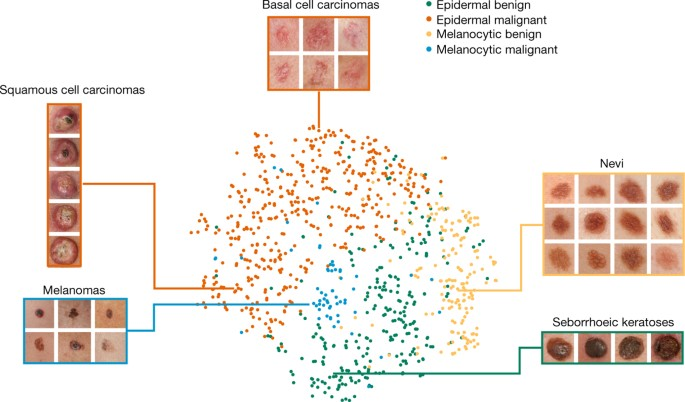
They trained their AI model using over 129,000 images of skin lesions, covering more than 2,000 skin diseases. What made it groundbreaking wasn’t just the scale, but the performance. The system could accurately distinguish between benign and malignant conditions, including deadly melanoma.
This wasn’t some lab experiment with carefully cleaned-up data. The model was tested against 21 dermatologists and performed on par with the experts. The results were published in Nature, one of the most respected scientific journals.
Why It Matters
Skin cancer is one of the most common cancers in the world. Melanoma, while less common than basal or squamous cell carcinomas, is far more dangerous. Early detection dramatically increases survival rates, but many people don’t have access to dermatologists or don’t recognize symptoms in time.
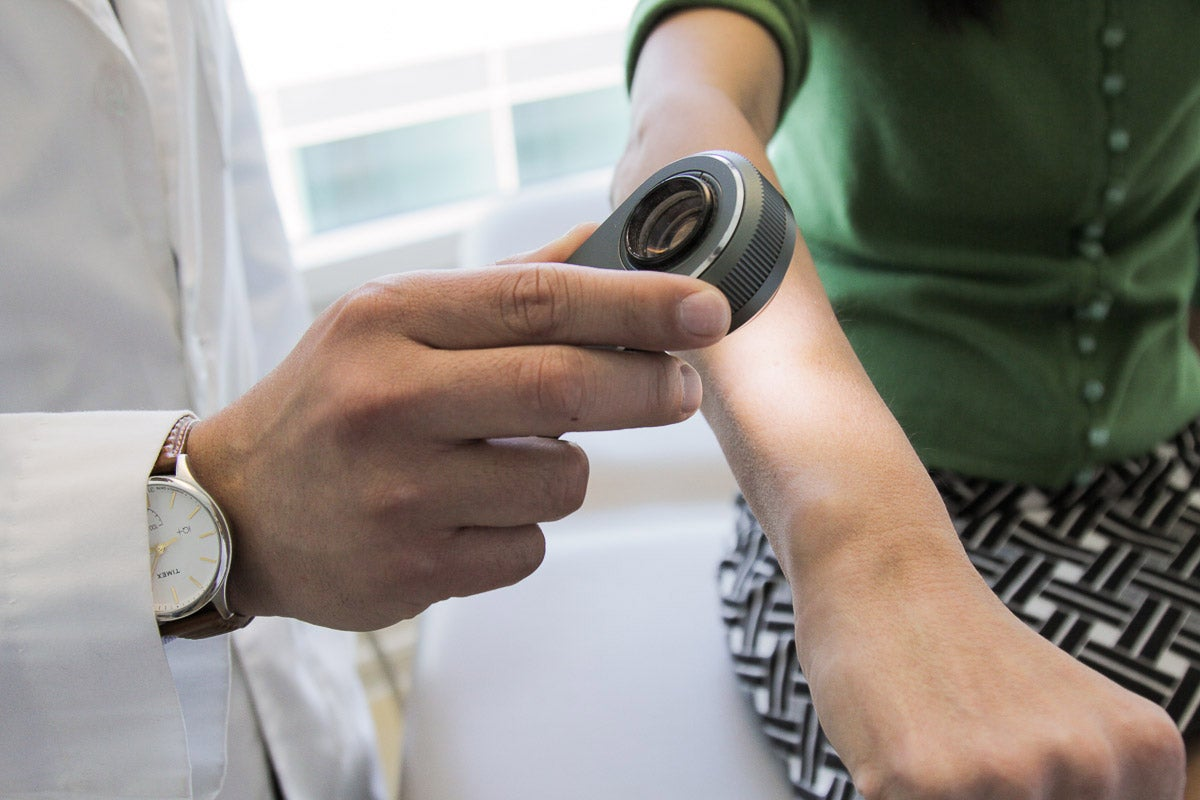
That’s where AI can play a critical role. A mobile app with this kind of model behind it could help people check suspicious moles or spots in minutes. It wouldn’t replace doctors, but it could flag potential problems earlier and bring peace of mind to users who might otherwise ignore a warning sign.
The real power here is accessibility. A smartphone with a decent camera and a trained model could serve as a first line of defense, especially in areas where dermatological care is hard to reach.
What the Research Actually Did
The Stanford team used a single deep convolutional neural network architecture based on GoogleNet Inception v3. They pretrained it on ImageNet, a dataset with millions of everyday images, before fine-tuning it on their skin lesion dataset.
No special filters or image preprocessing tricks were used. That’s what made it so impressive: it worked with regular photographs, similar to what a patient might take at home.
The model was able to differentiate between three major categories:
-
Benign lesions
-
Malignant melanomas
-
Carcinomas like basal or squamous cell cancers
The implications were clear. AI didn’t just belong in labs or self-driving cars. It had a place in frontline healthcare, too.
Real-World Impact of AI Projects by High School Students
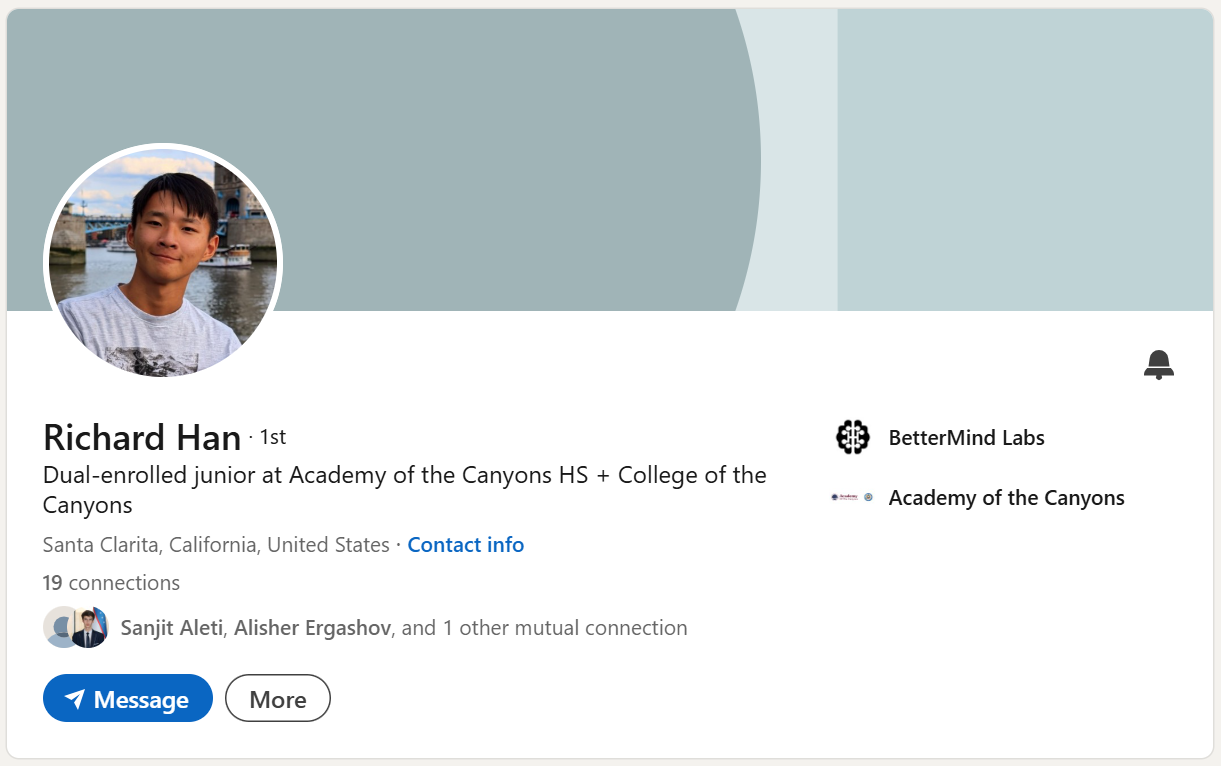
At BetterMind Labs, two high schoolers, Richard Han and Videep Cheemangunta, took inspiration from this research and built their own melanoma detection project. Their model analyzes images of skin lesions and flags potential cancer risks.
This AI project by high school students is more than just a technical exercise — it’s a real-world initiative proving that teens can use artificial intelligence for impactful, socially responsible solutions.
They said the hands-on experience helped them understand how AI can make a difference in real lives. It wasn’t just academic, it felt personal.
“BetterMind Labs made learning about AI fun and easy. We got to try real tools, build models, and think about how AI impacts the world.” — Richard Han
“The BetterMind Labs team is incredibly patient and professional. They taught us the fundamentals of AI and helped us build projects that actually matter.” — Videep Cheemangunta
The Bigger Picture
The line between student and scientist is getting thinner. When research like Stanford’s becomes public, high schoolers don’t just learn, they contribute. Whether it’s through academic partnerships or independent programs like BetterMind Labs, more students are exploring AI with a real sense of purpose.
Skin cancer detection is just one example. But it’s a powerful one. Because when a model can catch melanoma earlier than most people ever would, it’s not just impressive. It saves lives.
Relevant Links:
-
Dermatologist-Level Classification of Skin Cancer with Deep Neural Networks – Stanford
https://cs.stanford.edu/people/esteva/nature/ -
Stanford Researchers Use AI to Identify Skin Cancer with High Accuracy
https://news.stanford.edu/stories/2017/01/artificial-intelligence-used-identify-skin-cancer -
AI Project by High School Students for Cancer Detection
https://www.bettermindlabs.org/post/ai-project-by-high-school-students-cancer-detection -
BetterMind Labs – AI Projects by High School Students
https://www.bettermindlabs.org/ -
Skin Disease Classification Using Deep Learning – arXiv
https://arxiv.org/pdf/1810.10348