Tag: AI Projects

  • The AI Emergency Response Project by a High School Student That’s Outperforming 911 Dispatchers

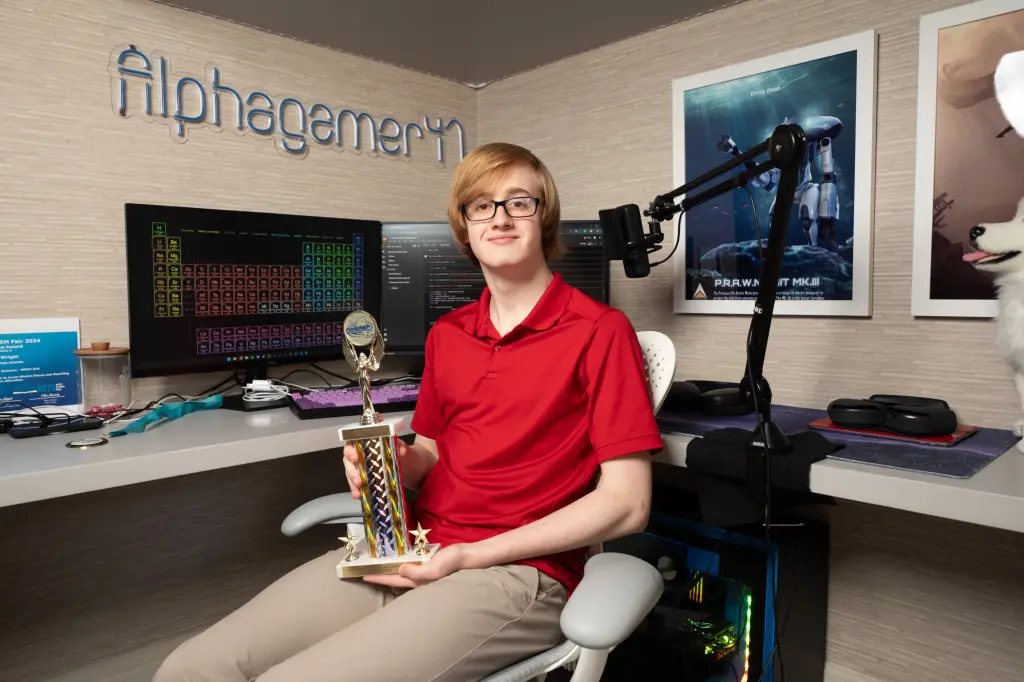
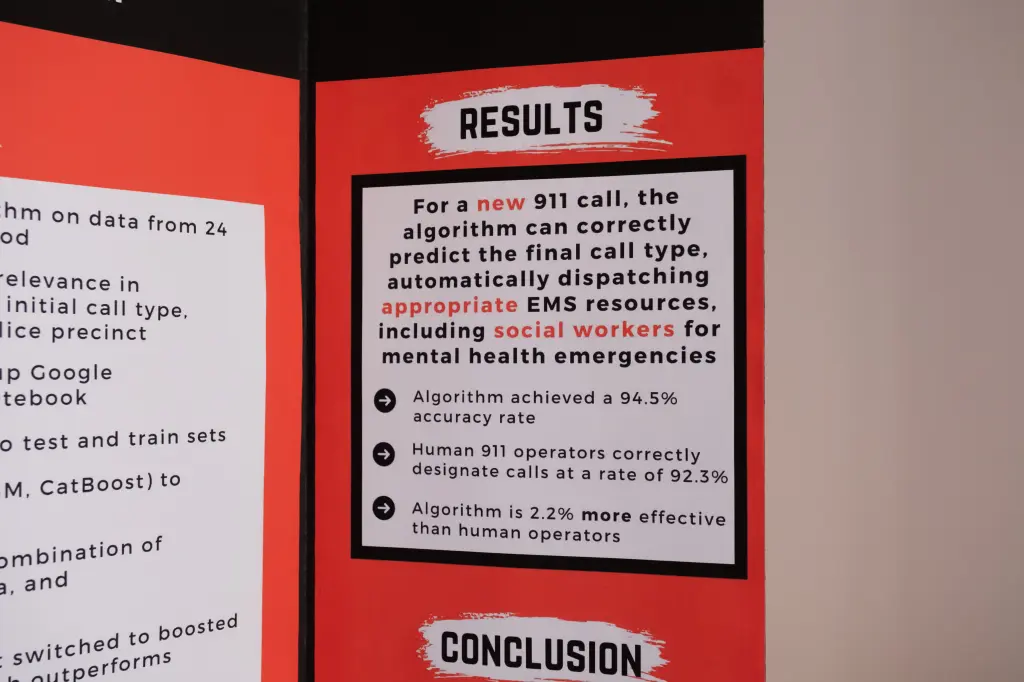
    When 17-year-old Pierce Wright built an AI emergency response project as a high school student, he didn’t expect to outperform trained 911 dispatchers. But that’s exactly what happened. His system, trained on over 24 million NYC 911 call records, clocked 94.5% accuracy higher than human professionals.

    This AI emergency response project by a high school student shows that real-world AI innovation isn’t just happening in labs—it’s happening in classrooms and teen bedrooms across the country.
    Why AI Emergency Response Projects by High School Students Matter

    Every year, hundreds of thousands of 911 calls in cities like New York involve mental health or substance abuse. Many of those calls don’t need a police officer or an ambulance. They need a different kind of help. And getting that wrong leads to wasted time, crowded ERs, and in some cases, tragic outcomes.

    Pierce saw this firsthand while volunteering with EMS teams in Westport, Connecticut. He noticed that emergency responders were constantly sent to cases that didn’t require their specific skills. That experience made him wonder if AI could help solve the mismatch between real needs and dispatched services.

    So he went to work.

    What He Actually Built

    Using open city datasets from NYC, Pierce trained a gradient-boosting model that looks at four key inputs: zip code, time of day, police precinct, and the initial call type. From that, the model predicts what kind of emergency response is actually needed.

    The scale was massive. He trained the system on data from 2005 to 2022, with millions of emergency medical service records. Then he tested the results and discovered something wild: the AI wasn’t just keeping up with human dispatchers, it was slightly better.

    That small margin could mean over $123 million saved annually by sending the right help more efficiently.

    But here’s the bigger picture. Pierce didn’t build this in a university lab or under a tech giant. He built it as a high school student, using tools and data that anyone can access.
    What Other Students Can Learn from This

    This isn’t a one-off miracle. More and more high school students are building real, working AI tools that tackle serious problems. Some are using computer vision to detect skin cancer. Others are training language models to flag early signs of depression in teens. The difference usually comes down to whether they have the right mentors, space to explore, and a reason to care.

    That’s where programs like BetterMind Labs come in. We’ve worked with students to help them go beyond theory and actually build projects that solve real-world problems.

    And yes, they also happen to look incredible on college applications.

    What Pierce’s Story Really Shows Us

    It’s easy to think of AI as something distant or overly complex. But the truth is, the tools are here. The knowledge is accessible. And when a teenager like Pierce Wright can train a smarter emergency response system than professionals with decades of experience, it’s a wake-up call.

    Students aren’t just future innovators. They’re already creating things that matter.

    So if you’re a parent wondering what your teen could be doing with their interests in tech, or a student who’s curious about AI but doesn’t know where to start, this is your sign.

    Want to help your teen build something real with AI?
    BetterMind Labs helps high school students learn AI by building meaningful projects. No fluff. No busywork. Just real-world tools, guided by mentors who’ve been there.

    Pierce started with a simple idea. Your teen can too.


    Relevant Links:

  • AI Fact-Checker Built by High School Students | Debate Tool

    How High School Students Built an AI Fact-Checker for Political Debates

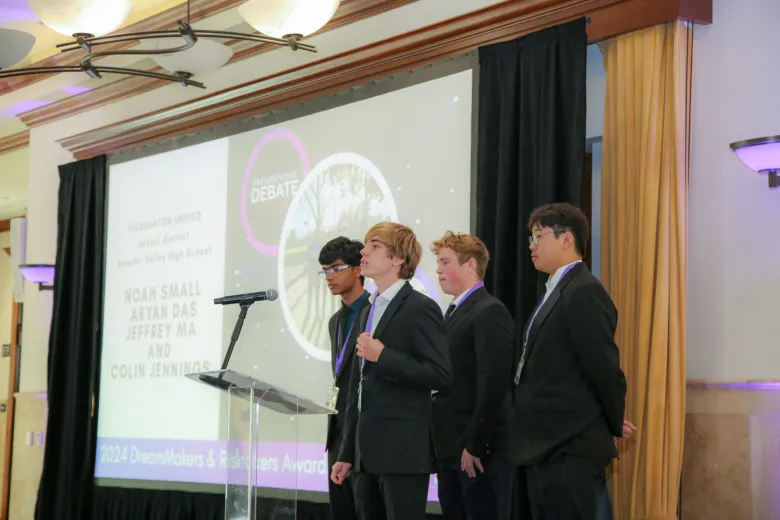
    Political debates are intense, fast-paced, and full of claims that aren’t always true. So students at Amador Valley High School in California took action. High school students built an AI fact-checker that listened to the 2024 U.S. presidential debate and flagged misleading or false statements on the spot. It wasn’t just for show; it achieved 87% accuracy using live news sources and natural language processing.

    This wasn’t a classroom assignment. It worked in the real world, and it was built by high schoolers.

    Real-Time AI Debate Fact-Checking System: What They Created

    Using speech-to-text software, the team transcribed debate audio in real time. Then their AI model compared spoken statements to verified databases and up-to-date news sources. Machine learning algorithms classified each claim as true, false, or misleading within seconds.

    One student, Noah Small, led efforts to optimize the speech transcription. Colin Jennings, Aryan Das, and Jeffrey Ma designed the machine learning model and built the confidence scoring system. Working under their teacher, Kevin Kiyoi, they tested APIs like Google Gemini and OpenAI’s GPT to parse and verify statements.

    The impressive part wasn’t just accuracy. It was adaptability. The system handled background noise, rapid speaker changes, and incomplete sentences. That made it a true example of a high school AI project success.

    Accuracy and Impact: Why AI Misinformation Tools Matter

    The debate tool achieved 87% accuracy, verified by students cross-checking outputs. Local media and educators praised its innovation and potential. This showed that teenagers can build useful systems for political fact-checking and tackling misinformation.

    They didn’t replace fact-checking organizations. Instead, they enhanced it, providing instant feedback during live events. Imagine using a similar tool for televised interviews, press briefings, or live podcasts. That’s the power of accessible, student-built AI.

    AI Projects by Teens: Projects with Purpose

    What makes this project shine is the mindset behind it. These students didn’t just learn AI theory. They picked a real problem and built a solution. That’s a big difference between classroom exercises and real-world projects.

    They could have studied algorithms all year. Instead, they created something meaningful.

    Mentorship in High School AI: Why It Matters

    The Amador Valley team had the guidance of Kevin Kiyoi, a teacher who encouraged experimentation and problem-solving. Mentorship like that is often what turns a decent project into something impactful.

    It’s the same reason students at BetterMind Labs get to build projects that matter. Take Namya and Rishav, developed an early disease detection system. They didn’t just work through tutorials; they had mentors who helped them work through real data, hit roadblocks, and iterate until their model worked in the wild.

    Whether it’s a debate fact-checker or an Early disease detector, mentorship makes the difference between learning the tools and learning how to use them.

    Final Thoughts: Teen AI Project Inspiration

    When Noah Small, Colin Jennings, Aryan Das, and Jeffrey Ma built their live AI fact-checker, they showed that high school students can tackle misinformation with real impact. That’s not a niche achievement. It’s a sign that the next wave of AI innovation will come from unexpected places.

    They just need curiosity, support, and tools. And once they start building, they might surprise you with just how far they can go.


    Relevant Links

  • The AI Project by High School Students That’s Revolutionizing Cancer Detection

    Stanford’s AI System That Diagnoses Skin Cancer

    In 2017, researchers at Stanford University published something that turned heads in both tech and healthcare: a convolutional neural network that could classify skin cancer with the same accuracy as board-certified dermatologists.

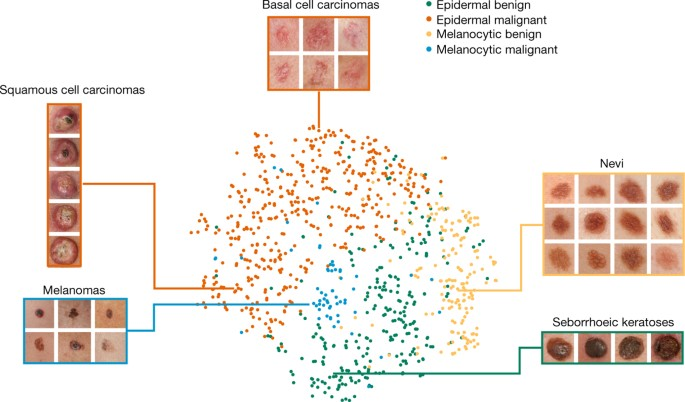
    They trained their AI model using over 129,000 images of skin lesions, covering more than 2,000 skin diseases. What made it groundbreaking wasn’t just the scale, but the performance. The system could accurately distinguish between benign and malignant conditions, including deadly melanoma.

    This wasn’t some lab experiment with carefully cleaned-up data. The model was tested against 21 dermatologists and performed on par with the experts. The results were published in Nature, one of the most respected scientific journals.

    Why It Matters

    Skin cancer is one of the most common cancers in the world. Melanoma, while less common than basal or squamous cell carcinomas, is far more dangerous. Early detection dramatically increases survival rates, but many people don’t have access to dermatologists or don’t recognize symptoms in time.

    That’s where AI can play a critical role. A mobile app with this kind of model behind it could help people check suspicious moles or spots in minutes. It wouldn’t replace doctors, but it could flag potential problems earlier and bring peace of mind to users who might otherwise ignore a warning sign.

    The real power here is accessibility. A smartphone with a decent camera and a trained model could serve as a first line of defense, especially in areas where dermatological care is hard to reach.

    What the Research Actually Did

    The Stanford team used a single deep convolutional neural network architecture based on GoogleNet Inception v3. They pretrained it on ImageNet, a dataset with millions of everyday images, before fine-tuning it on their skin lesion dataset.

    No special filters or image preprocessing tricks were used. That’s what made it so impressive: it worked with regular photographs, similar to what a patient might take at home.

    The model was able to differentiate between three major categories:

    • Benign lesions

    • Malignant melanomas

    • Carcinomas like basal or squamous cell cancers

    The implications were clear. AI didn’t just belong in labs or self-driving cars. It had a place in frontline healthcare, too.

    Real-World Impact of AI Projects by High School Students

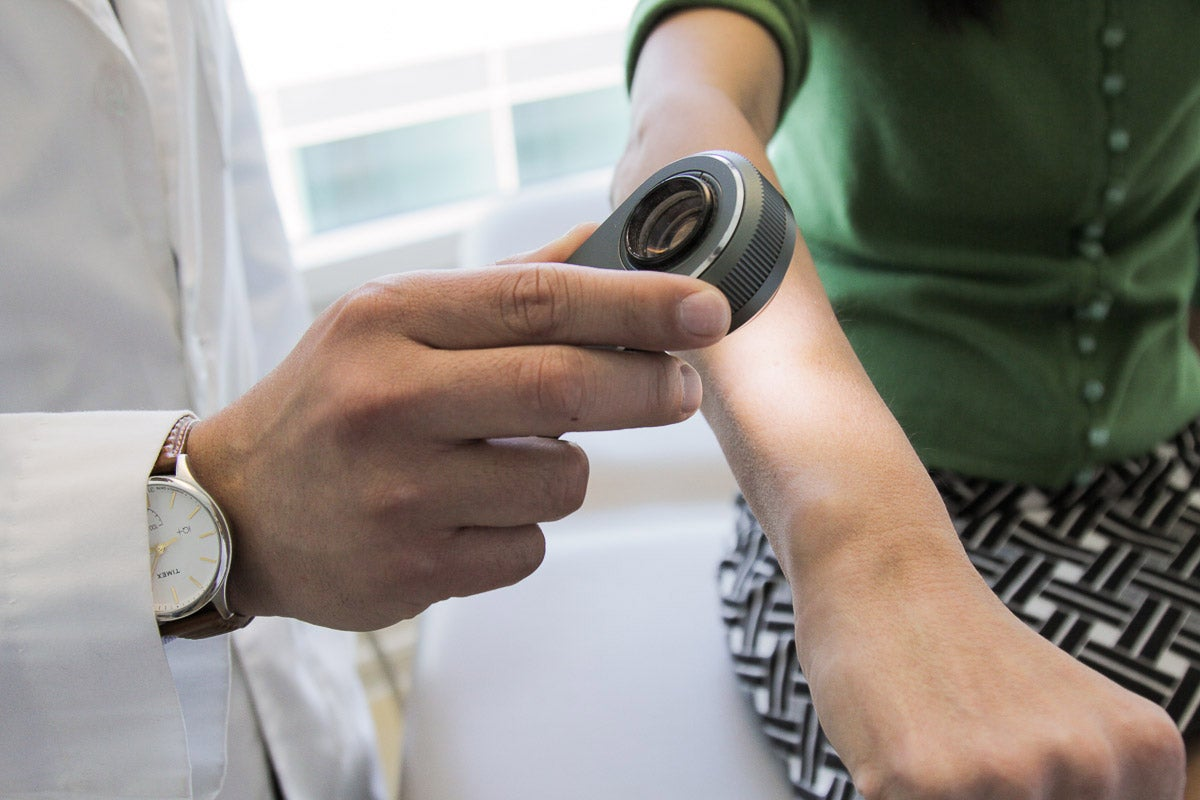
    At BetterMind Labs, two high schoolers, Richard Han and Videep Cheemangunta, took inspiration from this research and built their own melanoma detection project. Their model analyzes images of skin lesions and flags potential cancer risks.

    This AI project by high school students is more than just a technical exercise — it’s a real-world initiative proving that teens can use artificial intelligence for impactful, socially responsible solutions.

    They said the hands-on experience helped them understand how AI can make a difference in real lives. It wasn’t just academic, it felt personal.

    “BetterMind Labs made learning about AI fun and easy. We got to try real tools, build models, and think about how AI impacts the world.” — Richard Han

    “The BetterMind Labs team is incredibly patient and professional. They taught us the fundamentals of AI and helped us build projects that actually matter.” — Videep Cheemangunta

    The Bigger Picture

    The line between student and scientist is getting thinner. When research like Stanford’s becomes public, high schoolers don’t just learn, they contribute. Whether it’s through academic partnerships or independent programs like BetterMind Labs, more students are exploring AI with a real sense of purpose.

    Skin cancer detection is just one example. But it’s a powerful one. Because when a model can catch melanoma earlier than most people ever would, it’s not just impressive. It saves lives.


    Relevant Links:

  • An AI Project by High School Students That’s Changing How We Learn

    AI is no longer just for PhDs and tech giants, this AI project by high school students proves that. At BetterMind Labs, a group of passionate teenagers built a fully functional recommendation engine aimed at sparking curiosity, not addiction.

    You finish binging a sci-fi series on Netflix, and instantly, a new one with a similar vibe appears, titled “Top Picks For You.” You listen to a new indie band on Spotify, and your “Discover Weekly” playlist is suddenly filled with similar-sounding artists you’ve never heard of but instantly love. You buy a new coffee maker on Amazon, and your homepage starts suggesting specific brands of coffee beans and mugs.

    Is it magic? Mind-reading?

    It’s one of the most powerful and pervasive forms of artificial intelligence in the world: the recommendation algorithm. These invisible engines are the curators of our digital lives, shaping our tastes, our purchases, and even our thoughts. But how do they actually work?

    The Recommendation Engine: Your Personal, Invisible Butler

    At its core, a recommendation algorithm is a filtering system that predicts your preferences. It sifts through millions of items to present you with the ones it thinks you’ll like best. There are two primary ways it does this.

    Method 1: Collaborative Filtering (“People like you also liked…”)

    This is the most common method. The algorithm doesn’t need to know anything about the products themselves; it just needs to know what people do.

    It works like this:

    1. The algorithm identifies a user who has similar tastes to you. Let’s call them your “taste twin.”

    2. It looks at everything you and your taste twin have both liked.

    3. Then, it finds something your taste twin has liked, but you haven’t seen yet.

    4. Finally, it recommends that new item to you, assuming you’ll like it too.

    This is the engine behind Netflix’s “Trending Now” and Amazon’s “Customers who bought this also bought…” It’s powerful because it leverages the wisdom (and data) of crowds.

    Method 2: Content-Based Filtering (“Because you watched…”)

    This method looks at the attributes of the content itself. If you watch a lot of sci-fi movies starring a specific actor and directed by a certain director, the algorithm will tag those attributes. It then searches its massive library for other movies with the same tags (same genre, same actor, etc.) and recommends those to you.

    This is why after you watch one video about “how to fix a leaky faucet” on YouTube, your entire feed fills up with home improvement content.

    How This AI Project by High School Students Solved a Real Problem

    Understanding these systems is the first step toward becoming a more conscious digital citizen. The next step? Learning how to build them yourself—and perhaps, how to build them for a better purpose.

    Case Study: A BetterMind Labs Student’s “Curiosity Engine”

    Meet “Leo,” a high school student who felt trapped by his social media feeds. He noticed that the more he engaged, the narrower his content became. The same topics, same opinions, same creators, over and over. He wasn’t discovering new ideas; he was just digging deeper into a trench of familiarity.

    He brought this frustration to the BetterMind Labs AI/ML program with a question: Could you build a recommendation engine that did the opposite? Could it foster curiosity instead of just confirming bias?

    Working with mentors, Leo learned the fundamentals of recommendation systems. But instead of designing his project to predict what a user would definitely like, he designed it to find surprising and interesting connections.

    He built a “Curiosity Engine.” Here’s how it worked:

    • A user inputs a topic they enjoy, like “Basketball.”

    • Instead of recommending more basketball videos, Leo’s algorithm would analyze the core concepts (teamwork, strategy, physics) and find content from other fields.

    • It might recommend a documentary on military strategy, an article on the physics of projectile motion, or a biography of a famous team coach.

    Leo’s project was a brilliant demonstration of critical thinking. He deconstructed a technology that runs our lives and rebuilt it to serve a higher purpose: learning and discovery. It’s a story that shows not just technical skill, but a deep understanding of the ethical and social implications of AI.

    How to Be a Conscious Consumer in an Age of Algorithms

    You don’t need to build an AI to take back control. Here are a few simple ways to manage the algorithms in your life:

    • Be Actively Curious: Intentionally search for topics and creators outside of your usual bubble.

    • Pollute Your Data: Occasionally watch or listen to something completely random to throw the algorithm off.

    • Use “Incognito” or “Private Browse”: This allows you to search without the influence of your past behavior.

    • Manage Your History: Periodically go into your YouTube or Netflix settings and delete viewing history that you don’t want to influence future recommendations.

    These algorithms are powerful tools, but they are not in charge. By understanding how they work, we can use them to genuinely enrich our lives, not limit them.

    🚀 Ready to help your teen move from being a passive consumer to an active creator?

    Explore the BetterMind Labs AI Internship and see how they can learn to build the technologies that are shaping our world.

  • A High Schooler’s Guide to Predicting Air Quality in Texas using Machine Learning

    For years, we’ve focused on reporting air quality. But now, machine-learning air quality prediction in Texas is emerging as a real, transformative possibility. We’ve all seen it: the hazy sky, the daily Air Quality Index (AQI) report on the news, the warnings for “sensitive groups.” For many in Texas, from the industrial corridors of Houston to the bustling traffic of Dallas, air quality is a daily concern that impacts health, outdoor activities, and overall well-being.

    For decades, we’ve focused on reporting air quality. But what if we could reliably predict it? What if we could give communities, schools, and individuals with health conditions a heads-up before a bad air day even begins?

    This is no longer science fiction. It’s a problem perfectly suited for machine learning.

    Why Predicting Air Quality is a Perfect Problem for Machine Learning

    Air quality is incredibly complex. It’s a dynamic mix of countless variables:

    • Weather patterns (wind speed, direction, humidity, temperature)

    • Pollutants (ozone, PM2.5, nitrogen dioxide)

    • Human activity (traffic density, industrial output)

    The relationships between these factors are subtle and constantly changing. While a human might struggle to see the hidden patterns, a machine learning model is designed for exactly this task. It can analyze vast amounts of historical data and “learn” how these variables interact to produce a specific Air Quality Index.

    The Machine Learning Project Workflow: From Data to Prediction

    Creating a predictive model for air quality follows a clear, structured path. It’s a process that demystifies AI and turns it into a practical tool for scientific inquiry.

    Step 1: Gathering the Data

    The first step is to collect historical data. Public sources like the US Environmental Protection Agency (EPA) and the Texas Commission on Environmental Quality (TCEQ) provide years of detailed, hourly measurements of pollutants and weather conditions across the state.

    Step 2: Training the Model

    Next, this data is fed into a machine learning model. The model analyzes the data, identifying complex correlations—like how a certain wind direction combined with high traffic and specific temperatures led to high ozone levels in the past. This is the “learning” phase.

    Step 3: Making a Prediction

    Once trained, the model can be given the current day’s data (today’s temperature, wind forecast, etc.) to generate a prediction of the air quality 24 or 48 hours in the future

    Case Study in Action: A BetterMind Labs Alumni uses machine learning for air quality prediction in Texas

    This workflow isn’t just for university researchers. It’s something passionate high school students can achieve with the right guidance.

    Meet “Zoya,” a high school student from a community near the Houston Ship Channel. Passionate about environmental science, she was tired of seeing her friends with asthma struggle on days when the air quality unexpectedly plummeted. She didn’t just want to report the problem; she wanted to anticipate it.

    Zoya brought this passion to the BetterMind Labs AI/ML program. While she understood the environmental science, she needed the technical skills to build a predictive tool. The program provided the critical bridge.

    • Mentorship: Her mentors helped her navigate the vast public databases of the TCEQ, teaching her how to access and clean the complex environmental data.

    • Technical Skills: She learned how to implement powerful time-series forecasting models in Python—the same kinds of models used by data scientists in the industry.

    • Project Development: Over the course of the program, Zoya built a functional machine learning model. It could take real-time weather and pollutant data from her part of Texas and generate a reliable 24-hour AQI forecast.

    Zoya’s project was more than an assignment. It was a potential tool for her community and a powerful story of purpose for her college applications. It showed that she could combine her passion for environmental justice with high-level technical skills to create something with real-world impact.

    The Impact: Beyond a Student AI Project

    A successful air quality prediction model has far-reaching implications. It could:

    • Allow school districts to make informed decisions about outdoor recess.

    • Help individuals with respiratory conditions plan their activities and medication.

    • Provide city planners with a tool to understand the immediate impact of traffic or industrial events.

    This case study shows that machine learning is a powerful tool for the next generation of problem-solvers. It allows students to move from being passive observers of the world’s challenges to becoming active architects of its solutions.

    Ready to help your teen build a project that tackles a real-world problem?

    Explore the BetterMind Labs AI Internship and see how he or she can turn their passion into a project with purpose.


    Relevant Links

  • AI Passion Projects: The Ultimate Extracurricular for Top College Admissions in 2025

    As you and your teen navigate the increasingly competitive world of college admissions, the question of extracurriculars looms large. For years, the advice was to be “well-rounded”—President of one club, treasurer of another, varsity athlete on a team, and volunteer in the community.

    But in 2025, the game has changed.

    Top colleges are no longer looking for students who do a little bit of everything. They are looking for students who do one thing with exceptional depth, passion, and impact.

    The Big Shift for College Admissions: From “Well-Rounded” to “Spiky”

    Admissions officers today talk about building a “well-rounded class,” not a class of well-rounded students. They want a class composed of unique specialists: a future biologist who has done novel research, a budding filmmaker who has created a documentary, a future policymaker who has tackled a local community issue.

    This is the “spiky” profile: a student who has a clear, demonstrated passion in a specific area. Why is this so valuable? Because it shows:

    • Authenticity: A deep dive into a subject proves genuine interest, not just resume-padding.

    • Initiative: It shows the student can identify a problem and work independently to solve it.

    • Impact: It demonstrates they can create tangible outcomes.

    So, What is the Single Best Extracurricular for Top Colleges in 2025?

    The single most powerful extracurricular for top colleges in 2025 isn’t a club, a sport, or a standard volunteer role.

    It’s the Independent Impact Project.

    An impact project is a student-led endeavor that aims to solve a problem, explore a deep curiosity, or create something new. It’s the ultimate “show, don’t tell” for a college application.

    Why an Independent Passion Project Beats the Standard Extracurricular List

    A passion project moves a student from a participant to a creator. Instead of just joining the coding club, they build an app. Instead of joining the environmental club, they design a sensor to monitor local water quality.

    This approach is powerful because it’s deeply personal and cannot be easily replicated. It gives your teen a unique story to tell—a story of challenge, discovery, and growth. That’s why programs that help students build these projects—like those at BetterMind Labs—focus on mentorship to help turn a spark of an idea into a powerful portfolio piece.

    How Your Teen Can Build a Standout AI Passion Project for Their College Admissions

    Getting started is more about mindset than genius. Here’s a simple framework to help your teen build an extracurricular project that colleges will notice.

    Step 1: Find a Problem, Not Just a Subject

    Encourage your teen to look around them. What problems exist in their community, their school, or in a field they love?

    • Interested in healthcare? The problem could be how to help the elderly remember to take their medication.

    • Interested in finance? The problem might be the spread of financial misinformation online.

    • Interested in biology? It could be the challenge of antibiotic resistance.

    Step 2: Use a Modern Tool to Create a Unique Solution (Like AI)

    This is where your teen can truly stand out. Using a modern tool like Artificial Intelligence shows they are a forward-thinking problem-solver. AI isn’t just for coders; it’s a powerful tool that can be applied to almost any field.

    At BetterMind Labs, we guide students through this exact process, and the results speak for themselves. These are the kinds of impact projects that define a “spiky” profile:

    • Alexei Manuel didn’t just study biology; he used AI to analyze chiral molecules, a project aimed at disrupting biology and creating more effective medicines.

    • Saksham Srivastava tackled one of medicine’s biggest threats by building an AI to fight antibiotic resistance.

    • Ishita Sabbineni addressed a societal problem by creating an AI Medical Misinformation Detector to find false cures and claims online.

    These students didn’t just join a club. They identified a major problem and used high-level skills to build a solution. That is the story top colleges want to hear.

    Step 3: Document the Journey and Share the Story

    The final step is to communicate the project’s impact. This can be a simple website, a detailed blog post, a GitHub repository for code, or even a short video. Documenting the process—the challenges, the failures, and the breakthroughs—is just as important as the final product.

    From Idea to Impact: A BetterMind Labs Alumni’s Story

    Meet Ishita Sabbineni. Like many of her peers, she was concerned about a growing real-world problem: the spread of dangerous medical misinformation online. She saw how fake cures and false claims could harm people and decided she wanted to do something about it.

    This is the perfect starting point for an impactful AI passion project for college admissions. But an idea is different from a plan.

    Through the BetterMind Labs AI ML program, Ishita was able to turn her concern into a concrete project. Working with mentors, she learned the advanced AI skills needed to tackle the problem. The program provided her with the structure and technical guidance

    to design, build, and train a sophisticated AI model.

    The result? An AI Medical Misinformation Detector. It’s a tool designed to analyze online health content and flag false or unsubstantiated claims before they can mislead people.

    This isn’t just a science fair project. It’s a real solution to a pressing societal issue. It’s a story of initiative, technical skill, and a desire to make a positive impact. This is the narrative that cuts through the noise of thousands of applications and makes an admissions officer pause and take notice.

    Ready to help your teen move beyond the checklist and build an extracurricular with real impact?

    Explore the BetterMind Labs AI Internship and discover how a passion project can transform their future.


    Relevant Links

  • From Code to Compassion: How to Write a Tech College Essay for High School Students That Gets You In

    Your teen has spent years building apps, competing in hackathons, and diving deep into the world of AI. They have an impressive list of technical projects. But when it comes time to write their college essay, a common problem emerges: their passion for tech comes across as cold, generic, and, well, robotic.

    They write things like: “I am passionate about technology. I learned Python and built a machine learning model with 92% accuracy.”

    An admissions officer reads that and thinks: “So did 5,000 other applicants.”

    A great tech essay isn’t a list of accomplishments; it’s a story of purpose. It answers the question, “Why do you do what you do?” This guide will show your teen how to tell that story.

    The Biggest Mistake in a Tech College Essay for High School Students

    The most common trap is writing a “project report” instead of a personal statement. Students describe what they built in great technical detail but fail to explain why they built it, what they learned about themselves in the process, and why it matters to them and the world.

    Your teen’s code is not their personality. Their resilience, creativity, and empathy are. The essay is the place to show those qualities, using a tech project as the vehicle for the story.

    The “Problem-Project-Purpose” Framework for a Killer Tech Essay

    To write a compelling narrative, your teen can use a simple three-step framework. This structure ensures their essay is anchored in human experience and future aspirations. Following are the steps to write tech college essay for high school students.

    Step 1: Start with a Human Problem, Not a Technical One

    Every great innovation begins with a human need. Before your teen writes a single word about code, they should write about the problem they wanted to solve. It should be personal, emotional, and relatable.

    • Instead of: “I wanted to build a healthcare app.”

    • Try: “Every time I visited my grandparents, I saw the color-coded pillbox on the kitchen counter. The fear of them missing a dose, of a simple mistake having serious consequences, was always in the back of my mind.”

    This hooks the reader emotionally and sets the stage for a much more meaningful story.

    Step 2: Introduce Your Project as the Answer

    Once the human problem is established, the tech project becomes the solution—the tangible expression of the student’s desire to help. Here, they should describe the project, but focus on the journey, not just the technical specs. What was the biggest challenge? What was the “aha!” moment? What did they learn about failure and persistence?

    From Idea to Impact: A BetterMind Labs Student’s Story

    Let’s look at the story of Aryaman Hegde. Aryaman didn’t start with a passion for algorithms; he started with a passion for his family. The risk of strokes among the elderly, and the critical importance of early detection, was a problem that felt personal to him.

    He saw a gap where technology could serve a deeply human need. But having the idea is one thing; having the skills to execute it is another.

    Through the BetterMind Labs AI ML program, Aryaman found the mentorship and technical foundation to bring his idea to life. He wasn’t just handed a textbook. He was guided through the process of building a complex AI model capable of detecting stroke risk factors in seniors. He learned to work with healthcare data, train a neural network, and, most importantly, how to apply his technical skills to a problem that could one day save someone’s life.

    His project wasn’t just an exercise in coding. It was an act of empathy. He channeled his concern for his loved ones into a powerful, functional tool. That is the story that makes a college essay unforgettable.

    Step 3: Connect it All to Your Future Purpose

    The essay should end by looking forward. How has this experience shaped your teen’s goals? What do they want to study in college, and what bigger problems do they hope to solve in the future?

    • Instead of: “I want to major in Computer Science.”

    • Try: “Building the stroke detector taught me that code is more than just logic; it’s a tool for compassion. At your university, I want to dive deeper into computational biology to build technologies that don’t just solve puzzles, but protect the people we love.”

    This connects their past experiences to their future aspirations, showing the admissions committee a student with a clear and inspiring sense of purpose.

    Ready to help your teen find their purpose and build a project that tells a powerful story?

    Explore the BetterMind Labs AI Internship and discover how they can turn their passion for tech into a compelling college narrative.


    Relevant Links

  • AI Skills for Data Science and Quantitative Careers: What Teens Need Now

    Why AI Skills for Data Science and Quantitative Careers Matter for Teens

    If your teen is even remotely interested in fields like finance, research, economics, business analytics, or biotech — chances are, they’re already walking into a world driven by data.

    But knowing data isn’t enough anymore.

    To really thrive, today’s students need AI skills for data science and quantitative careers — because modern decision-making isn’t just about collecting data. It’s about analyzing it, forecasting with it, and building intelligent systems that learn from it.

    Wait, Isn’t That Stuff Only for PhDs?

    Not anymore.

    You don’t need a PhD or Wall Street job to start learning this. In fact, many high school students are already learning the building blocks — especially when they’re exposed to hands-on AI learning in environments built just for them.

    Take a student from BetterMind Labs, for example — Ansh, a rising 12th grader from Illinois, used his love for math to build a stock market trend analyzer that combines historical data, moving averages, and a basic LSTM model to predict next-day movement.

    It wasn’t about beating the market — it was about learning how to think like a quant, with real tools and real datasets.

    The Rise of Quantitative Careers — Powered by AI

    Let’s look at the numbers.

    According to the U.S. Bureau of Labor Statistics, data science roles are expected to grow 35% through 2032. That’s among the fastest-growing job categories across the board.

    And AI is now at the heart of everything from:

    • Hedge funds and algorithmic trading

    • Bioinformatics and genome research

    • Operations and logistics planning

    • Climate risk modeling

    • Behavioral analytics in marketing

    That’s why we tell parents: even if your teen isn’t going into computer science, AI is still an essential part of their toolkit.

    What AI Skills Are Actually Useful for Data Careers?

    Let’s break it down. Here are a few core skills that high schoolers can begin developing today:

    📊 1. Understanding Data:

    How to clean, visualize, and understand real-world datasets using tools like Pandas, Seaborn, and Google Sheets.

    🤖 2. Intro to Machine Learning:

    Building basic ML models using scikit-learn and TensorFlow, and learning how models like linear regression, decision trees, and K-means clustering actually work.

    📈 3. Time-Series Analysis & Forecasting:

    Perfect for students interested in business, climate, or finance. AI models like ARIMA and LSTM teach how to predict trends based on historical data.

    💡 4. Applying AI to a Passion Project:

    This is the most important part. Learning tools is easy. Learning how to use those tools to solve a problem you care about is what separates good applicants from unforgettable ones.

    Real Teens, Real Projects

    One of our students, Prateek, was obsessed with startups — not just the buzzwords, but the numbers behind why some succeed and others fail. He wasn’t a coder when he joined BetterMind Labs, but he had a bold idea:

    “Can I use AI to predict which startups might succeed, just by looking at early-stage data?”

    With the guidance of his mentor, Rishi built VC Startup Analyzer; an AI + Quant project that scanned pitch decks, founder profiles, and funding trends to assess a startup’s potential.

    It combined natural language processing with statistical modeling — and turned heads during college admissions.

    Why? Because it wasn’t just a smart idea. It was sharp, self-driven, and exactly what schools love to see: a student applying AI to real-world, high-stakes decisions.

    This is the kind of work we support at BetterMind Labs — where students don’t just learn AI, they learn how to use it with purpose.

    These projects weren’t about building the next billion-dollar startup.

    They were about thinking like analysts, data scientists, and solvers — starting young.

    Where Can Your Teen Learn These Skills?

    There are tons of great resources out there. Here’s a curated mix of free and guided options:

    🧠 Intro Courses

    🎓 Guided Programs (with Mentorship)

    • BetterMind Labs AI/ML Internship: Personalized mentorship, real-world projects, and 1:1 guidance to help students build their own AI-based solutions in finance, healthcare, or policy.

    • MIT’s FutureMakers: Offers weekend workshops and summer deep dives into applied AI.

    📘 Books & Tools

    • Data Science for Kids by Dale Lane

    • Python for Data Analysis by Wes McKinney

    • Kaggle (great for real datasets + competitions)

    Why Building an AI Project Matters More Than Just “Learning AI”

    Let’s be honest — taking a course is great. But when your teen applies to a T20 school or selective program, they’ll be asked:

    “What’s something you built that reflects your interest in data, tech, or problem-solving?”

    That’s why we believe in AI-powered passion projects.

    At BetterMind Labs, we don’t just teach. We mentor teens to build things that showcase their thinking, not just their skills. From credit card fraud detection to climate finance, they pick the domain. We help them make it real.

    And that’s what makes them stand out.

    Final Word: AI + Data = Superpowers

    If your teen is already interested in economics, finance, biology, or tech, now’s the time to help them go deeper.

    By giving them access to the right tools, mentorship, and space to explore — you’re not just helping them build a resume. You’re giving them a superpower.

    AI skills for data science and quantitative careers are no longer optional — they’re the new foundation.

    And if they start now, they won’t just follow trends.

    They’ll help shape them.

    🚀 Ready to help your teen build something meaningful?

    Explore BetterMind Labs’ AI Internship for High School Students today.

    Let me know if you want this turned into a parent-facing newsletter, LinkedIn blog, or carousel.

  • AI Literacy: The New Essential Skill for Teens

    The World Is Changing — Why AI Literacy for Teens Can’t Wait

    AI literacy for teens is no longer a nice-to-have—it’s foundational. If you’re a parent today, you’re watching your child grow up in a world that looks nothing like the one you entered. From how we shop, bank, learn, and even receive healthcare, artificial intelligence (AI) is touching every industry, every decision, and every future career.

    This isn’t a futuristic idea. It’s today’s reality. And it’s why AI literacy is becoming just as essential as reading, writing, and arithmetic. So, what does this mean for your child’s future? And what should you be doing now to support them?

    Let’s dive in.

    AI Isn’t Just for Coders — It’s for Everyone

    A common myth is that AI is only for “math kids” or “tech nerds.” But in reality, AI is becoming a core skill across all fields, not just software engineering.

    • In the arts: AI tools are being used to enhance music composition, automate animation, and even co-write novels.

    • In business: Marketing teams are using AI for customer segmentation, forecasting, and content creation.

    • In science: Researchers use AI to process massive datasets in genomics, climate modeling, and even space exploration.

    Even if your child wants to be a filmmaker, designer, doctor, or entrepreneur — understanding AI will give them a competitive edge.

    The AI Job Market Is Booming — And Here to Stay

    According to the World Economic Forum, AI and automation will create 97 million new jobs by 2025. Roles like:

    • Machine Learning Engineer

    • Data Analyst

    • AI Product Manager

    • Biomedical AI Researcher

    • AI Ethicist

    And for every technical role, there’s a non-technical one: marketers, strategists, designers, and educators all using AI as part of their daily work.

    The U.S. Bureau of Labor Statistics projects data science and related roles to grow 35% by 2032 — one of the fastest-growing fields in the country.

    Want to give your teen an edge? Start with AI literacy now.

    What Does AI Literacy Actually Mean?

    AI literacy doesn’t mean becoming a machine learning expert overnight. It means:

    • Understanding how algorithms make decisions

    • Knowing the ethical risks of AI (like bias or misinformation)

    • Being able to apply AI tools in your field of interest

    • Knowing how to read and interpret data

    At BetterMind Labs, we call this the “AI fluency trifecta”: awareness, application, and action.

    And yes — high schoolers can absolutely learn this when taught the right way.

    Real Student, Real Impact: A Passion-Fueled AI Project

    One of our alumni, Ananya Gangwar, had always been curious about how money works — how teens spend it, save it, or sometimes just ignore it. She didn’t know how to code, but when she joined the AI mentorship program at BetterMind Labs, she had one clear goal:

    “I want to build something that helps people my age make smarter money decisions.”

    With her mentor’s help, Ananya created Finance Buddy — an AI-powered personal finance assistant built just for teens. It tracks spending habits, gives easy saving tips, and even breaks down tricky terms like APR or compound interest using AI.

    What started as an idea turned into a tool students could actually use.

    And it showed colleges something deeper: curiosity, impact, and the ability to turn AI into something that helps others.

    That’s what BetterMind Labs is all about: real-world projects, personal growth, and meaningful mentorship.

    How Parents Can Help

    Here’s how you can support your teen’s AI journey:

    1. Normalize AI Exploration

    Just like you’d encourage them to try piano or soccer, treat AI as a new creative outlet.

    Free tools like Teachable Machine, Hugging Face, or RunwayML are great starting points.

    2. Look for Project-Based Learning

    At BetterMind Labs, our programs focus on helping teens build AI-powered passion projects — from detecting wildfires to fighting misinformation. These projects build confidence, independence, and real-world skills.

    3. Encourage Mentorship

    Teens need guidance — especially in emerging fields. Look for AI summer internships for high school students, or AI mentorship programs like ours that connect teens with real professionals.

    What Colleges (and Recruiters) Are Looking For

    Top colleges, especially T20 schools, aren’t just impressed by straight As anymore. They’re looking for:

    • Originality in projects

    • Real-world impact

    • Collaboration and initiative

    • Creative use of emerging tech

    This is why AI learning programs for teens are becoming more important than AP classes or test prep. Your child can stand out — not by doing more, but by doing what matters.

    Why BetterMind Labs Might Be the Right Fit

    We’re not just another online course. We:

    • Match students 3:1 with mentors from AI, medicine, finance, and space research

    • Help them brainstorm real-world problems and solve them with AI

    • Support their college admissions journey with tailored guidance and storytelling

    • Provide an AI Program that’s selective but supportive — perfect for ambitious teens looking for more than a certificate

    Whether your child wants to build a startup, publish a research paper, or simply understand the tech behind ChatGPT, we meet them where they are.

    Conclusion: AI Is the New Literacy

    Think of AI like reading or writing. You don’t need your child to become the next OpenAI engineer. But they shouldn’t be left behind in a world powered by AI.

    Whether they’re 13 or 17, whether they love biology or business — AI literacy gives them superpowers.

    And it starts with exposure. Tools. Mentors. The freedom to explore.

    The earlier they start, the more confident they’ll be when opportunities knock.

    So if you’re wondering whether your child is “too young” to start learning AI…

    They’re not.

    But it’s never too early—only too late.

    👉 Explore BetterMind Labs’ AI/ML Programs for Teens

    Build something that matters. Starting now.


    Relevant Links

  • Why AI Literacy is the New Math for Teens

    Imagine telling your teen that they no longer need to learn math. Sounds absurd, right? For generations, math has been a cornerstone of education not just because it’s useful, but because it trains logic, structure, and problem-solving.

    Today, AI literacy should hold the same place in a teen’s education, as math once did. Not because every student needs to become a machine learning engineer, but because AI is quickly becoming the language of the future—the way we interact with technology, systems, and even each other.

    What Is AI Literacy, Actually?

    AI literacy doesn’t mean writing complex neural networks from scratch. At its core, it means:

    • Understanding how AI works (data, models, algorithms)

    • Knowing what AI can and can’t do

    • Asking the right questions about fairness, bias, and ethics

    • Being able to use AI tools creatively and responsibly

    It’s about becoming a smart user, thinker, and builder in an AI-powered world.

    Why Gen Z Needs AI Literacy Now

    AI is no longer “cutting-edge”—it’s everyday. From college admissions systems to personalized learning tools, Instagram feeds to fraud detection in banking, AI runs in the background of nearly every modern service.

    Here’s why this matters for Gen Z:

    1. AI Is Reshaping Every Industry

    Whether your teen wants to be a doctor, musician, climate activist, or entrepreneur, AI will likely play a role. Doctors are using AI to detect cancer early. Musicians are generating melodies using AI assistants. Climate researchers use AI to model emissions scenarios. Marketers use AI to test which ads convert best.

    The next generation must know how to work with AI—not be replaced by it.

    2. AI Tools Are Becoming the Default

    Tools like ChatGPT, Midjourney, Claude, and Notion AI are already shaping how students study, brainstorm, and build. Knowing how to use them well means better research, faster prototyping, and stronger creativity.

    The gap is widening between students who use AI thoughtfully and those who don’t.

    3. Critical Thinking Starts with Knowing AI’s Limits

    Teens today are surrounded by AI-driven recommendations, algorithms, and content feeds. Understanding how those systems work (and how they can be biased) helps students:

    • Think more critically about what they consume

    • Challenge misinformation

    • Stay in control of their time, choices, and data

    But I Don’t Want My Teen to Become a Coder…

    That’s perfectly okay and expected.

    Just like math isn’t only for engineers, AI literacy isn’t only for coders. It’s a thinking skill, a creative lens, and a power tool. Your teen doesn’t need to major in AI—but they should learn to speak its language.

    They can:

    • Use AI to plan a climate campaign

    • Use machine learning to sort music by mood

    • Use NLP tools to analyze classic literature

    • Use AI dashboards to explore startup ideas

    AI is a medium, not a major.

    How Teens Can Start Building AI Fluency

    You don’t need to wait for schools to catch up (though some are trying). Here’s how teens can start learning now:

    Start with Concepts, Not Code

    Resources like Google’s AI for Anyone, Elements of AI, and MIT’s Introduction to Deep Learning make AI approachable for beginners—no math PhD required.

    Learn by Doing (Projects > Textbooks)

    At BetterMind Labs, high school students build AI-powered projects guided by real mentors. Whether it’s detecting wildfires, analyzing mental health trends, or building a music classifier—they don’t just learn AI, they use it to solve what matters to them.

    Projects make college applications stronger because they show real-world thinking.

    Explore AI in Your Passion Area

    Encourage your teen to connect AI to their interests:

    • Science: Predict plant growth using satellite images

    • Literature: Generate poetry based on emotional tone

    • Finance: Build a personal expense analyzer

    • Health: Train a model to detect stress from audio

    Passion makes learning stick.

    Ask the Hard Questions

    • Can AI be fair?

    • Who owns the data?

    • What does creativity mean in an AI era?

    Ethics, storytelling, and communication are as vital as technical knowledge.

    What Colleges and Employers Want

    The top colleges don’t just want students who can repeat what’s taught. They want problem-solvers, tinkerers, and creators.

    A portfolio that includes:

    • Thoughtful use of AI

    • Clear problem-solving

    • Real-world application

    …can stand out more than a 1600 SAT.

    Especially when paired with reflection: Why did I build this? What did I learn?

    Final Thoughts: AI Literacy Isn’t Optional Anymore

    AI is not coming. It’s already here.

    It’s writing headlines, diagnosing illness, scoring resumes, and recommending your next favorite song. If your teen can’t understand, adapt, and build with AI, they’ll be working at a disadvantage—regardless of their major or dream career.

    But if they can? They’ll be among the most prepared, the most curious, and the most future-ready.

    Let’s stop treating AI as an optional extra. Let’s start teaching it like we taught math.

    Want your teen to explore AI the right way—through personalized mentorship, real-world projects, and expert guidance?

    Check out the BetterMind Labs AI/ML Internship for High School Students  — applications now open. Limited seats. Unlimited impact.


    Relevant Links