Tag: AI + Space

  • How a High School Student’s AI Project Discovered 1.5 Million New Objects in Space

    How a high school student’s machine learning project led to real-world impact and a $250,000 prize?

    Table of Contents

    • High School Student Uses AI to Analyze NASA Telescope Data

    • Machine Learning in Astronomy: How Matteo Did It at Age 17

    • The Power of Mentorship in High School STEM Projects

    • Why AI Projects for High School Students Matter More Than Ever

    • From Curiosity to Code: Star Gazer, Built by a High School Student

    • FAQs

    • Final Takeaway: The Future of STEM Belongs to Students Who Start Early
    High School Student Uses AI to Analyze NASA Telescope Data

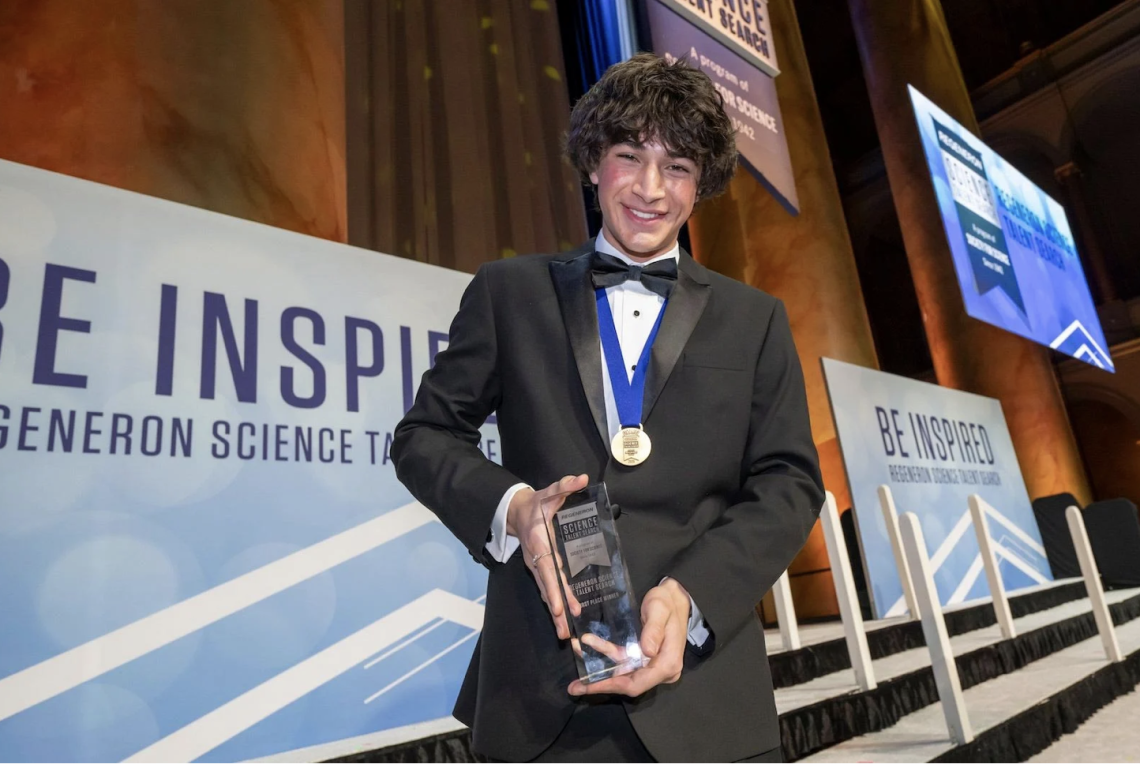
    Matteo Paz didn’t have access to a lab or telescope. What he had was curiosity, Python, and a public NASA dataset.

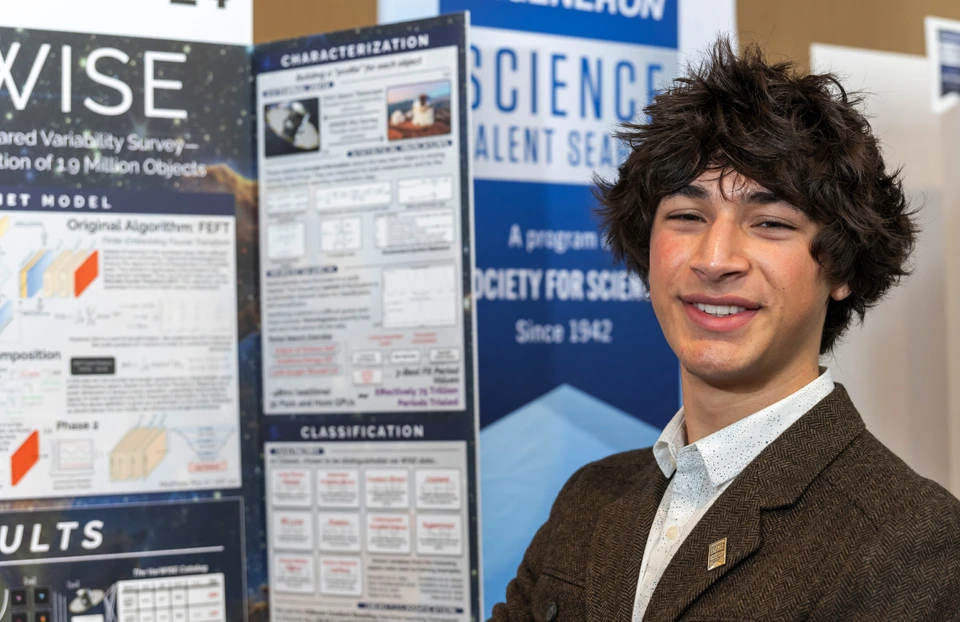
    While most researchers were focused on tracking asteroids, Matteo trained an AI model called VARNet to detect everything else: variable stars, black holes, cosmic flickers that had gone unnoticed.

    The result? His model flagged 1.9 million objects. Over 1.5 million were brand new to astronomy.

    Machine Learning in Astronomy: How Matteo Did It at Age 17
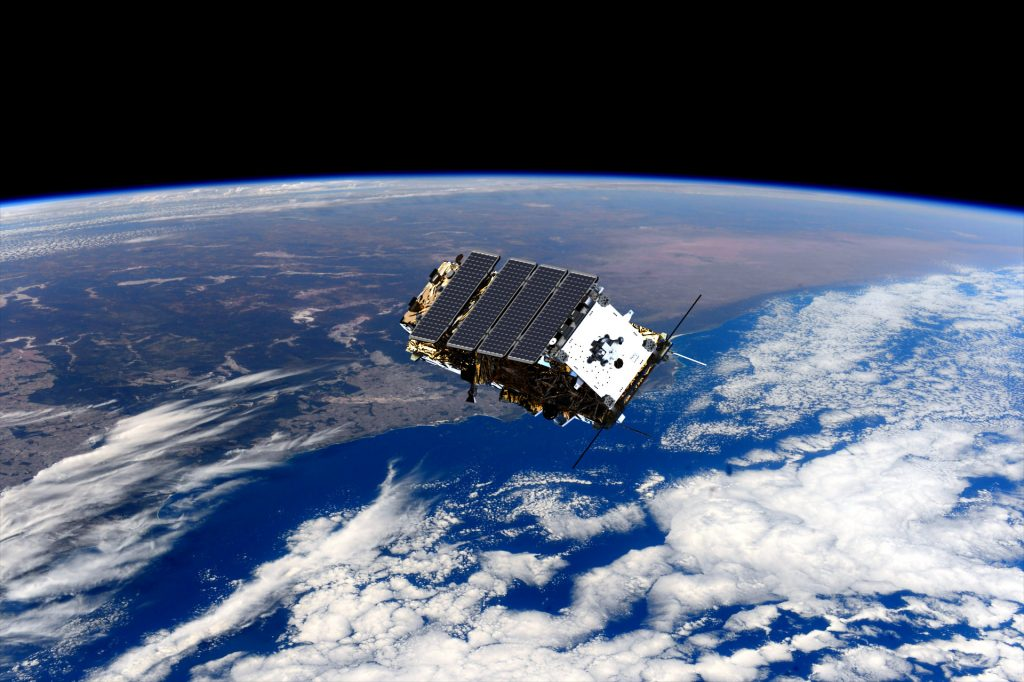
    He used data from NASA’s NEOWISE mission, which scanned the entire sky in infrared for more than a decade. That’s hundreds of billions of data points, enough to make most heads spin.

    But Matteo didn’t get overwhelmed. He built a machine learning model that analyzed brightness fluctuations in stars over time, identifying patterns using wavelet transforms and Fourier analysis.

    This wasn’t just a science fair project. His work was published in The Astronomical Journal. And he took home $250,000 at the Regeneron Science Talent Search https://www.societyforscience.org/regeneron-sts/2025-student-finalists/matteo-paz/, one of the most prestigious science competitions for high schoolers in the U.S.

    The Power of Mentorship in High School STEM Projects

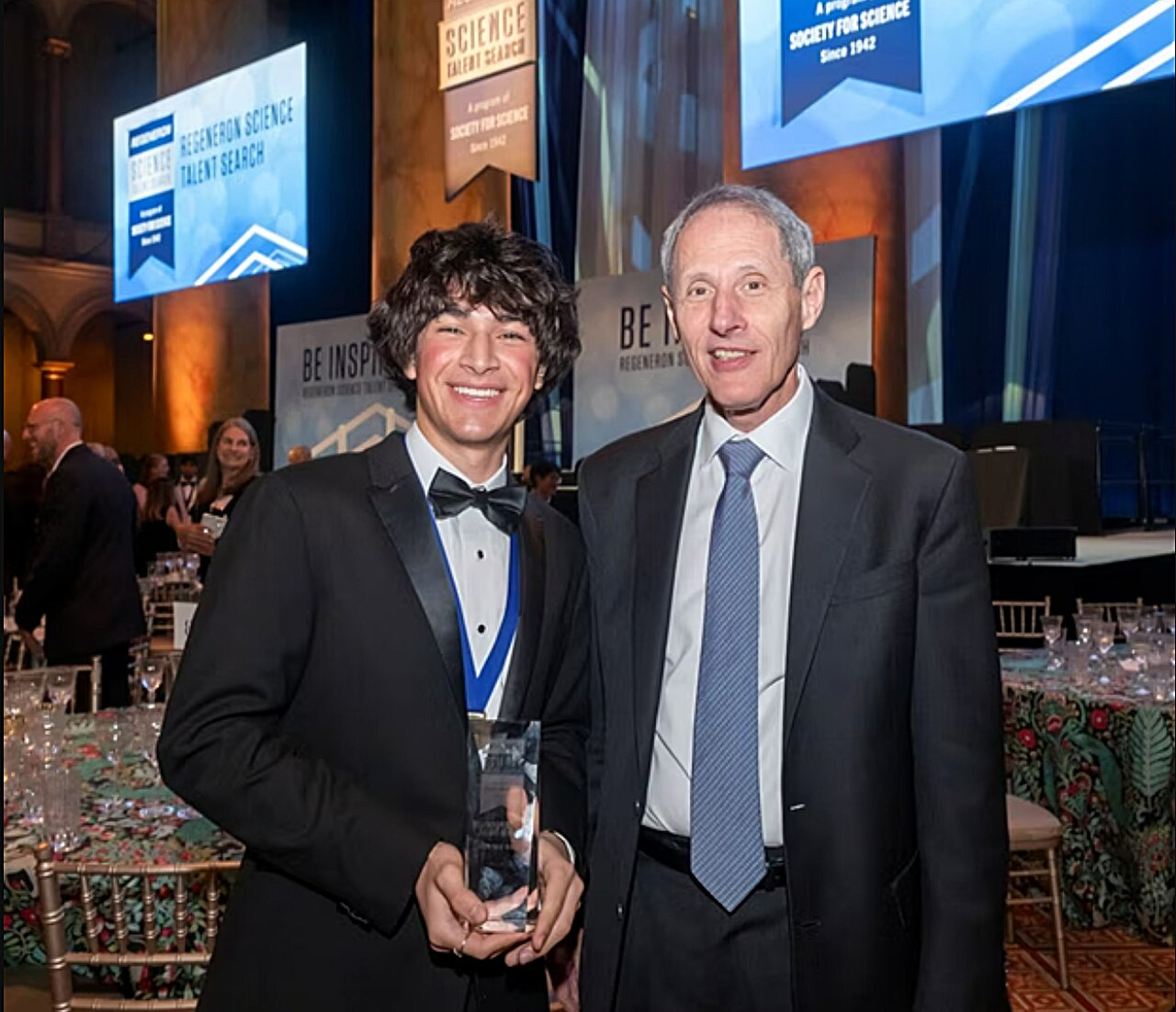
    Behind Matteo’s success was a key figure: Dr. J. Davy Kirkpatrick, senior scientist at Caltech. When Matteo told him he wanted to publish his research, Kirkpatrick didn’t say, “Maybe later.” He said, “Let’s talk about that.”

    That one line made all the difference. It’s proof that real mentorship isn’t just helpful, it’s essential.
    Why AI Projects for High School Students Matter More Than Ever

    If you’re a high schooler or the parent of one, here’s what Matteo’s story proves:

    • You don’t need a PhD to use real data. You need direction.

    • AI and machine learning are not college-level-only tools anymore.

    • High schoolers can publish. They can compete. They can get taken seriously.

    • The right mentor can turn a vague interest into a world-class result.

    From Curiosity to Code: Star Gazer, Built by a High School Student

    A few months ago, a student at BetterMind Labs took on a challenge that felt way out of reach: tracking how star brightness shifts over time. Inspired by space missions like NEOWISE, the student built Star Gazer, a tool that uses machine learning to classify variable stars based on their light curves.

    He didn’t start with a background in astrophysics. But he had questions and a mentor who helped him follow them to a working prototype. His project didn’t just end with a presentation. He’s now exploring real-world datasets and refining them further for publication.

    Projects like this are becoming more common, not because students are “geniuses,” but because the tools, guidance, and ambition finally line up.

    Check out BetterMind Labs AI + Space Exploration projects that High School Students can build.
    FAQs

    Who is Matteo Paz and why is his AI project significant?

    Matteo Paz is a high school researcher who developed VARNet, a machine learning model that analyzed NASA’s NEOWISE data to identify variable objects in space. His research led to the discovery of more than 1.5 million previously unknown astronomical objects and earned him the $250,000 top prize at the Regeneron Science Talent Search.

    Can high school students really build advanced AI projects?

    Yes. With access to public datasets, open-source tools, and strong mentorship, high school students can build sophisticated AI projects in fields such as healthcare, astronomy, finance, climate science, and cybersecurity. Many students are already conducting research and developing solutions with real-world impact.

    Do students need advanced math or coding experience to start AI?

    Not necessarily. Many students begin with little or no experience. Learning Python, data analysis, and basic machine learning concepts step by step allows students to gradually build the skills needed for more advanced AI applications.

    Why is mentorship important for AI and research projects?

    Mentorship helps students identify meaningful problems, avoid common mistakes, and develop stronger technical solutions. Experienced mentors also provide guidance on research methodology, data analysis, project presentation, and publication opportunities.

    Can AI projects help with college admissions?

    Absolutely. Meaningful AI projects showcase initiative, intellectual curiosity, problem-solving ability, and real-world impact. Projects often become powerful topics for college essays, research competitions, scholarship applications, and interviews because they demonstrate how students apply knowledge beyond the classroom.

    Final Takeaway: The Future of STEM Belongs to Students Who Start Early

    Matteo Paz’s story is remarkable, but the lesson isn’t that he was extraordinary. The lesson is that he started. He found a problem that interested him, learned the tools he needed, worked with mentors, and stayed committed long enough to create something meaningful.

    That same pattern appears again and again among successful students. The strongest college applicants, scholarship winners, and young researchers are not simply consuming knowledge. They are applying it. They build, test, iterate, and solve problems that matter.

    At BetterMind Labs, we see this transformation happen every year. Students begin with curiosity and leave with projects that tackle challenges in healthcare, finance, sustainability, cybersecurity, and even astronomy. Like Matteo, they learn to work with real datasets, develop machine learning models, and create solutions that extend far beyond a classroom assignment.

    The goal is not to replicate someone else’s success story. It is to create your own.

    Whether you’re analyzing telescope data, building an AI healthcare tool, or designing a sustainability solution, the opportunity to make an impact starts much earlier than most people realize. The tools are available. The data is available. The mentorship is available.

    The students who will shape the future of science and technology are not waiting until college to begin.

    They’re already building.

    And at BetterMind Labs, we’re helping them turn curiosity into research, projects into impact, and ideas into opportunities.

    Checkout BetterMind Labs AI ML Program designed for High School Students (8th to 12th Graders)


    Relevant Keywords:

    Regeneron STS 2025 Finalist – Matteo Paz
    https://www.societyforscience.org/regeneron-sts/2025-student-finalists/matteo-paz/

    NASA NEOWISE Mission Update – April 2025
    https://neowise.ipac.caltech.edu/news/neowise20250411/

    Pranav Sivakumar’s Research Project – Astronomical League PDF
    https://www.astroleague.org/files/awards/Pranav_Sivakumar_project.pdf

    Pranav Sivakumar – Wikipedia
    https://en.wikipedia.org/wiki/Pranav_Sivakumar

    Sloan Digital Sky Survey – Educational Resources
    https://classic.sdss.org/education/

    Fermilab High School Student Internship Programs
    https://internships.fnal.gov/high-school-student-programs/

    BetterMind Labs – AI Projects by High School Students
    https://www.bettermindlabs.org/
  • How AI is Changing the World — and What a High School Student AI Astronomy Project Means for Gen Z

    He didn’t have a telescope.

    He didn’t work in a professional lab.

    But at just 15, Pranav Sivakumar launched a high school student AI astronomy project that helped discover gravitationally lensed quasars—some of the rarest and most fascinating objects in the universe.

    His project earned recognition from NASA, Fermilab, and even the White House.

    What’s a Gravitationally Lensed Quasar?

    It sounds like sci-fi, but it’s real astrophysics.

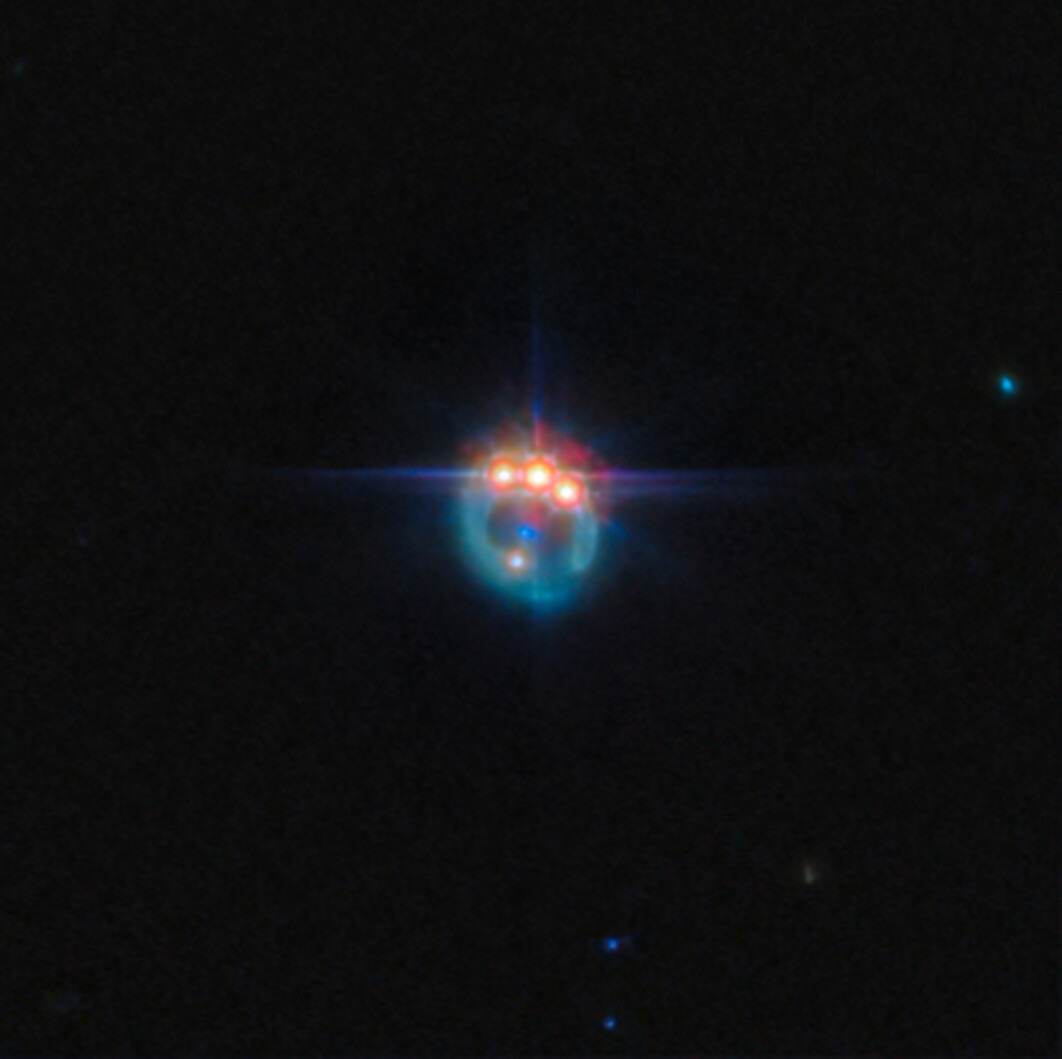
    Quasars are insanely bright, faraway galaxies with black holes at their centers. Sometimes, a massive galaxy lies directly between us and the quasar. That foreground galaxy bends the light from the quasar around it, sort of like a cosmic magnifying glass. That’s gravitational lensing.

    These systems are rare, and finding them helps scientists test theories about dark energy, dark matter, and the very shape of the universe.

    How This High School Student Used AI in Their Astronomy Project

    He used data from the Sloan Digital Sky Survey, a massive open-source catalog of the sky.

    Then, with Python and machine learning models he built himself, he filtered through thousands of galaxy images to flag 109 potential lensing systems. His work impressed researchers at Fermilab and NASA, landing him as a finalist (twice!) in the Google Science Fair and earning him the Virgin Galactic Pioneer Award.

    Eventually, he was invited to the White House Astronomy Night, where President Obama personally acknowledged his work.

    All of this. At fifteen.

    Why This Matters to Parents and Students Today

    Pranav’s story isn’t just inspiring. It’s a clear sign of where the world is heading.

    You don’t need to wait for college to do real science. You don’t need a lab.

    What you do need is the curiosity to ask questions and the support to build something real.

    We’ve seen this firsthand at BetterMind Labs, where high school students are working on their own ambitious projects, from AI-powered wildfire prediction tools to apps that detect signs of early skin cancer using computer vision.

    What Will You  Build?

    The tools are out there. The data is free. The only missing piece? A community that pushes you to go further than school ever will.

    At BetterMind Labs, we help students connect with mentors, use real-world tools, and work on projects that colleges (and the world) actually care about.

    Because at the end of the day, there’s no age limit on changing the world. Just ask Pranav.


    Relevant Links:

    A Glimpse of the Next Generation of AlphaFold – DeepMind
    https://deepmind.google/discover/blog/a-glimpse-of-the-next-generation-of-alphafold/

    Future of Jobs Report 2025 – World Economic Forum
    https://www.weforum.org/stories/2025/01/future-of-jobs-report-2025-jobs-of-the-future-and-the-skills-you-need-to-get-them/

    Khanmigo for Teachers – AI Teaching Assistant by Khan Academy
    https://www.khanmigo.ai/teachers

    Google Workspace with Gemini – AI Tools for Education
    https://edu.google.com/intl/ALL_au/workspace-for-education/add-ons/google-workspace-with-gemini/

    Runway – Creative Tools Powered by AI
    https://runwayml.com/

    Understanding AI Bias in Hiring – VidCruiter
    https://www.vidcruiter.com/interview/intelligence/ai-bias/

    The Promises and Perils of Predictive Policing – CIGI
    https://www.cigionline.org/articles/the-promises-and-perils-of-predictive-policing/

    Timnit Gebru – Wikipedia
    https://en.wikipedia.org/wiki/Timnit_Gebru

    AI Now Institute – Wikipedia
    https://en.wikipedia.org/wiki/AI_Now_Institute

    Teachable Machine – Train Machine Learning Models Easily
    https://teachablemachine.withgoogle.com/

  • AI Mental Health Tools Built by High School Students: How Teens Are Supporting Astronauts

    Let’s start with a simple question:

    What does mental health look like… in zero gravity?

    That’s the kind of challenge a group of high school students in Michigan took on, and what they built could actually end up helping NASA astronauts cope with isolation during long space missions.

    Here’s the story of VISTA-AI, and why it matters for every student thinking, “Can I really make a difference while I’m still in high school?”

    From a Michigan High School to a NASA Workshop

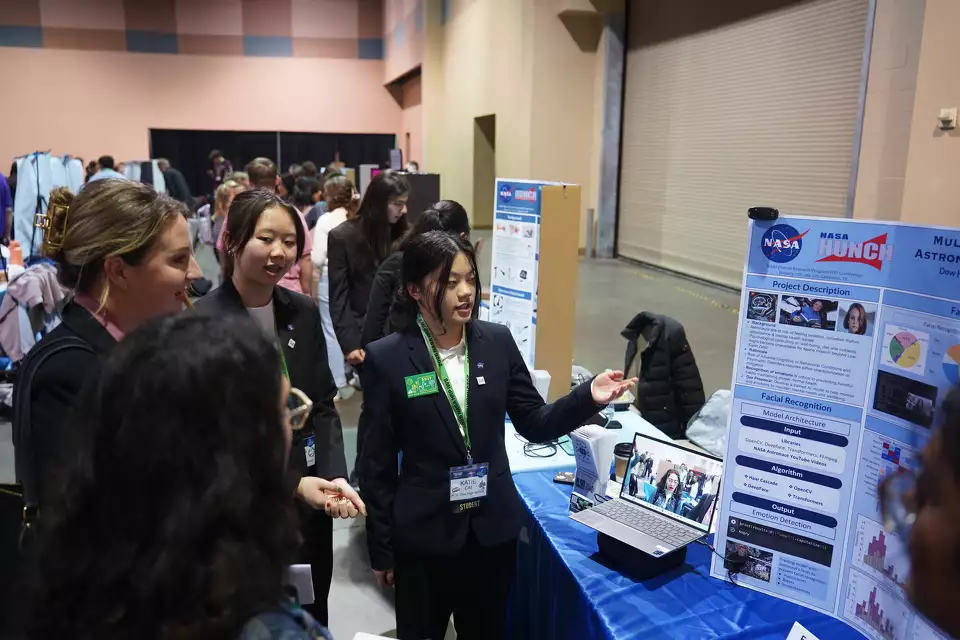
    VISTA-AI is one of the most promising AI mental health tools built by high school students. Created by a group from Michigan, it uses facial expression analysis and tone recognition to monitor astronaut well-being—Track mental states over time, something that’s crucial for astronauts on extended missions.

    Their idea was smart. But what happened next was next-level.

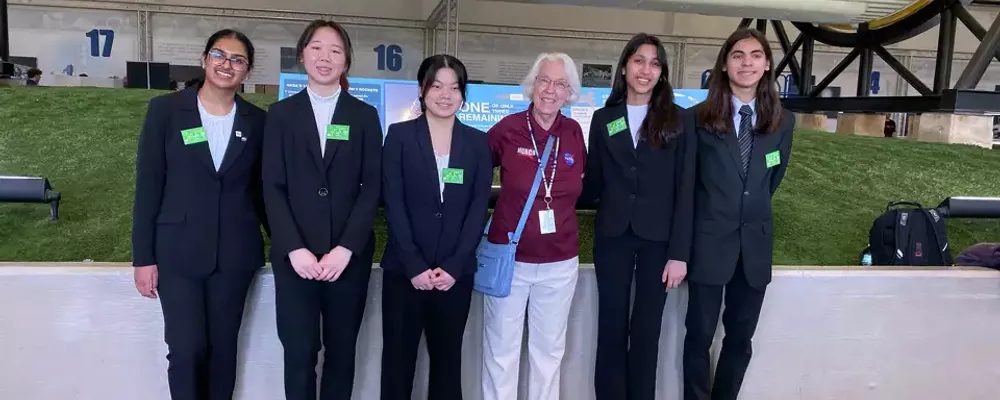
    They were invited to present their work at the NASA Human Research Program Investigators’ Workshop in Texas. There, they got direct feedback from scientists, engineers, and even astronaut Frank Rubio, who spent nearly a full year on the International Space Station.

    Yes, you read that right: high schoolers explaining their invention to someone who’s literally lived in space.

    And they didn’t stop there. The team later showcased their work at the NASA HUNCH Final Design Review in Houston, continuing to refine the tool based on real-world input.

    Why AI Mental Health Tools Built by High School Students Matter in Space

    Imagine spending 6 months or more in a small spacecraft, millions of miles from Earth, with no escape from your environment. No nature. No fresh air. Limited human interaction.

    Mental health in space isn’t just a side topic; it’s mission-critical.

    That’s what makes VISTA-AI such a smart approach. It gives astronauts and mission teams a way to spot emotional red flags early, using passive data like facial tension or voice stress.

    This isn’t just theoretical. If VISTA-AI keeps evolving, it could help astronauts on future moon bases, Mars missions, and even commercial space flights.

    So What Does This Mean for You?

    Here’s the thing: you don’t have to wait until college or even graduation to start working on problems that matter.

    Students across North America are doing real, impactful work right now. Whether it’s AI in space, mental health, sustainability, or education, there’s room for young thinkers at the table.

    Take Zahra Azeem, for example. She’s an alumni at BetterMind Labs, a program where teens explore personalized projects that blend AI, empathy, and innovation. Zahra built Serenity AI, a wellness chatbot that helps people reflect, journal, and receive personalized mental health suggestions. It even uses AI-driven prescription generation, all built on Streamlit, a Python-based app platform.

    Her project didn’t just impress mentors. It reminded everyone that when students care deeply about a problem and have the right guidance, they can actually move the needle.

    How to Get Started

    If you’re a student:

    You don’t need to wait for a big lab or fancy grant. Start small. Get curious. Find a question that bugs you, and build something that tries to answer it.

    If you’re a parent:

    Support your child’s curiosity. Give them space to tinker, explore, and fail. Programs like BetterMind Labs exist to help kids turn passion into direction.

    Because the future isn’t just about getting into college. It’s about shaping the world you want to live in, whether that’s here on Earth, or 250 miles above it.


    Relevant Links:

  • How High School Students Are Using AI to Make Space Research NASA-Worthy Discoveries

    How High Schoolers Are Using AI in Space Research

    “I used to think space was out of reach, but now I’m training AI models to discover things I never imagined,” 

    said one of our students with a grin. Like them, millions of students today are realizing they can use artificial intelligence to make a real impact in the space industry — from analyzing telescope data to identifying patterns no human eye could detect.

    A prime example is Matteo (Matthew) Paz. Using AI-powered data analysis during his research at Caltech, he uncovered 1.5 million previously unknown objects in space. This breakthrough not only expanded the potential of a NASA mission but also earned him a single-author, peer-reviewed scientific paper, a rare achievement for someone his age.

    Astronomer and IPAC senior scientist Davy Kirkpatrick, who has spent the last five summers mentoring high school students alongside undergraduates, citizen scientists, and graduate fellows, guided Paz through this journey.

    “Meeting Davy was a game-changer,” 

    Paz said. “He gave me the freedom to experiment with AI tools and follow my curiosity without limits. That’s how I grew as both a coder and a scientist.”

    When students are supported by mentors who encourage exploration, whether in coding, AI, or astronomy, they stop setting limits for themselves. The line between what’s possible and what’s not begins to blur, and groundbreaking research like this becomes reality.

    Projects Born From Passion

    Inspired by stories like this, we’ve been mentoring our own students the same way—with openness and encouragement. Some of our favorite space + AI projects include:

    • Asteroid Classification Tool using NASA datasets and clustering algorithms

    • Satellite Health Prediction using LSTM models

    • A Space Image Enhancer that sharpens low-resolution telescope imagery using GANs

    How AI is Revolutionizing Space Research

    AI has become the rocket fuel behind major space research. Leading agencies like NASA and ESA are using it extensively:

    1. NASA’s Frontier Development Lab

    They use AI for:

    • Lunar terrain analysis

    • Planetary defense simulations

    • Deep learning-based asteroid tracking

    They’ve partnered with tech giants like Intel and Google to explore ways AI can predict hazardous asteroid impacts, optimize rover paths, and even simulate space environments.

    2. European Space Agency (ESA)

    ESA uses AI to:

    • Analyze satellite imagery for climate monitoring

    • Detect exoplanets through light curve classification

    • Enhance telescope data resolution with AI-based super-resolution models

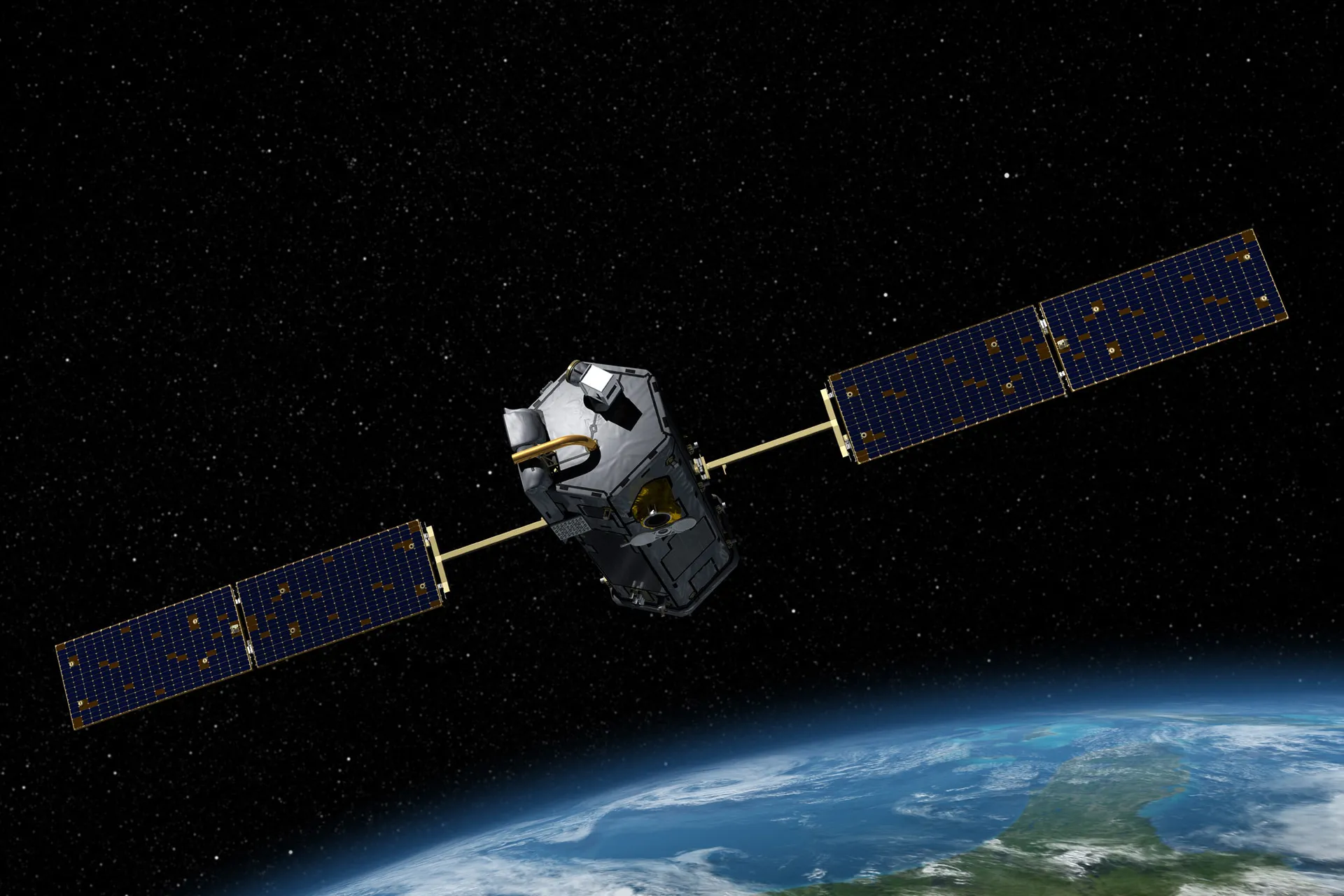
    The technical stack includes CNNs, autoencoders, and edge AI models running on low-power satellites.

    Can High Schoolers Join This Mission?

    Absolutely. Just like Paz, anyone with drive and curiosity can start small and grow into a space innovator.

    Here’s a Roadmap to Get Started:

    1. Learn AI Basics – Start with Python, scikit-learn, and basic data science concepts.

    2. Understand Astronomy Fundamentals – Explore Khan Academy, NASA’s Open Learning platforms.

    3. Try Open Datasets – Use datasets from NASA, Kaggle, and ESA.

    4. Build Mini Projects – Start with notebooks before moving to full apps.

    5. Join a Mentor Program – This is where transformation happens.

    Project Ideas for High School Students:

    1. Galaxy Image Classifier – Use CNNs to sort galaxy shapes.

    2. Satellite Trajectory Predictor – Predict ISS location using time series.

    3. Solar Flare Alert System – Classify solar flare images from SOHO.

    4. Star Brightness Estimator – Use regression to analyze variable stars.

    5. Asteroid Risk Index Calculator – Rank known asteroids by size, speed, and orbit proximity.

    Why Mentorship Changes Everything

    Building these projects alone can be challenging. At BetterMind Labs, you’ll join a small group of up to three students, each guided by an experienced mentor. This way, you get personalized support while working alongside peers. Whether you’re decoding starlight or tracking asteroids, we’ll guide you every step of the way.

    In Conclusion: The Sky Isn’t the Limit

    High school students today don’t need to wait. With the right support, tools, and mindset, they can create space solutions that once seemed like science fiction. We’ve seen students make NASA-worthy projects with just a few weeks of mentorship.

    If you’re dreaming big, the time to start is now.

    Join our July AI/ML Internship at BetterMind Labs and bring your own space project to life.

    Your journey to the stars starts now.


    Relevant Links

    AI Use Cases at NASA – 2024 Report

    https://www.nasa.gov/organizations/ocio/dt/ai/2024-ai-use-cases/

    The Power of AI in Space Exploration – ESA Blog

    https://blogs.esa.int/exploration/the-power-of-ai-in-space-exploration/

    Exploring Space with AI – Caltech

    https://www.caltech.edu/about/news/exploring-space-with-ai

    Machine Learning Research in Astronomy – Harvard-Smithsonian Center for Astrophysics

    https://pweb.cfa.harvard.edu/research/topic/machine-learning

    NASA Open Data Portal

    https://data.nasa.gov/

    High School Space Exploration Projects – Science Buddies

    https://www.sciencebuddies.org/science-fair-projects/science-projects/space-exploration/high-school