Artificial Intelligence isn’t just shaping industries like finance, healthcare, and entertainment—it’s also giving high school students new ways to showcase their creativity and technical skills. One of the most popular starting points is sentiment analysis: training a computer to understand whether a piece of text expresses something positive, negative, or neutral.
At BetterMind Labs, one of our high school students recently built a sentiment analysis project analyzed movie reviews. The project didn’t just stop at classifying reviews—it provided visual dashboards showing how audiences reacted differently to genres, directors, or even specific years. That type of project demonstrates exactly what top colleges and scholarship committees love to see: curiosity, technical ability, and social relevance.
What Is Sentiment Analysis?
In simple terms, sentiment analysis is a way for computers to “read between the lines.” It uses natural language processing (NLP) and machine learning algorithms to figure out the emotional tone behind words.
Positive sentiment: “The movie was fantastic!”
Negative sentiment: “The app kept crashing—it’s terrible.”
Neutral sentiment: “The meeting is scheduled for 3 PM.”
Companies use sentiment analysis to monitor customer feedback, track brand reputation, and even gauge public mood during elections. For students, building one is a chance to apply AI to a real-world problem they can relate to.
How Our Student at BetterMind Labs Built Sentiment Analysis Project
Here’s a step-by-step look at how our student developed their project with mentor guidance:
Data Collection – Downloaded a dataset of movie reviews from Kaggle.
Data Cleaning – Removed punctuation, stop words (“the,” “is”), and irrelevant text.
Feature Engineering – Converted words into numerical form using methods like TF-IDF and word embeddings.
Model Training – Used algorithms like Logistic Regression and later experimented with deep learning models such as LSTMs.
Evaluation – Measured accuracy, precision, and recall to check performance.
Visualization – Created graphs to show how sentiment varied by genre, year, and director.
The project didn’t just stay theoretical—it became a portfolio-ready piece that impressed teachers and set the stage for scholarship essays.
Why Mentorship Matters
Here’s the honest truth: students can technically try to build a sentiment analysis model on their own. But most get stuck when:
They don’t know how to preprocess messy text data.
They can’t decide which model (Naïve Bayes, Logistic Regression, or Neural Networks) fits best.
They struggle to present results in a way that looks professional.
At BetterMind Labs, mentors bridge that gap. Our mentors are graduate researchers and industry professionals who’ve built similar tools in real companies. Instead of spinning wheels for weeks, students get:
Step-by-step guidance on debugging and improving models.
Best practices for coding, visualization, and writing about their projects.
Feedback loops that make the difference between a basic project and one that’s competition- or publication-ready.
How You Can Build Your Own
If you’re a student (or a parent of one) and curious about starting:
Pick a Dataset – Movie reviews, tweets, Amazon product reviews, or even YouTube comments.
Learn the Basics – Python, Pandas, and scikit-learn are enough to start.
Train a Simple Model – Try Naïve Bayes first—it’s lightweight and surprisingly effective for text classification.
Iterate – Add deep learning later (e.g., LSTMs or Transformers like BERT) to push the project further.
Document Everything – Screenshots, graphs, and explanations turn code into a portfolio.
Why You Should Consider BetterMind Labs
Plenty of tutorials exist online, but building a standout project is about more than just copying code. It’s about:
Mentorship: Having someone experienced to guide you when you’re stuck.
Impact: Turning a simple project into something meaningful for college or scholarships.
Community: Working alongside other motivated students and learning from their journeys.
That’s what makes BetterMind Labs different. Students don’t just build “projects”—they build stories they can confidently share in applications, interviews, and competitions.
If your child is curious about AI, a project like sentiment analysis is the perfect entry point. And with the right mentorship, it can go from “just a coding exercise” to “a defining achievement” in their academic journey.
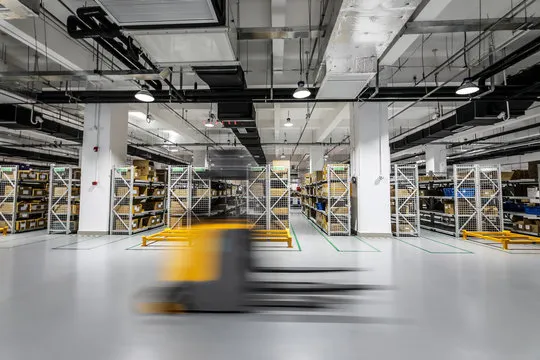
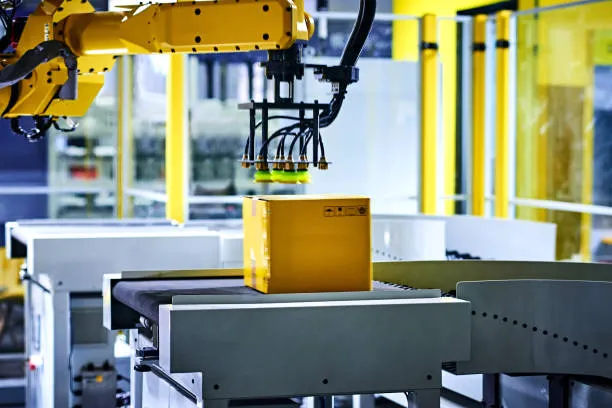
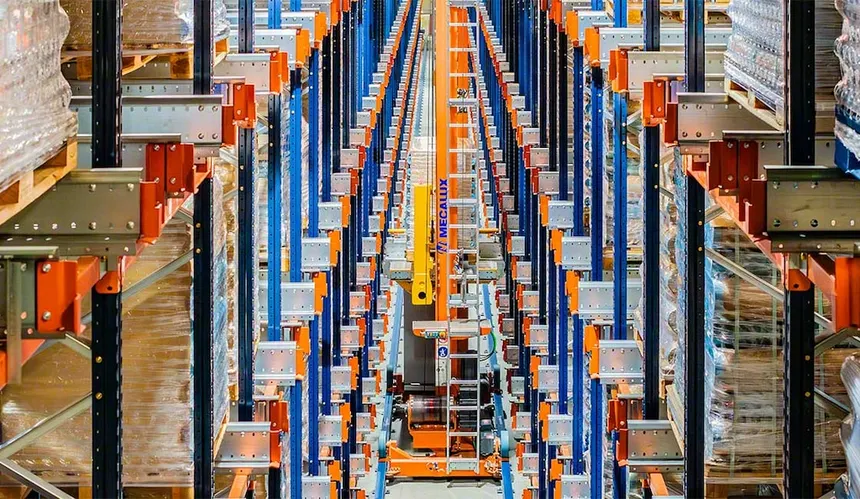
Imagine a massive warehouse bustling with activity. Packages zoom past on conveyor belts, robotic arms pick up items with precision, and drones scan shelves to ensure nothing goes missing. Sounds like something from a sci-fi movie, right? Well, it’s not. This is the reality of modern warehouses, where AI-powered robots are reshaping the logistics world — and the impact is closer to home than you might think.
In this blog, we’ll explore how warehouse automation is changing the way products reach your doorstep, the technology driving this revolution, and what the future holds for AI in logistics. Along the way, I’ll share insights from my experience mentoring students in STEM projects, showing how understanding these trends can inspire your own tech-driven ideas.
The Warehouse of Yesterday vs. Today
A few decades ago, warehouses were noisy, human-heavy spaces. Workers manually scanned items, loaded trucks, and sorted packages. Mistakes were common, and efficiency was limited by human speed.
Fast forward to today: AI-driven robots handle inventory management, picking, sorting, and quality control. These machines work 24/7, rarely make mistakes, and can adapt to changing demands faster than any human could.
Think about it like this: if your local Amazon delivery arrives almost magically the next day, chances are a robot had a hand in making that happen. Companies like Amazon Robotics have deployed over 750,000 robots globally, streamlining logistics like never before.
Core AI Technologies Powering Warehouse Automation
AI in warehouses isn’t just about cool robots moving boxes. Several key technologies work together to make automation smart, flexible, and reliable.
1. Advanced Robotic Systems
Robotic systems today aren’t one-size-fits-all. They include:
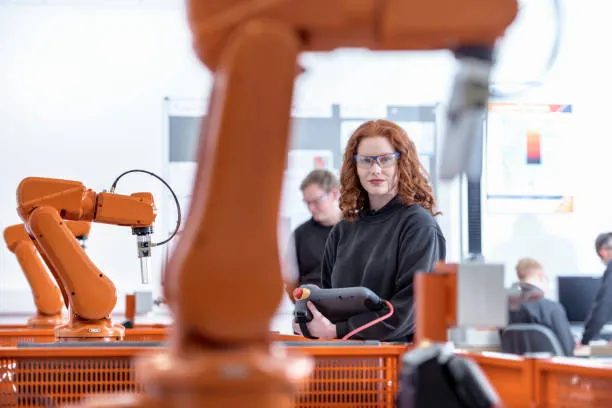
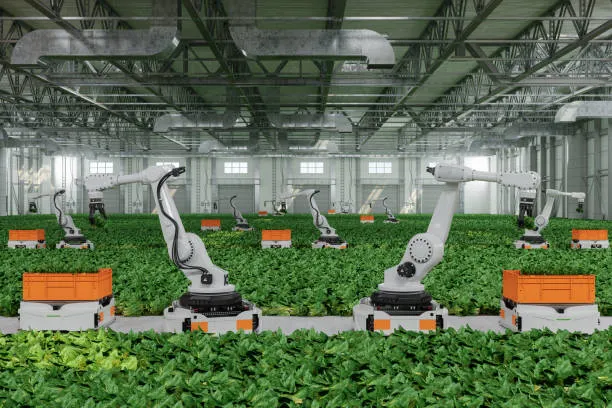
Robotic arms for picking individual items of varying shapes, weights, and textures (Sparrow robotic arms).
Autonomous mobile robots (AMRs) like Proteus that navigate around human workers safely.
Collaborative robots (cobots) that work alongside humans for tasks like palletizing and quality control (CGL India on cobots).
These robots are modular, meaning they can adapt to different warehouse layouts, product types, and order volumes without major infrastructure changes.
2. Intelligent Sorting and Processing
Sorting is no longer a manual guessing game. Modern systems use:
Linear sortation with pop-up wheels and pusher arms for medium-speed sorting (Modula US).
Loop sortation with tilt-tray and cross-belt sorters for high-throughput operations (Bastian Solutions).
These systems integrate computer vision and AI to detect damaged goods, misplaced items, or anomalies, ensuring the right product reaches the right place on time.
3. AI-Driven Inventory Management
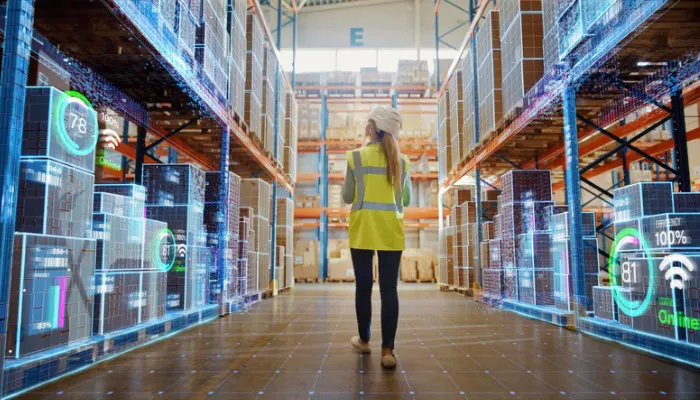
One of the coolest aspects of warehouse AI is real-time inventory visibility. Modern systems:
Predict future demand using historical sales data and market trends (Exotec insights).
Reduce overstocking and understocking by up to 25–50% (BrainCorp resource).
Here’s a quick table to visualize the impact:
Feature
Human Process
AI-Powered Process
Impact
Picking accuracy
85%
99%
Fewer mistakes
Inventory visibility
Weekly updates
Real-time
Less over/understock
Sorting speed
Medium
High
Faster fulfillment
Quality control
Manual inspection
Continuous AI monitoring
Fewer damaged products
Operational Benefits: More Than Just Robots
You might think automation is just about replacing humans. The reality is more nuanced — it’s about enhancing efficiency, safety, and productivity.
Efficiency and Productivity Gains
Robotic systems can increase picking productivity by 25–50% (StandardBots blog) and reduce picking times by up to 50% in fulfillment centers. They also work round-the-clock, unlike human staff who need breaks, sleep, and vacation.
Cost Reduction Strategies
While robots are a big investment upfront, companies typically see ROI within 18–24 months (Element Logic ROI whitepaper). Savings come from:
From mentoring students in STEM robotics projects, I’ve seen how collaborative AI-human systems encourage creativity. When humans focus on strategy and problem-solving, robots handle repetitive tasks efficiently.
Leading Industry Players Shaping the Future
Several companies are at the forefront of warehouse automation:
Amazon Robotics: Pioneer in fleet coordination and robotic picking (Exotec insights)
Boston Dynamics: Advanced mobility solutions like Stretch for box handling
Geek+: AI-powered fleets for e-commerce
Universal Robots: Over 50% of global cobot market share
These companies are constantly pushing boundaries, combining AI, machine learning, and robotics to make warehouses smarter, faster, and more sustainable.
Future Trends in Warehouse Automation
The next decade promises even more exciting changes:
AI and Machine Learning Integration
Robots will continuously learn from operational data, improving workflow efficiency and predicting maintenance needs (Exotec insights).
Sustainability Focus
Automation solutions will prioritize energy-efficient robotics, solar-powered systems, and eco-friendly warehouse designs, reducing the environmental footprint.
Enhanced Human-Robot Collaboration
Cobots and humans will work more seamlessly, leveraging human creativity and robotic precision to handle complex tasks.
Implementation Considerations for Companies
Before implementing warehouse automation, organizations should evaluate:
Integration potential: existing warehouse management systems
Scalability: ability to grow with business needs
A typical ROI calculation includes capital expenditure, operational savings, and payback period — usually within 18–24 months (GEP on warehouse automation ROI).
Why It Matters to Students
You might be thinking, “Cool, but why should I care as a student?” Here’s the thing:
Career Opportunities: Logistics, AI, robotics, and supply chain management are rapidly growing fields. Early exposure can inspire your future career.
Innovation Ideas: Understanding warehouse automation can spark ideas for your own STEM projects — from designing smart robots to optimizing processes.
Real-World Impact: Automation affects how products get delivered, prices remain low, and quality stays high — all things you interact with daily.
When mentoring students, I often see them amazed by how AI doesn’t just live in apps and games — it physically shapes the world around us. That realization is powerful and motivating.
Student Spotlight: Saanvi Rao Builds a Mini AI-Powered Warehouse Inventory System
One of our alumni, Saanvi Rao, a high school junior, took inspiration from real-world warehouse automation and decided to build her own mini AI-powered inventory management system for her STEM project.
Saanvi started by observing how companies like Amazon Robotics track thousands of items across giant warehouses. She wondered: “Can I create a small-scale version for a classroom or home setup?”
Using Raspberry Pi, a few sensors, and basic AI coding, Saanvi built a system that could:
Track item locations in real time using QR codes and RFID tags.
Detect missing items and send notifications when a product wasn’t where it should be.
Predict restocking needs based on historical usage patterns.
For the demo, she set up a mini warehouse with toy boxes representing products. When one box was removed, the system immediately updated the inventory list and triggered a “restock needed” alert on her laptop.
The project wasn’t just about coding. Saanvi had to think like a warehouse manager. She optimized storage, designed the flow for item movement, and even tested how the system would handle errors or misplaced items.
The result? A fully functional, AI-assisted inventory prototype that impressed judges at her school’s science fair. More importantly, Saanvi gained hands-on experience with robotics, AI, and logistics, showing that even high school students can understand and innovate in complex industrial systems.
This project demonstrates how real-world concepts like warehouse automation aren’t just abstract ideas. they’re playgrounds for creativity, problem-solving, and hands-on learning.
Conclusion: A Warehouse Revolution You Can Touch
Warehouse automation powered by AI-driven robots isn’t just about machines replacing humans. It’s about collaboration, efficiency, and innovation. From faster deliveries to smarter inventory management, these systems are redefining modern logistics.
For students interested in STEM, AI, or robotics, now is the perfect time to dive in. Explore robotics kits, AI coding projects, or even internships in logistics tech — the skills you build today could shape the warehouses of tomorrow.
If you’re curious, check out some of the leading companies we mentioned, like Amazon Robotics or Geek+, and see what AI-powered logistics looks like firsthand.
The warehouse revolution isn’t coming — it’s already here, and understanding it could be your first step into an exciting tech-driven future.
In today’s digital world, Artificial Intelligence (AI) is shaping industries like healthcare, robotics, and entertainment. By 2027, AI will be everywhere, and understanding it will be essential for future success. This is where BetterMindLabs comes in. Their AI/ML programs for kids offer an interactive, hands-on learning experience that equips children with the knowledge and skills needed to thrive in an AI-powered world.
Why AI Classes for Kids is Important
As AI becomes more integrated into our daily lives, children must learn about it at an early age. AI education not only introduces kids to coding, machine learning, and data science but also encourages critical thinking, problem-solving, and creativity. These skills are invaluable for the jobs of tomorrow, especially in tech-driven fields like AI, robotics, and software engineering.
How BetterMindLabs Stands Out
1. Fun, Interactive Sessions
BetterMindLabs offers engaging, easy-to-understand programs that make learning AI and machine learning exciting for kids. Through hands-on projects like building chatbots or creating AI-powered games, children apply what they learn in real-world scenarios.
2. Age-Appropriate Curriculum
BetterMind Labs’ AI programs are tailored to various age groups, from beginners to advanced learners. Whether your child is just starting or has some coding experience, BetterMindLabs offers programs that match their skill level.
3. Expert Guidance
The platform provides access to AI experts who guide kids through each lesson, offering personalized feedback and mentorship. This helps students grasp complex concepts like deep learning and neural networks in a fun, digestible way.
4. Future-Ready Skills
BetterMindLabs prepares kids for a future driven by AI. Through machine learning projects and coding, children gain skills that are highly valued in emerging fields such as data science, AI programming, and robotics.
Why Choose BetterMindLabs?
BetterMindLabs offers a comprehensive, child-friendly AI curriculum that not only teaches technical skills but also promotes creativity and innovation. Their programs equip kids with the tools to succeed in a world where AI is becoming a fundamental part of everyday life. With thousands of successful college applications and overwhelmingly positive responses from students and parents alike, BetterMindLabs is making a significant impact on the college application process. By fostering critical thinking, problem-solving abilities, and technical proficiency, their programs enhance students’ academic profiles, giving them a competitive edge in college admissions and paving the way for future success.
As AI classes for kids become more important in 2027artificial intelligence, BetterMindLabs is the ideal place to introduce your child to the fascinating world of artificial intelligence. By learning AI and machine learning at a young age, your child will be well-prepared for the future.
Explore BetterMind Labs’ AI/ML Program today and give your child the competitive edge they need to succeed in tomorrow’s tech-driven world.