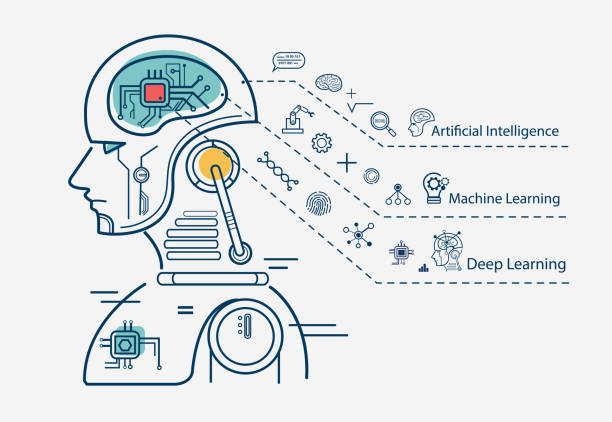
Wondering if machine learning by high school students is possible? The answer is yes, and it’s already happening. Across the country, teenagers are building AI tools that once seemed far beyond their reach.
From budget trackers to medical apps, machine learning by high school students is solving real-world problems before they even get to college.
Table of Contents
-
Section 1: Why Machine Learning Isn’t Just for PhDs Anymore
-
Section 2: Why Machine Learning by High School Students Is on the Rise
-
Section 3: Real Examples: Teens Using AI to Solve Problems
-
Section 4: Why Learning Machine Learning in High School Makes Sense
-
Section 5: Is Machine Learning too Complex?
-
Section 6: How to Get Started with Machine Learning
-
Section 7: FAQs
-
Section 8: Conclusion
Why Machine Learning Isn’t Just for PhDs Anymore
Let’s get this out of the way. Machine learning sounds intimidating. Most people picture college lectures packed with abstract math or tech companies filled with people who’ve spent a decade getting advanced degrees.
But here’s what’s actually happening: teenagers are already building AI projects. And not just toy demos or school assignments. We’re talking about real-world tools, finance bots, plant disease detectors, and custom recommendation engines created by high schoolers.
Why Machine Learning by High School Students Is on the Rise
Rewind to 2010, and high school computer science mostly meant HTML and maybe a little Java. Things have shifted. Today’s students have access to open-source tools, free cloud computing, and hands-on platforms like Kaggle, Google Colab, and Hugging Face.
According to a 2023 Code.org survey, nearly 80% of teens say they’re interested in AI. But only about 16% have actually used any AI tools or done projects with them. That’s a big gap, and it’s being filled by self-driven learners and programs designed specifically for high school students.
Real Examples: Teens Using AI to Solve Problems
Take Maher, a senior in high school who built a budgeting assistant at BetterMind Labs for his family. He used machine learning to predict spending and flag when it went over a set limit.
He didn’t have any background in data science. What he had was curiosity and a bit of structure, and a mentor who guided him from idea to functioning prototype. Along the way, he learned the basics of Python, how to work with datasets, and how to present their project like a real-world builder.
Why Learning Machine Learning in High School Makes Sense
For one, it gives students a huge edge in college applications. Top schools now look beyond test scores and grades. They want to see initiative, real-world thinking, and the ability to solve meaningful problems.
But it’s not just about admissions. When a teenager spends time building an AI tool, even a small one, they pick up skills in logic, experimentation, and data interpretation. Those are skills that pay off whether they go into medicine, finance, design, or literally anything else.
It also gives them something real to talk about in interviews, scholarship applications, or even internships.
Is Machine Learning too Complex?
Not really. Most beginner-friendly ML projects are surprisingly accessible. Students typically start with Python and use pre-built libraries like scikit-learn or pandas. They often work with existing datasets and don’t need to code algorithms from scratch.
What matters more is how they think. Can they break down a problem into steps? Can they use data to ask better questions? That’s the core of any good AI project.
How to Get Started with Machine Learning
If your kid’s curious about AI, here’s a basic path that works:
Start with Python; platforms like Codecademy or W3Schools make this easy
-
Play with simple machine learning tools like Google’s Teachable Machine
-
Explore beginner projects on Kaggle
-
Build something small: maybe a grade predictor, a song recommender, or a tool to sort emails
-
Find a structured community like BetterMind Labs, where they can get feedback and support
They don’t need to become the next AI prodigy overnight. The point is to experiment, fail a little, and slowly build something that feels real.
FAQS :
Do high school students need advanced college math to start learning Machine Learning?
No, you don’t need a PhD in math to get started. While the backend of ML relies heavily on linear algebra, calculus, and probability, high school students can easily start with foundational algebra. Many modern tools and libraries abstract the complex math, allowing students to focus on the logic and coding first, building up their math skills as they go.
What are some beginner-friendly ML projects a teenager can build?
Start small with projects that match personal interests. Great beginner projects include building a spam email detector, a movie recommendation system, an image classifier that tells cats from dogs, or a predictor for sports statistics. These can all be built using basic datasets available online.
How does learning Machine Learning benefit a student’s future college applications?
It provides a massive competitive edge. Admissions officers look for initiative, problem-solving, and practical application of skills. Building an ML project, competing in a Kaggle hackathon, or coding a unique algorithm demonstrates a level of drive and technical curiosity that sets a student apart from the crowd.
Are there free tools available for students to build ML models without a powerful computer?
Yes, you don’t need an expensive gaming PC. Tools like Google Colab and Kaggle Notebooks allow anyone to write and execute Python code in their web browser. They provide free access to powerful hardware (like GPUs) directly through the cloud, making ML accessible to anyone with a standard laptop and an internet connection.
Conclusion :
Machine learning isn’t locked behind a university gate anymore. With the right mindset and some early guidance, high school students can dive into it, and many are already doing it.
These projects don’t just teach code. They teach clarity, creativity, and initiative. And in today’s world, that’s what sets people apart.
If you’re curious about what this actually looks like in practice, take a look at how students are doing it at BetterMind Labs. It might just be the nudge your teen needs.
Relevant Links
-
Code.org Annual Report – Advancing Computer Science Education
https://code.org/about/annual-report -
BetterMind Labs – Student-Led AI Projects
https://www.bettermindlabs.org/projects -
Machine Learning with Python – DataCamp Tutorial
https://www.datacamp.com/tutorial/machine-learning-python -
Pandas Tutorial – Data Analysis with Python – DataCamp
https://www.datacamp.com/tutorial/pandas -
Learn Python – Codecademy Interactive Course
https://www.codecademy.com/learn/learn-python -
Python Tutorial – W3Schools (Armenian Edition)
https://www.w3schools.am/python/default.html -
Teachable Machine – Train Your Own Machine Learning Models
https://teachablemachine.withgoogle.com/ -
Kaggle Learn – Free Courses for Data Science and Machine Learning
https://www.kaggle.com/learn