Tag: Passion Projects

  • The AI Project by High School Students That’s Revolutionizing Cancer Detection

    Stanford’s AI System That Diagnoses Skin Cancer

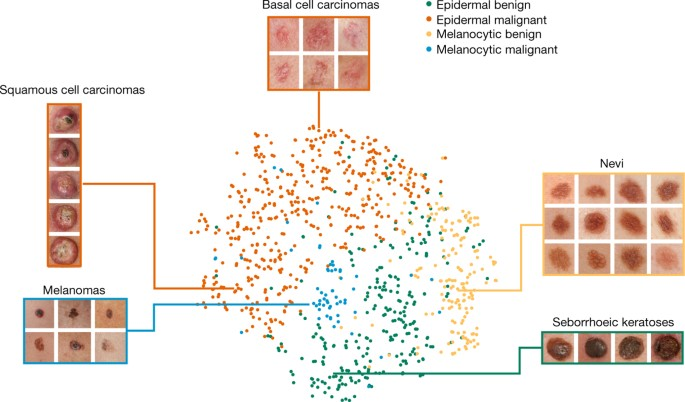
    In 2017, researchers at Stanford University published something that turned heads in both tech and healthcare: a convolutional neural network that could classify skin cancer with the same accuracy as board-certified dermatologists.

    They trained their AI model using over 129,000 images of skin lesions, covering more than 2,000 skin diseases. What made it groundbreaking wasn’t just the scale, but the performance. The system could accurately distinguish between benign and malignant conditions, including deadly melanoma.

    This wasn’t some lab experiment with carefully cleaned-up data. The model was tested against 21 dermatologists and performed on par with the experts. The results were published in Nature, one of the most respected scientific journals.
    Why It Matters

    Skin cancer is one of the most common cancers in the world. Melanoma, while less common than basal or squamous cell carcinomas, is far more dangerous. Early detection dramatically increases survival rates, but many people don’t have access to dermatologists or don’t recognize symptoms in time.

    That’s where AI can play a critical role. A mobile app with this kind of model behind it could help people check suspicious moles or spots in minutes. It wouldn’t replace doctors, but it could flag potential problems earlier and bring peace of mind to users who might otherwise ignore a warning sign.

    The real power here is accessibility. A smartphone with a decent camera and a trained model could serve as a first line of defense, especially in areas where dermatological care is hard to reach.

    What the Research Actually Did
    The Stanford team used a single deep convolutional neural network architecture based on GoogleNet Inception v3. They pretrained it on ImageNet, a dataset with millions of everyday images, before fine-tuning it on their skin lesion dataset.

    No special filters or image preprocessing tricks were used. That’s what made it so impressive: it worked with regular photographs, similar to what a patient might take at home.

    The model was able to differentiate between three major categories:

    • Benign lesions

    • Malignant melanomas

    • Carcinomas like basal or squamous cell cancers

    The implications were clear. AI didn’t just belong in labs or self-driving cars. It had a place in frontline healthcare, too.

    Real-World Impact of AI Projects by High School Students
    At BetterMind Labs, two high schoolers, Richard Han and Videep Cheemangunta, took inspiration from this research and built their own melanoma detection project. Their model analyzes images of skin lesions and flags potential cancer risks.

    This AI project by high school students is more than just a technical exercise — it’s a real-world initiative proving that teens can use artificial intelligence for impactful, socially responsible solutions.

    They said the hands-on experience helped them understand how AI can make a difference in real lives. It wasn’t just academic, it felt personal.

    “BetterMind Labs made learning about AI fun and easy. We got to try real tools, build models, and think about how AI impacts the world.” — Richard Han
    “The BetterMind Labs team is incredibly patient and professional. They taught us the fundamentals of AI and helped us build projects that actually matter.” — Videep Cheemangunta

    The Bigger Picture

    The line between student and scientist is getting thinner. When research like Stanford’s becomes public, high schoolers don’t just learn, they contribute. Whether it’s through academic partnerships or independent programs like BetterMind Labs, more students are exploring AI with a real sense of purpose.

    Skin cancer detection is just one example. But it’s a powerful one. Because when a model can catch melanoma earlier than most people ever would, it’s not just impressive. It saves lives.


    Relevant Links:

  • A High Schooler’s Guide to Predicting Air Quality in Texas using Machine Learning

    For years, we’ve focused on reporting air quality. But now, machine-learning air quality prediction in Texas is emerging as a real, transformative possibility. We’ve all seen it: the hazy sky, the daily Air Quality Index (AQI) report on the news, the warnings for “sensitive groups.” For many in Texas, from the industrial corridors of Houston to the bustling traffic of Dallas, air quality is a daily concern that impacts health, outdoor activities, and overall well-being.

    For decades, we’ve focused on reporting air quality. But what if we could reliably predict it? What if we could give communities, schools, and individuals with health conditions a heads-up before a bad air day even begins?

    This is no longer science fiction. It’s a problem perfectly suited for machine learning.

    Why Predicting Air Quality is a Perfect Problem for Machine Learning

    Air quality is incredibly complex. It’s a dynamic mix of countless variables:

    • Weather patterns (wind speed, direction, humidity, temperature)

    • Pollutants (ozone, PM2.5, nitrogen dioxide)

    • Human activity (traffic density, industrial output)

    The relationships between these factors are subtle and constantly changing. While a human might struggle to see the hidden patterns, a machine learning model is designed for exactly this task. It can analyze vast amounts of historical data and “learn” how these variables interact to produce a specific Air Quality Index.

    The Machine Learning Project Workflow: From Data to Prediction

    Creating a predictive model for air quality follows a clear, structured path. It’s a process that demystifies AI and turns it into a practical tool for scientific inquiry.

    Step 1: Gathering the Data

    The first step is to collect historical data. Public sources like the US Environmental Protection Agency (EPA) and the Texas Commission on Environmental Quality (TCEQ) provide years of detailed, hourly measurements of pollutants and weather conditions across the state.

    Step 2: Training the Model

    Next, this data is fed into a machine learning model. The model analyzes the data, identifying complex correlations—like how a certain wind direction combined with high traffic and specific temperatures led to high ozone levels in the past. This is the “learning” phase.

    Step 3: Making a Prediction

    Once trained, the model can be given the current day’s data (today’s temperature, wind forecast, etc.) to generate a prediction of the air quality 24 or 48 hours in the future

    Case Study in Action: A BetterMind Labs Alumni uses machine learning for air quality prediction in Texas

    This workflow isn’t just for university researchers. It’s something passionate high school students can achieve with the right guidance.

    Meet “Zoya,” a high school student from a community near the Houston Ship Channel. Passionate about environmental science, she was tired of seeing her friends with asthma struggle on days when the air quality unexpectedly plummeted. She didn’t just want to report the problem; she wanted to anticipate it.

    Zoya brought this passion to the BetterMind Labs AI/ML program. While she understood the environmental science, she needed the technical skills to build a predictive tool. The program provided the critical bridge.

    • Mentorship: Her mentors helped her navigate the vast public databases of the TCEQ, teaching her how to access and clean the complex environmental data.

    • Technical Skills: She learned how to implement powerful time-series forecasting models in Python—the same kinds of models used by data scientists in the industry.

    • Project Development: Over the course of the program, Zoya built a functional machine learning model. It could take real-time weather and pollutant data from her part of Texas and generate a reliable 24-hour AQI forecast.

    Zoya’s project was more than an assignment. It was a potential tool for her community and a powerful story of purpose for her college applications. It showed that she could combine her passion for environmental justice with high-level technical skills to create something with real-world impact.

    The Impact: Beyond a Student AI Project

    A successful air quality prediction model has far-reaching implications. It could:

    • Allow school districts to make informed decisions about outdoor recess.

    • Help individuals with respiratory conditions plan their activities and medication.

    • Provide city planners with a tool to understand the immediate impact of traffic or industrial events.

    This case study shows that machine learning is a powerful tool for the next generation of problem-solvers. It allows students to move from being passive observers of the world’s challenges to becoming active architects of its solutions.

    Ready to help your teen build a project that tackles a real-world problem?

    Explore the BetterMind Labs AI Internship and see how he or she can turn their passion into a project with purpose.


    Relevant Links

  • From Code to Compassion: How to Write a Tech College Essay for High School Students That Gets You In

    Your teen has spent years building apps, competing in hackathons, and diving deep into the world of AI. They have an impressive list of technical projects. But when it comes time to write their college essay, a common problem emerges: their passion for tech comes across as cold, generic, and, well, robotic.

    They write things like: “I am passionate about technology. I learned Python and built a machine learning model with 92% accuracy.”

    An admissions officer reads that and thinks: “So did 5,000 other applicants.”

    A great tech essay isn’t a list of accomplishments; it’s a story of purpose. It answers the question, “Why do you do what you do?” This guide will show your teen how to tell that story.

    The Biggest Mistake in a Tech College Essay for High School Students

    The most common trap is writing a “project report” instead of a personal statement. Students describe what they built in great technical detail but fail to explain why they built it, what they learned about themselves in the process, and why it matters to them and the world.

    Your teen’s code is not their personality. Their resilience, creativity, and empathy are. The essay is the place to show those qualities, using a tech project as the vehicle for the story.

    The “Problem-Project-Purpose” Framework for a Killer Tech Essay

    To write a compelling narrative, your teen can use a simple three-step framework. This structure ensures their essay is anchored in human experience and future aspirations. Following are the steps to write tech college essay for high school students.

    Step 1: Start with a Human Problem, Not a Technical One

    Every great innovation begins with a human need. Before your teen writes a single word about code, they should write about the problem they wanted to solve. It should be personal, emotional, and relatable.

    • Instead of: “I wanted to build a healthcare app.”

    • Try: “Every time I visited my grandparents, I saw the color-coded pillbox on the kitchen counter. The fear of them missing a dose, of a simple mistake having serious consequences, was always in the back of my mind.”

    This hooks the reader emotionally and sets the stage for a much more meaningful story.

    Step 2: Introduce Your Project as the Answer

    Once the human problem is established, the tech project becomes the solution—the tangible expression of the student’s desire to help. Here, they should describe the project, but focus on the journey, not just the technical specs. What was the biggest challenge? What was the “aha!” moment? What did they learn about failure and persistence?

    From Idea to Impact: A BetterMind Labs Student’s Story

    Let’s look at the story of Aryaman Hegde. Aryaman didn’t start with a passion for algorithms; he started with a passion for his family. The risk of strokes among the elderly, and the critical importance of early detection, was a problem that felt personal to him.

    He saw a gap where technology could serve a deeply human need. But having the idea is one thing; having the skills to execute it is another.

    Through the BetterMind Labs AI ML program, Aryaman found the mentorship and technical foundation to bring his idea to life. He wasn’t just handed a textbook. He was guided through the process of building a complex AI model capable of detecting stroke risk factors in seniors. He learned to work with healthcare data, train a neural network, and, most importantly, how to apply his technical skills to a problem that could one day save someone’s life.

    His project wasn’t just an exercise in coding. It was an act of empathy. He channeled his concern for his loved ones into a powerful, functional tool. That is the story that makes a college essay unforgettable.

    Step 3: Connect it All to Your Future Purpose

    The essay should end by looking forward. How has this experience shaped your teen’s goals? What do they want to study in college, and what bigger problems do they hope to solve in the future?

    • Instead of: “I want to major in Computer Science.”

    • Try: “Building the stroke detector taught me that code is more than just logic; it’s a tool for compassion. At your university, I want to dive deeper into computational biology to build technologies that don’t just solve puzzles, but protect the people we love.”

    This connects their past experiences to their future aspirations, showing the admissions committee a student with a clear and inspiring sense of purpose.

    Ready to help your teen find their purpose and build a project that tells a powerful story?

    Explore the BetterMind Labs AI Internship and discover how they can turn their passion for tech into a compelling college narrative.


    Relevant Links

  • AI for Teens: How to Explore Your Passion in Science, Arts, or Business

    What Does AI for Teens Actually Look Like?

    Let’s get one thing straight—AI isn’t just about robots, math, or Silicon Valley.

    Today’s teens are growing up in a world where artificial intelligence is shaping every field.

    Whether your child dreams of becoming a doctor, a fashion designer, a filmmaker, or an entrepreneur—AI can help them get there faster, smarter, and with more creativity.

    The earlier they explore how AI can power their passion, the more future-ready they’ll be.

    Science: Turning Curiosity Into Real-World Solutions

    Teens passionate about science often feel stuck doing theory-heavy assignments or textbook-based projects. But AI lets them go deeper, solving real problems in biology, medicine, physics, or environmental science.

    Real Student Example: Fighting Antibiotic Resistance with AI

    BetterMind Labs alumni Saksham built his first AI model to tackle the challenge of antibiotic resistance. Using Python, he trained the system on lists of antibiotics and example cases, enabling it to generate ranked treatment recommendations with confidence scores.

    He even attempted to package it into a mobile app, gaining hands-on experience with deploying Python projects. Along the way, Saksham not only deepened his understanding of how thousands of antibiotics are used but also proved that a beginner can build meaningful AI tools with real-world potential.

    Arts: Creativity Enhanced by Intelligence

    Think AI is just logic and no heart? Think again.

    Teens interested in visual arts, music, storytelling, and design are using AI to:

    • Generate concept art or color palettes

    • Compose original soundtracks with AI-based tools like AIVA or Amper

    • Build storytelling assistants that co-write narratives

    • Animate characters using tools like Runway ML

    Real Student Example: Story Plot Generator

    Alexis, a alumni of the BetterMind Labs summer AI program, loved writing fantasy fiction but often got stuck in the middle of her plots. She built an AI-powered story plot generator that gave her branching storylines based on themes, tone, and character arcs.

    Not only did it spark her creativity, but it became a favorite among her school’s writing club.

    Her final project became part of her college app portfolio—and showed how tech can amplify art.

    Business: From Ideas to Impact

    Teen entrepreneurs today are no longer limited to lemonade stands. With AI, they can:

    • Analyze market trends using sentiment analysis

    • Build product recommendation systems

    • Use predictive models to forecast demand

    • Automate customer service or lead generation

    Real Student Example: Employee Attrition Predictor

    A BetterMind Labs alumni, Aman, wanted to understand why companies lose talented employees. He built a machine learning model that analyzes workplace data and predicts whether an employee is likely to leave, using exploratory data analysis, feature selection, and logistic regression.

    To make it practical, Aman integrated the model into a Streamlit web app that HR teams can use for real-time insights and workforce retention planning.

    That project not only gave him hands-on experience in applied AI but also set him apart as someone who can solve problems with real business impact.

    How Can Your Teen Get Started?

    You might be thinking: That sounds great—but my child isn’t a coder.

    That’s okay. AI is no longer locked behind walls of complex math and programming. With the right tools and mentorship, teens can start exploring AI in ways that match their interests.

    Here’s how:

    1. Start With Passion, Not Tech

    Help your teen identify a problem or idea they genuinely care about. Is it mental health? Climate change? Art? Education?

    From there, AI becomes a tool—not the goal.

    2. Use the Right Tools

    Platforms like:

    • Teachable Machine (Google) for beginners

    • Runway ML for creative AI

    • ChatGPT + Python Notebooks for rapid prototyping

    Let them test, play, and build without fear of failure.

    3. Join a Mentored Program

    That’s where BetterMind Labs comes in.

    Our AI/ML summer internship isn’t just about teaching AI—it’s about helping teens use AI to explore what excites them most. Each student works with a real mentor to define a project, get feedback, and launch something meaningful.

    We’ve seen students build:

    • AI-powered mental health check-in tools

    • Fashion recommender systems

    • Eco-friendly logistics planners

    • Music genre blenders based on mood

    And every one of them started with a single question:

    “What if I could solve this with AI?”

    Why This Matters Now

    In a world where AI is transforming every field, teens who understand how to harness it—not just code it—will lead the future.

    College admissions are evolving too. Top universities are shifting their focus from perfect grades to passion-driven innovation. They want to see students who think deeply and build boldly.

    AI projects that reflect a student’s personal interest are exactly the kind of thing that makes an application unforgettable.

    Final Thought: AI Isn’t a Career—It’s a Compass

    Don’t think of AI as a job track. Think of it as a superpower—one that helps your teen get further in whatever direction they’re already excited about.

    Whether it’s solving medical mysteries, writing better stories, launching a startup, or just understanding how Spotify knows what song to recommend…

    AI will be part of your teen’s journey.

    The question is, will they use it passively, or shape the future with it?

    BetterMind Labs’ AI Internship for High Schoolers is open now.

    Let your teen explore AI, build a real project, and discover just how far their passion can take them.

    Apply now at https://blog.bmldesk.com/


    Relevant Links

  • How a High School Student’s AI Project Discovered 1.5 Million New Objects in Space

    How a high school student’s machine learning project led to real-world impact and a $250,000 prize?

    Table of Contents

    • High School Student Uses AI to Analyze NASA Telescope Data

    • Machine Learning in Astronomy: How Matteo Did It at Age 17

    • The Power of Mentorship in High School STEM Projects

    • Why AI Projects for High School Students Matter More Than Ever

    • From Curiosity to Code: Star Gazer, Built by a High School Student

    • FAQs

    • Final Takeaway: The Future of STEM Belongs to Students Who Start Early

    High School Student Uses AI to Analyze NASA Telescope Data

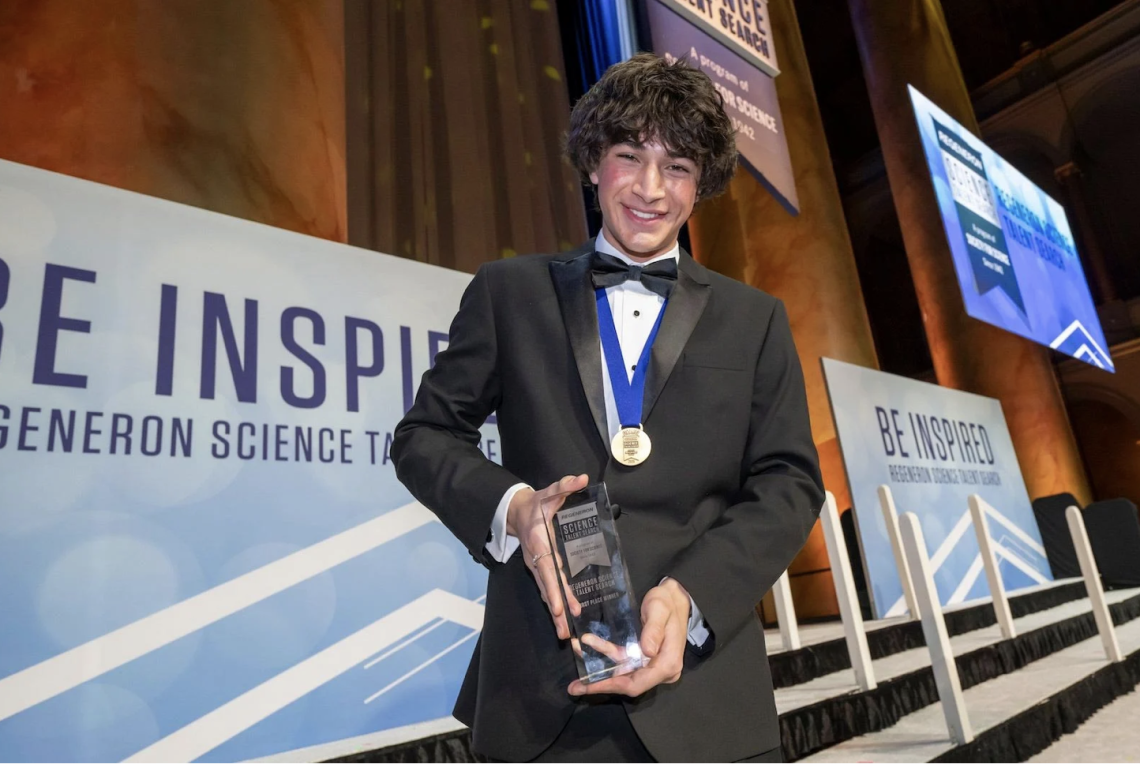
    Matteo Paz didn’t have access to a lab or telescope. What he had was curiosity, Python, and a public NASA dataset.

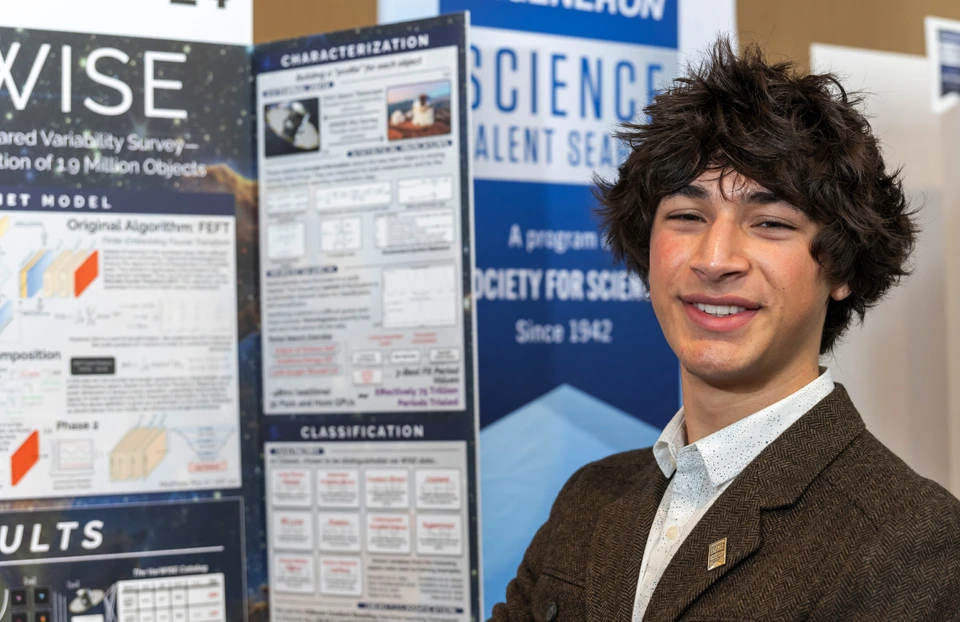
    While most researchers were focused on tracking asteroids, Matteo trained an AI model called VARNet to detect everything else: variable stars, black holes, cosmic flickers that had gone unnoticed.

    The result? His model flagged 1.9 million objects. Over 1.5 million were brand new to astronomy.

    Machine Learning in Astronomy: How Matteo Did It at Age 17

    He used data from NASA’s NEOWISE mission, which scanned the entire sky in infrared for more than a decade. That’s hundreds of billions of data points, enough to make most heads spin.

    But Matteo didn’t get overwhelmed. He built a machine learning model that analyzed brightness fluctuations in stars over time, identifying patterns using wavelet transforms and Fourier analysis.

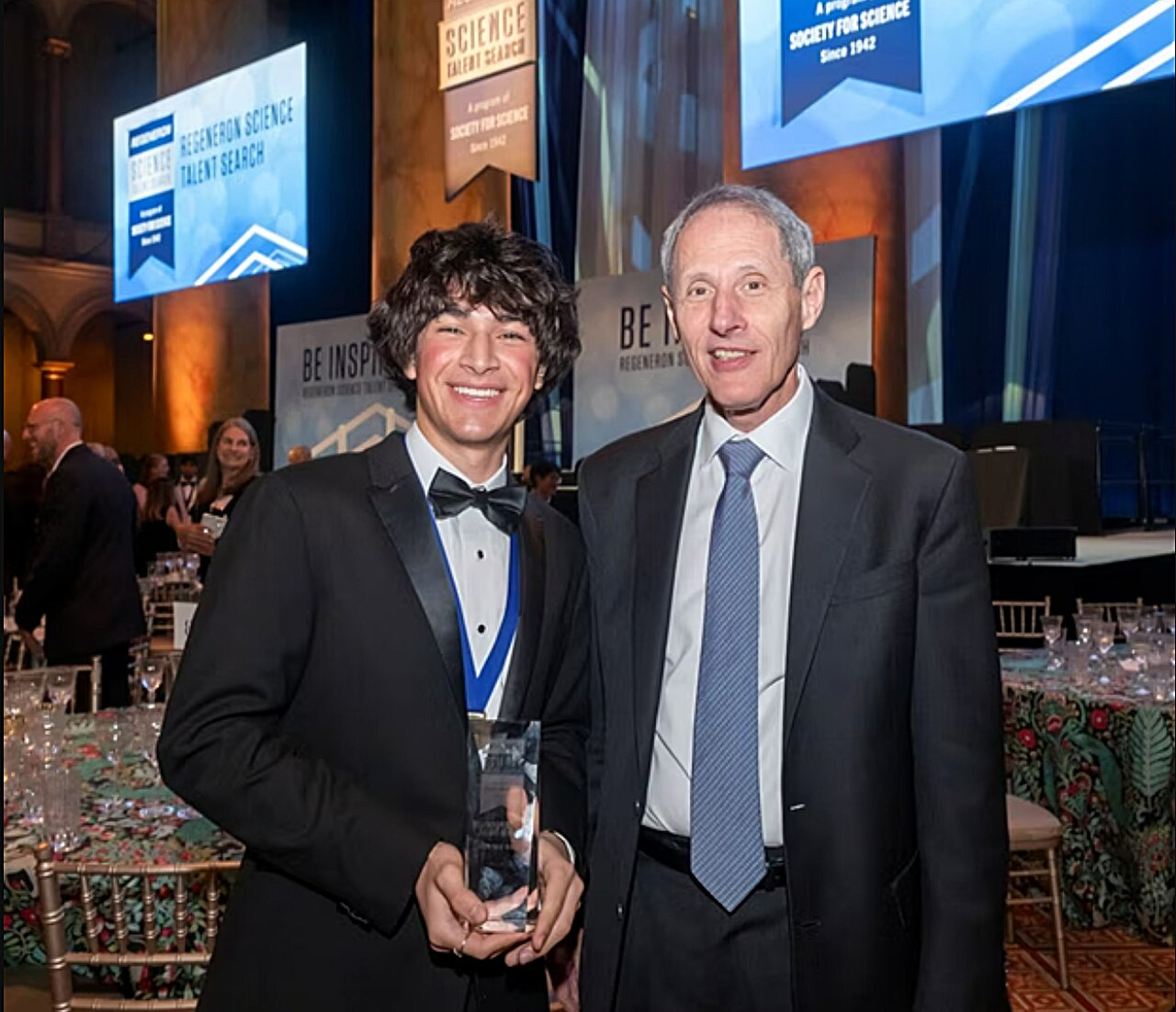
    This wasn’t just a science fair project. His work was published in The Astronomical Journal. And he took home $250,000 at the Regeneron Science Talent Search https://www.societyforscience.org/regeneron-sts/2025-student-finalists/matteo-paz/, one of the most prestigious science competitions for high schoolers in the U.S.

    The Power of Mentorship in High School STEM Projects

    Behind Matteo’s success was a key figure: Dr. J. Davy Kirkpatrick, senior scientist at Caltech. When Matteo told him he wanted to publish his research, Kirkpatrick didn’t say, “Maybe later.” He said, “Let’s talk about that.”

    That one line made all the difference. It’s proof that real mentorship isn’t just helpful, it’s essential.

    Why AI Projects for High School Students Matter More Than Ever

    If you’re a high schooler or the parent of one, here’s what Matteo’s story proves:

    • You don’t need a PhD to use real data. You need direction.

    • AI and machine learning are not college-level-only tools anymore.

    • High schoolers can publish. They can compete. They can get taken seriously.

    • The right mentor can turn a vague interest into a world-class result.

    From Curiosity to Code: Star Gazer, Built by a High School Student

    A few months ago, a student at BetterMind Labs took on a challenge that felt way out of reach: tracking how star brightness shifts over time. Inspired by space missions like NEOWISE, the student built Star Gazer, a tool that uses machine learning to classify variable stars based on their light curves.

    He didn’t start with a background in astrophysics. But he had questions and a mentor who helped him follow them to a working prototype. His project didn’t just end with a presentation. He’s now exploring real-world datasets and refining them further for publication.

    Projects like this are becoming more common, not because students are “geniuses,” but because the tools, guidance, and ambition finally line up.

    Check out BetterMind Labs AI + Space Exploration projects that High School Students can build.

    FAQs

    Who is Matteo Paz and why is his AI project significant?

    Matteo Paz is a high school researcher who developed VARNet, a machine learning model that analyzed NASA’s NEOWISE data to identify variable objects in space. His research led to the discovery of more than 1.5 million previously unknown astronomical objects and earned him the $250,000 top prize at the Regeneron Science Talent Search.

    Can high school students really build advanced AI projects?

    Yes. With access to public datasets, open-source tools, and strong mentorship, high school students can build sophisticated AI projects in fields such as healthcare, astronomy, finance, climate science, and cybersecurity. Many students are already conducting research and developing solutions with real-world impact.

    Do students need advanced math or coding experience to start AI?

    Not necessarily. Many students begin with little or no experience. Learning Python, data analysis, and basic machine learning concepts step by step allows students to gradually build the skills needed for more advanced AI applications.

    Why is mentorship important for AI and research projects?

    Mentorship helps students identify meaningful problems, avoid common mistakes, and develop stronger technical solutions. Experienced mentors also provide guidance on research methodology, data analysis, project presentation, and publication opportunities.

    Can AI projects help with college admissions?

    Absolutely. Meaningful AI projects showcase initiative, intellectual curiosity, problem-solving ability, and real-world impact. Projects often become powerful topics for college essays, research competitions, scholarship applications, and interviews because they demonstrate how students apply knowledge beyond the classroom.

    Final Takeaway: The Future of STEM Belongs to Students Who Start Early

    Matteo Paz’s story is remarkable, but the lesson isn’t that he was extraordinary. The lesson is that he started. He found a problem that interested him, learned the tools he needed, worked with mentors, and stayed committed long enough to create something meaningful.

    That same pattern appears again and again among successful students. The strongest college applicants, scholarship winners, and young researchers are not simply consuming knowledge. They are applying it. They build, test, iterate, and solve problems that matter.

    At BetterMind Labs, we see this transformation happen every year. Students begin with curiosity and leave with projects that tackle challenges in healthcare, finance, sustainability, cybersecurity, and even astronomy. Like Matteo, they learn to work with real datasets, develop machine learning models, and create solutions that extend far beyond a classroom assignment.

    The goal is not to replicate someone else’s success story. It is to create your own.

    Whether you’re analyzing telescope data, building an AI healthcare tool, or designing a sustainability solution, the opportunity to make an impact starts much earlier than most people realize. The tools are available. The data is available. The mentorship is available.

    The students who will shape the future of science and technology are not waiting until college to begin.

    They’re already building.

    And at BetterMind Labs, we’re helping them turn curiosity into research, projects into impact, and ideas into opportunities.

    Checkout BetterMind Labs AI ML Program designed for High School Students (8th to 12th Graders)


    Relevant Keywords:

    Regeneron STS 2025 Finalist – Matteo Paz
    https://www.societyforscience.org/regeneron-sts/2025-student-finalists/matteo-paz/

    NASA NEOWISE Mission Update – April 2025
    https://neowise.ipac.caltech.edu/news/neowise20250411/

    Pranav Sivakumar’s Research Project – Astronomical League PDF
    https://www.astroleague.org/files/awards/Pranav_Sivakumar_project.pdf

    Pranav Sivakumar – Wikipedia
    https://en.wikipedia.org/wiki/Pranav_Sivakumar

    Sloan Digital Sky Survey – Educational Resources
    https://classic.sdss.org/education/

    Fermilab High School Student Internship Programs
    https://internships.fnal.gov/high-school-student-programs/

    BetterMind Labs – AI Projects by High School Students
    https://www.bettermindlabs.org/

  • From NASA to Netflix: Where AI Is Being Used Today

    From Rockets to Recommendations, where AI is being used today

    In 2025, artificial intelligence isn’t just a buzzword. It’s a silent force shaping nearly every part of our daily lives. Whether you’re watching your favorite series on Netflix or calculating rover paths on Mars, AI is in the driver’s seat. This blog explores where AI is being used today—from outer space to your smartphone—and why understanding this shift is essential for students, innovators, and future leaders.

    AI in Space: Smarter Missions with NASA

    NASA doesn’t just launch rockets; it launches data—terabytes of it every day. To make sense of it all, NASA uses AI to:

    • Optimize rover routes on Mars using machine learning algorithms that adapt to terrain patterns.

    • Analyze satellite images to detect climate changes, forest fires, and even asteroid movement.

    • Assist astronauts with intelligent virtual assistants onboard spacecraft (like “Callisto,” a voice-operated system on Artemis I).

    In 2022, NASA used AI to process 3 petabytes of climate data to better predict weather patterns on Earth. That’s not science fiction; it’s science reality.

    AI in Entertainment: The Netflix Experience

    When you log into Netflix and see a perfect recommendation, thank AI.

    Netflix uses machine learning to:

    • Predict what you’ll like based on your viewing history.

    • Optimize video streaming quality based on your internet bandwidth.

    • Customize thumbnails for each user to increase click-through rate.

    This is why two users may see completely different posters for the same movie. It’s AI working behind the scenes to keep you watching longer.

    AI in Healthcare: Faster, Smarter Diagnosis

    AI is helping doctors diagnose diseases faster and more accurately than ever before.

    • PathAI uses deep learning to detect cancer in pathology slides with higher accuracy than traditional methods.

    • IBM Watson Health supports doctors by providing evidence-based treatment recommendations.

    • AI chatbots are helping patients manage symptoms and schedule appointments in real-time.

    Our own student at BetterMind Labs, Richard, inspired by his father’s misdiagnosis, built a skin cancer detection tool using AI. His model now helps thousands of people self-check skin lesions.

    AI in Education: Personalized Learning at Scale

    AI is personalizing how students learn.

    • Knewton and Squirrel AI create adaptive learning experiences.

    • Gradescope uses AI to grade handwritten math and science exams.

    • AI-powered chatbots help students learn languages or solve math problems instantly.

    At BetterMind Labs, one of our alumni created an AI-powered Concept-Map Generator to simplify textbook reading, now used by 3 schools.

    AI in Cybersecurity: Protecting in Real-Time

    In today’s digital world, threats evolve faster than humans can detect.

    • CrowdStrike and Darktrace use AI to spot anomalies in network traffic.

    • AI algorithms predict potential breaches and prevent data theft.

    • Phishing URL detectors built by students like ours use natural language processing to identify scam emails before they reach your inbox.

    AI in Business & Finance: Smart Investments and Operations

    AI in business isn’t just about automation—it’s about smarter decisions.

    • JP Morgan uses AI to analyze legal documents and reduce review time.

    • AI-powered CRMs like Salesforce Einstein predict customer behavior.

    • Robo-advisors help people invest with personalized financial strategies.

    BetterMind Labs alumni projects have included a crypto sentiment analyzer, used by young traders to predict market movements based on Reddit and Twitter feeds.

    Why It Matters for Students

    Knowing where AI is being used today helps students:

    • Identify relevant problems worth solving.

    • Build portfolio-worthy projects.

    • Gain skills in demand across multiple industries.

    Whether you’re into medicine, movies, or Mars—AI is there.

    How You Can Start

    Don’t wait for college to get started. Here are 3 steps:

    1. Learn Python and basic ML using YouTube or platforms like Fast.ai.

    2. Pick a problem you care about—mental health, education, climate change.

    3. Start small: build chatbots, detectors, or data visualizations.

    And if you need mentorship, check out our BetterMind Labs’ High School AI Internship. We help students like you build passion projects that make real-world impact.

    Conclusion: Be the Innovator AI Needs

    AI is not the future; it’s the now. And it’s happening in ways you can be a part of. From NASA to Netflix, from hospitals to your own high school classroom—AI is everywhere.

    It’s time to not just use AI, but to create with it. Let BetterMind Labs show you how.

    Applications for BetterMind Labs’ AI Program are now open.

    Where AI Is Being Used Today is more than a question. It’s a map of opportunities—and your name might just be the next point on it.


    Relevant Links

  • AI as a Foundational Skill: Why Every High School Student Needs to Learn AI in 2025

    AI Is No Longer Optional—It’s Foundational

    In 2025, artificial intelligence isn’t just for coders or tech companies. It’s the new literacy. Just like reading, writing, and basic math, AI is becoming a foundational skill for high school students. Whether you’re interested in art, biology, business, or aerospace, AI is shaping how we learn, work, and think.

    AI helps you brainstorm better, learn faster, and problem-solve more creatively. It’s not just a tool to do your homework. It’s a thinking partner, a research assistant, a pattern finder, and sometimes even a co-creator.

    A Real Story: How AI Helped a Biochemistry Student Stand Out

    Take the example of one of our students—let’s call him Alexei. He wasn’t planning to go into computer science. He loved biochemistry and wanted to study how molecules interact in the human body.

    But here’s the twist: Alexi started using AI tools like ChatGPT and PubMed AI to:

    • Break down complex papers into simpler summaries

    • Generate lab experiment ideas based on molecular behavior

    • Visualize protein interactions using open-source AI visualization tools

    Without even knowing it, AI was amplifying his research. When his peers were spending 3 hours reading a dense paper, Alexi could finish it in 30 minutes with a clearer understanding. When writing his college application essay, he used AI to structure his narrative, find research gaps in his project, and polish the final draft.

    He got into one of the top programs for biochemistry. Not because he wanted to be an AI expert—but because he used AI smartly in his own domain.

    Why High School Students Who Use AI Have an Edge

    Imagine two students:

    • One uses AI to gather ideas, create outlines, summarize, fact-check, and iterate

    • The other starts every project from scratch, does manual research, and edits alone

    Who do you think has more time, more clarity, and more output?

    AI users don’t just move faster. They think deeper. With every question they ask an AI tool, they learn how to think critically, ask better questions, and structure their thoughts. It’s like having a private tutor available 24/7.

    Real Examples of How Students Use AI in Non-Tech Fields

    • In History: Creating interactive timelines, writing documentary scripts, summarizing texts

    • In Psychology: Analyzing patterns in behavior data using ML tools, simulating patient scenarios

    • In Art & Design: Using AI to generate creative prompts, test color palettes, or design concepts

    • In Economics: Forecasting market trends, building models to study supply-demand shifts

    But It’s Not Just About Tools—It’s About Mindset

    What matters more than knowing how to use 10 AI tools is knowing how to use them meaningfully. AI doesn’t make you smart, but if you’re smart, it makes you unstoppable.

    That’s why we tell every student at BetterMind Labs: “Don’t build AI projects. Use AI to build your dreams.”

    How BetterMind Labs Helps Students Use AI in Any Field

    Whether you’re into medicine, law, climate change, or economics, our mentors help students:

    • Pick problems they deeply care about

    • Use AI not just as a skill, but as a force multiplier

    • Create real projects that impress colleges and change communities

    Our students have used AI to:

    • Build disaster relief models

    • Create medical image classifiers

    • Optimize crop prediction models

    Conclusion: You Don’t Have to Become an AI Engineer to Use AI Powerfully

    The world is changing. Those who understand AI will shape the world. Those who don’t will just live in it.

    AI for high school students isn’t just a course or a summer camp. It’s a shift in how you think, learn, and grow.

    And it starts with a single question:

    What do you want to build?

    Applications for BetterMind Labs’ AI Internship Program for High Schoolers are now open.

    Start where you are. Use what you have. Let AI do the rest.


    Relevant Links

  • Why AI Projects Are a Must-Have for High School Students Eyeing Top Colleges

    In a world where college applications are overflowing with high GPAs and perfect SAT scores, how do you stand out? One word: impact.

    And today, one of the clearest signs of impact is a well-thought-out, real-world AI project. That’s why AI projects for high school students are more than a trend—they’re a strategic move for future leaders, innovators, and college-bound dreamers.

    Why AI Projects for High School Students Matter More Than Ever

    AI is reshaping every industry—from finance to healthcare, education to space exploration. Students who show they can not only learn about AI but actually use it to solve real problems demonstrate something much deeper than knowledge. They show initiative, curiosity, and a desire to make an impact. These are the exact qualities that top colleges like MIT, Stanford, and the Ivies are desperate to find.

    In fact, a 2024 study by the National Association for College Admission Counseling (NACAC) found that students with hands-on, impact-based projects were 3.4x more likely to be accepted into T20 colleges compared to students with only coursework or generic extracurriculars.

    AI Projects That Started With a Problem

    At BetterMind Labs, our high school students don’t just follow tutorials. They build projects that solve personal and community challenges—earning them portfolio pieces that college admission officers actually remember.

    Crypto Sentiment Tracker — Built by “Samir,” a curious teen from New Jersey

    Samir was tired of watching his family make crypto decisions based on Twitter hype. So, with the help of his mentor, he built a Crypto Sentiment Tracker. It scrapes data from Twitter, Reddit, and news APIs, processes them through sentiment analysis using NLP, and delivers real-time sentiment trends for major coins. The tool helped his parents avoid an emotionally driven loss during a market dip. Samir’s project now has over 500 users.

    Brain Age Predictor — Created by “Ava,” whose grandfather’s condition changed everything

    Ava had always been close to her grandfather. When he was diagnosed with early-onset Alzheimer’s, she wanted to do more than just watch. Inspired by this, she built a Brain Age Predictor using a Kaggle dataset and TensorFlow models. It assesses cognitive performance based on simple tasks and predicts if a person’s brain is aging faster than average. Her model is still used by a small health nonprofit in her town.

    Disaster Relief Optimizer — Engineered by “Jay,” after floods wrecked his neighborhood in Louisiana

    Jay’s hometown was hit by a category 4 storm, and supplies were stuck miles away due to poor logistics. That frustration became motivation. He used reinforcement learning to build a simulation-based Disaster Relief Optimizer that suggests optimal resource distribution across flood-affected regions. Jay’s prototype was presented at a local disaster management summit.

    What Makes a Great AI Project for High School Students?

    1. Personal Relevance: Start with something that matters to you.

    2. Real-World Impact: Think beyond the screen. Will this help someone?

    3. Scalability: Can others benefit from it?

    4. Technical Creativity: Are you using AI in a novel way?

    That’s what turns a school project into a college admission highlight.

    Tip: Use the 3W Framework

    • What frustrates you?

    • Why does it matter?

    • Who could benefit from a solution?

    This approach ensures you’re not picking a project because it “sounds cool,” but because it solves a real problem.

    How BetterMind Labs Helps Students Build AI Projects That Matter

    At BetterMind Labs, we:

    • Run programs for high school students

    • Help them identify problems they care about

    • Teach them Python, AI, ML, NLP, and data science fundamentals

    • Pair them with industry mentors

    • Guide them through building a portfolio-worthy project

    These aren’t “classroom” projects. They’re real tools, solving real problems, often used by real people.

    AI Portfolio = College Admissions Gold

    Colleges want:

    • Proof of problem-solving skills

    • Passion for innovation

    • Ability to work with real-world data

    • Projects with human impact

    And that’s exactly what our students build.

    3 Unexpected AI Projects That Made a Big Impact

    • AI-Powered Urban Tree Counter – Used computer vision to count and classify trees from drone footage for an urban forestation campaign.

    • Fake News Identifier – Used BERT transformers to detect misinformation in regional news outlets.

    • AI Language Buddy – Helped younger ESL students learn English using personalized prompts and feedback.

    None of these projects were just academic—they changed lives, starting with the students who made them.

    Open-Source Resources to Get Started

    Want to try building something solo first? Here are some great resources:

    1. Fast.ai — Practical deep learning for coders.

    2. Kaggle — Datasets, notebooks, and competitions.

    3. Google AI for Youth — Beginner-friendly materials and guides.

    These are free and beginner-friendly, though it helps to have some guidance—especially when you’re looking to scale your project.

    Conclusion: It’s Not Just a Project—It’s Your Story

    In the race to college, the winners won’t just be those with perfect scores. They’ll be the ones who dared to build, solve, and innovate.

    Your AI project could be the thing that sets your application apart.

    At BetterMind Labs, we help you:

    • Discover problems worth solving

    • Learn real-world AI skills

    • Build portfolio projects that matter

    • Impress admission officers and interviewers

    Apply now for BetterMind Labs’ High School AI Internship.

    Spots are limited. Impact is not.


    Relevant Links

  • Why High School Passion Projects Are Your Ticket to a Top College

    If you’re waiting for college to start building something meaningful, you’re already late.

    Most high school students are taught to follow the same formula: get good grades, take tough classes, join a few clubs, maybe win some awards, and hope it’s enough to get into a top college.

    But the students who are actually standing out, those getting into MIT, Stanford, Princeton, and even winning scholarships at public Ivies, are doing something different.

    They’re not just preparing for the future. They’re creating it.

    They’re building projects, launching initiatives, and exploring ideas now, in high school. And colleges are noticing.

    Here’s why high school is not just the right time but the best time to start building something that actually matters.

    Colleges Value Action More Than Perfection

    Let’s look at the numbers.

    In 2023, Stanford received over 56,000 applications and accepted just 2,219 students. That’s an acceptance rate of under 4 percent. At MIT, the rate was about 4.7 percent. For Harvard, it was closer to 3.4 percent.

    And yet, year after year, we hear about students who don’t have perfect GPAs or 1580 SATs but still get in.

    Why?

    Because they show initiative. Because they’ve built something real and meaningful.

    Top colleges are no longer just looking for students who follow instructions. They’re looking for students who take initiative and solve problems.

    A high schooler who uses their free time to build an app that helps seniors manage prescriptions or a website that connects local food banks with volunteers is far more interesting than one who checks all the “right” boxes but creates nothing original.

    You Have Time and Freedom Now

    It might not feel like it, but high school is one of the last stages in life where you have the time, space, and safety to take risks.

    College comes with deadlines, major declarations, job applications, and internships. Adult life adds rent, bills, and far less flexibility. But right now, in high school, your evenings, weekends, and summers can be your most valuable asset.

    You can spend a summer learning Python and apply it to a health-tech project. You can volunteer in your community and turn your experience into a social impact initiative. You can start small and iterate without the pressure of earning income or academic credit.

    You Don’t Need to Be a Prodigy to Start

    Too many students think passion projects are only for geniuses.

    The truth is, you don’t need to invent the next Tesla. You need to find a problem you care about and try to solve it.

    Take the example of Benjy Firester, a high school student from New York who created a model to predict potato blight using weather data. His work ended up helping farmers in the US and abroad. He didn’t have a PhD. He had curiosity, access to public data, and time.

    And that was enough.

    Even small projects, a mobile app, a blog, a YouTube series breaking down tough biology topics, can gain serious traction when done with authenticity and consistency.

    In fact, according to a 2022 NACAC (National Association for College Admission Counseling) survey, over 70 percent of admissions officers said they value “authentic student-led work” as much or more than traditional extracurriculars.

    Why High School Passion Projects Beat Perfect Grades

    Grades show that you can perform. Projects show that you care.

    Colleges are increasingly prioritizing high school passion projects over traditional extracurriculars. When a student builds a passion project, it reflects their interests, personality, and initiative. It becomes a story worth telling in college essays, in interviews, and in recommendation letters.

    Let’s say you want to study environmental engineering. You could wait for college. Or you could start a local campaign now to track air quality in your neighborhood using open-source sensors. That project becomes your proof of commitment. It shows colleges that you’re not just saying you care, you’re doing something about it.

    That’s what admissions readers are looking for. Not just polished students. Real humans who act on their interests.

    You’re Never Too Young to Make an Impact

    There is a myth that teenagers can’t make a difference. It’s simply not true.

    Malala Yousafzai started speaking out for girls’ education at age 11. Gitanjali Rao, named TIME’s Kid of the Year in 2020, built an app to detect cyberbullying while she was still in middle school. Closer to home, thousands of high schoolers every year launch nonprofits, apps, awareness campaigns, podcasts, and research initiatives that impact their communities.

    What do they all have in common?

    They started.

    That’s the secret. You don’t have to wait to be older, smarter, richer, or more connected. You have everything you need right now to begin.

    How BetterMind Labs Helps You Start (and Finish)

    At BetterMind Labs, we’ve worked with hundreds of high school students who didn’t know where to begin. All they had was curiosity and the willingness to explore.

    We help students identify their interests, connect them to real-world problems, and guide them through designing and launching their own independent projects.

    Students in our programs have built everything from brain-age predictors to tools that analyze wildfire spread.

    More importantly, they leave the program knowing they’re capable of building something real and doing it again.

    Final Word: Stop Waiting, Start Building

    The future belongs to builders. To creators. To students who don’t wait for permission to do something meaningful.

    If you’re in high school, you’re not too early. You’re perfectly on time.

    Start now. Build now. Create now.

    Because the best time to make something that matters isn’t after high school. It’s right now.


    Relevant Links:

    https://www.ivycentral.com/acceptance-rate-stanford-university/

    https://features.thecrimson.com/2021/freshman-survey/makeup-narrative/

    https://www.nacacnet.org/wp-content/uploads/NACAC-College-Admission-Process-Research_FINAL.pdf

    https://www.foxbusiness.com/features/teens-winning-irish-potato-famine-science-project-could-save-billions

    https://kindly.unicef.io/

    https://www.bettermindlabs.org/

  • Why Passion Projects Matter for T20 College Admission

    Getting into a top 20 university, places like Stanford, MIT, Harvard, or UC Berkeley, has never been more competitive. Every year, thousands of high school students apply with near-perfect GPAs, stellar SAT or ACT scores, and a long list of APs and honors classes.

    But the reality is, thousands of others do too.

    So, what actually makes an applicant stand out?

    If you’re aiming for a top 20 university, passion projects for college admissions are no longer optional—they’re essential. More often than not, it’s something personal. Something they pursued outside of class, not because they had to, but because they wanted to. Passion projects, independent research, creative builds, and small-scale ventures, these are quickly becoming the new admissions currency at top-tier universities.

    Let’s explore why these independent projects matter so much, especially if you’re a high schooler interested in STEM fields, and how you can start building one today.

    Passion Projects Go Beyond Performance

    Strong grades show that you can handle coursework. But passion projects reveal why you’re doing it.

    For example, designing a low-cost prosthetic or starting a YouTube channel that teaches physics shows a student who’s not just absorbing knowledge, but they’re applying it. They’re curious, self-directed, and thinking beyond the next quiz.

    That kind of mindset is magnetic to college admissions officers. It’s not just about being a good student, it’s about showing you’re someone who genuinely wants to understand the world.

    How Passion Projects for College Admissions Show Initiative and Curiosity

    Here’s something top universities love: students who don’t wait to be told what to do.

    Whether it’s starting a blog about medical myths, organizing a community STEM workshop, or building a machine learning model to predict traffic flow, passion projects demonstrate initiative.

    And initiative matters. Especially at Ivy League and T20 schools, which are known for their collaborative, research-driven, innovation-first cultures. These schools want doers, not just test-takers.

    Real-World Application Beats Memorization

    Let’s compare two students.

    Both aced AP Computer Science. But one of them also used what they learned to build an app that helps seniors track medications.

    Guess who stands out?

    Top colleges care deeply about how students apply their learning in the real world. That means projects, not just problem sets.

    Take Ayaan, a high school junior who joined a program at BetterMind Labs. He had a growing interest in both neuroscience and artificial intelligence, so he combined the two and created a Brain Age Predictor using fMRI data and machine learning. The project helped him understand how aging affects neural pathways and gave him hands-on experience with real datasets, research methodology, and AI frameworks.

    The result? A project that wasn’t just smart, it was his. Original. Interdisciplinary. Personal. And something admissions officers will definitely remember.

    Your Story Makes You Memorable

    Every year, admissions readers go through thousands of applications. Great grades and test scores become white noise.

    But a student who starts a bioethics podcast? Or builds a clean water filtration prototype? Or teaches Python to middle schoolers? That’s hard to forget.

    A strong high school passion project gives your application a narrative. It helps you show up as a person, not just a resume.

    And when two students are equally qualified on paper, the one with a compelling story, the one who built something, almost always wins.

    You’re Already Becoming the Kind of Student Top Colleges Want

    Elite schools aren’t just looking for students who can succeed. They’re looking for students who will bring curiosity, creativity, and initiative to campus from day one.

    When you’ve already built something outside the classroom, especially something aligned with your intended major, it’s proof that you’re already the kind of learner they’re hoping to admit.

    Think about it. Saying “I want to study neuroscience” is good. Showing that you’ve already explored brain science through research, coding, or content creation? That’s powerful.

    You Don’t Have to Change the World. Just Start.

    This is where a lot of students get stuck: “I don’t have a big idea yet.”

    Here’s the secret: it doesn’t have to be big.

    Some of the best projects start small. A blog breaking down complex science. A website that curates scholarships. A simple app that solves a real problem. A resource guide. A data visualization. A short docuseries.

    It just needs to be authentic, actionable, and yours.

    Final Thoughts: What Truly Makes You Stand Out

    Grades and scores still matter. But they’re not the whole story anymore, especially at schools where nearly every applicant has a perfect academic record.

    What sets you apart is what you do when no one’s looking. What you build, what you question, and what you care about.

    So instead of asking, “How do I boost my GPA?” ask:

    “What’s something I can build this year that reflects who I really am?”


    Relevant Links

    The Myth of the Well-Rounded Applicant
    https://www.myprompt.com/post/the-myth-of-the-well-rounded-applicant

    How Passion Projects Can Strengthen Your College Application
    https://www.collegeadvisor.com/resources/passion-projects/

    Getting Started with Hugging Face: A Beginner-Friendly Tutorial
    https://huggingface.co/blog/proflead/hugging-face-tutorial

    TensorFlow Tutorial for Beginners by DataCamp
    https://www.datacamp.com/tutorial/tensorflow-tutorial

    DIY Arduino Water Pollution Monitoring System
    https://www.instructables.com/Arduino-Water-Pollution-Monitor/

    Lung Cancer Detection Using CNN – GeeksforGeeks Guide
    https://www.geeksforgeeks.org/deep-learning/lung-cancer-detection-using-convolutional-neural-network-cnn/

    Brain Tumor Classification Using Machine Learning
    https://data-flair.training/blogs/brain-tumor-classification-machine-learning/

    Capital Asset Pricing Model in Python – MLQ Blog
    https://blog.mlq.ai/capital-asset-pricing-model-python/

    How Stripe Uses Machine Learning to Detect Payment Fraud
    https://stripe.com/resources/more/how-machine-learning-works-for-payment-fraud-detection-and-prevention

    BetterMind Labs – AI Projects by High School Students
    https://www.bettermindlabs.org/