How High School Students Built an AI Fact-Checker for Political Debates
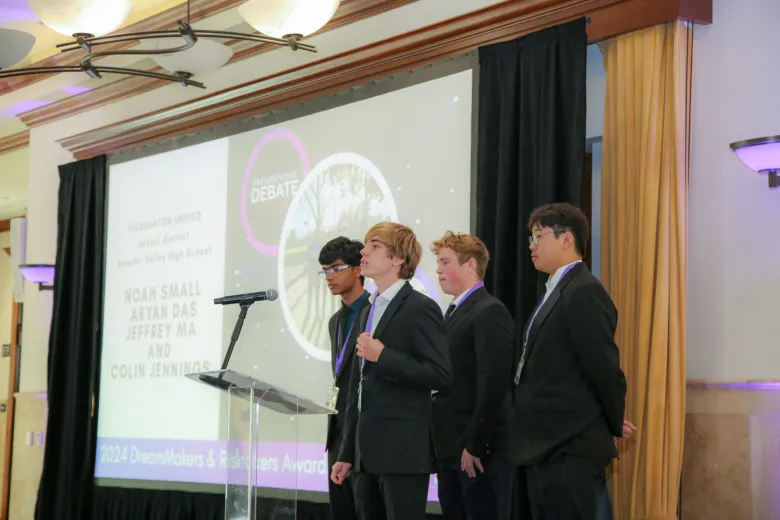
Political debates are intense, fast-paced, and full of claims that aren’t always true. So students at Amador Valley High School in California took action. High school students built an AI fact-checker that listened to the 2024 U.S. presidential debate and flagged misleading or false statements on the spot. It wasn’t just for show; it achieved 87% accuracy using live news sources and natural language processing.
This wasn’t a classroom assignment. It worked in the real world, and it was built by high schoolers.
Real-Time AI Debate Fact-Checking System: What They Created
Using speech-to-text software, the team transcribed debate audio in real time. Then their AI model compared spoken statements to verified databases and up-to-date news sources. Machine learning algorithms classified each claim as true, false, or misleading within seconds.
One student, Noah Small, led efforts to optimize the speech transcription. Colin Jennings, Aryan Das, and Jeffrey Ma designed the machine learning model and built the confidence scoring system. Working under their teacher, Kevin Kiyoi, they tested APIs like Google Gemini and OpenAI’s GPT to parse and verify statements.
The impressive part wasn’t just accuracy. It was adaptability. The system handled background noise, rapid speaker changes, and incomplete sentences. That made it a true example of a high school AI project success.
Accuracy and Impact: Why AI Misinformation Tools Matter
The debate tool achieved 87% accuracy, verified by students cross-checking outputs. Local media and educators praised its innovation and potential. This showed that teenagers can build useful systems for political fact-checking and tackling misinformation.
They didn’t replace fact-checking organizations. Instead, they enhanced it, providing instant feedback during live events. Imagine using a similar tool for televised interviews, press briefings, or live podcasts. That’s the power of accessible, student-built AI.
AI Projects by Teens: Projects with Purpose
What makes this project shine is the mindset behind it. These students didn’t just learn AI theory. They picked a real problem and built a solution. That’s a big difference between classroom exercises and real-world projects.
They could have studied algorithms all year. Instead, they created something meaningful.
Mentorship in High School AI: Why It Matters
The Amador Valley team had the guidance of Kevin Kiyoi, a teacher who encouraged experimentation and problem-solving. Mentorship like that is often what turns a decent project into something impactful.
It’s the same reason students at BetterMind Labs get to build projects that matter. Take Namya and Rishav, developed an early disease detection system. They didn’t just work through tutorials; they had mentors who helped them work through real data, hit roadblocks, and iterate until their model worked in the wild.
Whether it’s a debate fact-checker or an Early disease detector, mentorship makes the difference between learning the tools and learning how to use them.
Final Thoughts: Teen AI Project Inspiration
When Noah Small, Colin Jennings, Aryan Das, and Jeffrey Ma built their live AI fact-checker, they showed that high school students can tackle misinformation with real impact. That’s not a niche achievement. It’s a sign that the next wave of AI innovation will come from unexpected places.
They just need curiosity, support, and tools. And once they start building, they might surprise you with just how far they can go.
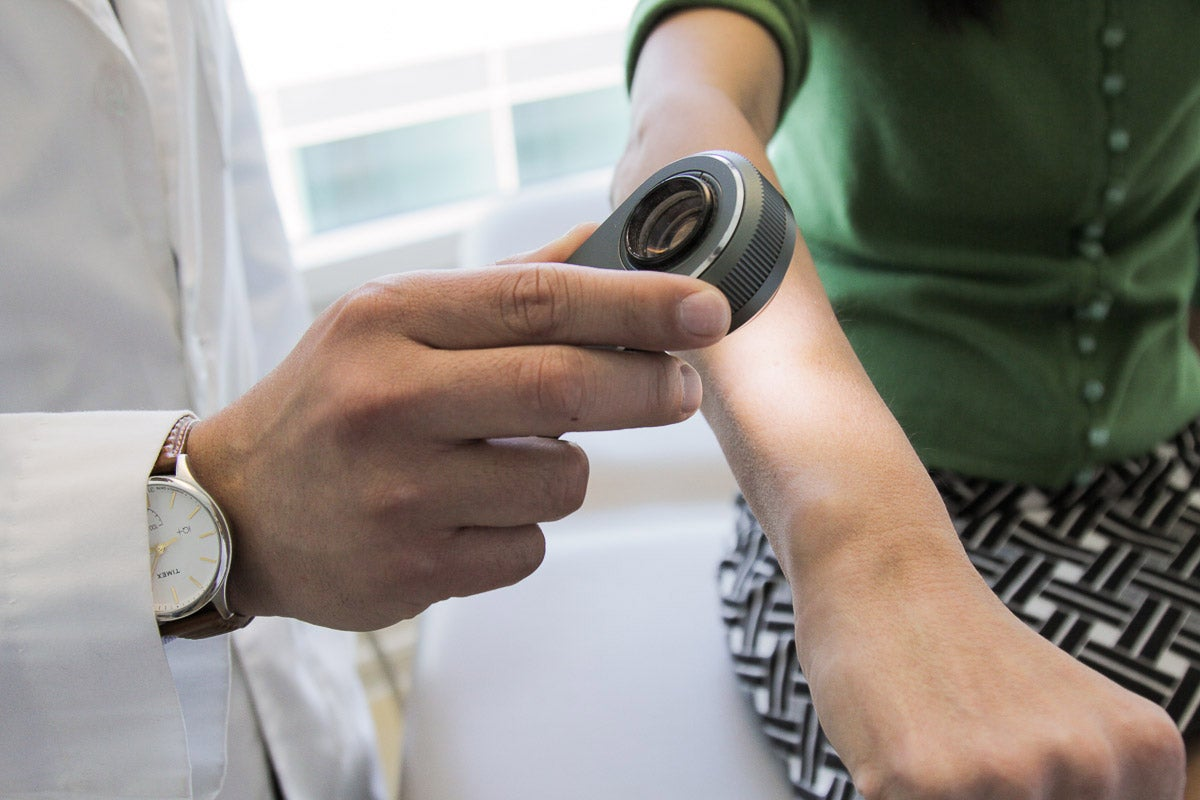
In 2017, researchers at Stanford University published something that turned heads in both tech and healthcare: a convolutional neural network that could classify skin cancer with the same accuracy as board-certified dermatologists.
They trained their AI model using over 129,000 images of skin lesions, covering more than 2,000 skin diseases. What made it groundbreaking wasn’t just the scale, but the performance. The system could accurately distinguish between benign and malignant conditions, including deadly melanoma.
This wasn’t some lab experiment with carefully cleaned-up data. The model was tested against 21 dermatologists and performed on par with the experts. The results were published in Nature, one of the most respected scientific journals.
Why It Matters
Skin cancer is one of the most common cancers in the world. Melanoma, while less common than basal or squamous cell carcinomas, is far more dangerous. Early detection dramatically increases survival rates, but many people don’t have access to dermatologists or don’t recognize symptoms in time.
That’s where AI can play a critical role. A mobile app with this kind of model behind it could help people check suspicious moles or spots in minutes. It wouldn’t replace doctors, but it could flag potential problems earlier and bring peace of mind to users who might otherwise ignore a warning sign.
The real power here is accessibility. A smartphone with a decent camera and a trained model could serve as a first line of defense, especially in areas where dermatological care is hard to reach.
What the Research Actually Did
The Stanford team used a single deep convolutional neural network architecture based on GoogleNet Inception v3. They pretrained it on ImageNet, a dataset with millions of everyday images, before fine-tuning it on their skin lesion dataset.
No special filters or image preprocessing tricks were used. That’s what made it so impressive: it worked with regular photographs, similar to what a patient might take at home.
The model was able to differentiate between three major categories:
Benign lesions
Malignant melanomas
Carcinomas like basal or squamous cell cancers
The implications were clear. AI didn’t just belong in labs or self-driving cars. It had a place in frontline healthcare, too.
Real-World Impact of AI Projects by High School Students
At BetterMind Labs, two high schoolers, Richard Han and Videep Cheemangunta, took inspiration from this research and built their own melanoma detection project. Their model analyzes images of skin lesions and flags potential cancer risks.
This AI project by high school students is more than just a technical exercise — it’s a real-world initiative proving that teens can use artificial intelligence for impactful, socially responsible solutions.
They said the hands-on experience helped them understand how AI can make a difference in real lives. It wasn’t just academic, it felt personal.
“BetterMind Labs made learning about AI fun and easy. We got to try real tools, build models, and think about how AI impacts the world.” — Richard Han
“The BetterMind Labs team is incredibly patient and professional. They taught us the fundamentals of AI and helped us build projects that actually matter.” — Videep Cheemangunta
The Bigger Picture
The line between student and scientist is getting thinner. When research like Stanford’s becomes public, high schoolers don’t just learn, they contribute. Whether it’s through academic partnerships or independent programs like BetterMind Labs, more students are exploring AI with a real sense of purpose.
Skin cancer detection is just one example. But it’s a powerful one. Because when a model can catch melanoma earlier than most people ever would, it’s not just impressive. It saves lives.
AI is no longer just for PhDs and tech giants, this AI project by high school students proves that. At BetterMind Labs, a group of passionate teenagers built a fully functional recommendation engine aimed at sparking curiosity, not addiction.
You finish binging a sci-fi series on Netflix, and instantly, a new one with a similar vibe appears, titled “Top Picks For You.” You listen to a new indie band on Spotify, and your “Discover Weekly” playlist is suddenly filled with similar-sounding artists you’ve never heard of but instantly love. You buy a new coffee maker on Amazon, and your homepage starts suggesting specific brands of coffee beans and mugs.
Is it magic? Mind-reading?
It’s one of the most powerful and pervasive forms of artificial intelligence in the world: the recommendation algorithm. These invisible engines are the curators of our digital lives, shaping our tastes, our purchases, and even our thoughts. But how do they actually work?
The Recommendation Engine: Your Personal, Invisible Butler
At its core, a recommendation algorithm is a filtering system that predicts your preferences. It sifts through millions of items to present you with the ones it thinks you’ll like best. There are two primary ways it does this.
Method 1: Collaborative Filtering (“People like you also liked…”)
This is the most common method. The algorithm doesn’t need to know anything about the products themselves; it just needs to know what people do.
It works like this:
The algorithm identifies a user who has similar tastes to you. Let’s call them your “taste twin.”
It looks at everything you and your taste twin have both liked.
Then, it finds something your taste twin has liked, but you haven’t seen yet.
Finally, it recommends that new item to you, assuming you’ll like it too.
This is the engine behind Netflix’s “Trending Now” and Amazon’s “Customers who bought this also bought…” It’s powerful because it leverages the wisdom (and data) of crowds.
Method 2: Content-Based Filtering (“Because you watched…”)
This method looks at the attributes of the content itself. If you watch a lot of sci-fi movies starring a specific actor and directed by a certain director, the algorithm will tag those attributes. It then searches its massive library for other movies with the same tags (same genre, same actor, etc.) and recommends those to you.
This is why after you watch one video about “how to fix a leaky faucet” on YouTube, your entire feed fills up with home improvement content.
How This AI Project by High School Students Solved a Real Problem
Understanding these systems is the first step toward becoming a more conscious digital citizen. The next step? Learning how to build them yourself—and perhaps, how to build them for a better purpose.
Case Study: A BetterMind Labs Student’s “Curiosity Engine”
Meet “Leo,” a high school student who felt trapped by his social media feeds. He noticed that the more he engaged, the narrower his content became. The same topics, same opinions, same creators, over and over. He wasn’t discovering new ideas; he was just digging deeper into a trench of familiarity.
He brought this frustration to the BetterMind Labs AI/ML program with a question: Could you build a recommendation engine that did the opposite? Could it foster curiosity instead of just confirming bias?
Working with mentors, Leo learned the fundamentals of recommendation systems. But instead of designing his project to predict what a user would definitely like, he designed it to find surprising and interesting connections.
He built a “Curiosity Engine.” Here’s how it worked:
A user inputs a topic they enjoy, like “Basketball.”
Instead of recommending more basketball videos, Leo’s algorithm would analyze the core concepts (teamwork, strategy, physics) and find content from other fields.
It might recommend a documentary on military strategy, an article on the physics of projectile motion, or a biography of a famous team coach.
Leo’s project was a brilliant demonstration of critical thinking. He deconstructed a technology that runs our lives and rebuilt it to serve a higher purpose: learning and discovery. It’s a story that shows not just technical skill, but a deep understanding of the ethical and social implications of AI.
How to Be a Conscious Consumer in an Age of Algorithms
You don’t need to build an AI to take back control. Here are a few simple ways to manage the algorithms in your life:
Be Actively Curious: Intentionally search for topics and creators outside of your usual bubble.
Pollute Your Data: Occasionally watch or listen to something completely random to throw the algorithm off.
Use “Incognito” or “Private Browse”: This allows you to search without the influence of your past behavior.
Manage Your History: Periodically go into your YouTube or Netflix settings and delete viewing history that you don’t want to influence future recommendations.
These algorithms are powerful tools, but they are not in charge. By understanding how they work, we can use them to genuinely enrich our lives, not limit them.
🚀 Ready to help your teen move from being a passive consumer to an active creator?
Explore the BetterMind Labs AI Internship and see how they can learn to build the technologies that are shaping our world.
Why AI Skills for Data Science and Quantitative Careers Matter for Teens
If your teen is even remotely interested in fields like finance, research, economics, business analytics, or biotech — chances are, they’re already walking into a world driven by data.
But knowing data isn’t enough anymore.
To really thrive, today’s students need AI skills for data science and quantitative careers — because modern decision-making isn’t just about collecting data. It’s about analyzing it, forecasting with it, and building intelligent systems that learn from it.
Wait, Isn’t That Stuff Only for PhDs?
Not anymore.
You don’t need a PhD or Wall Street job to start learning this. In fact, many high school students are already learning the building blocks — especially when they’re exposed to hands-on AI learning in environments built just for them.
Take a student from BetterMind Labs, for example — Ansh, a rising 12th grader from Illinois, used his love for math to build a stock market trend analyzer that combines historical data, moving averages, and a basic LSTM model to predict next-day movement.
It wasn’t about beating the market — it was about learning how to think like a quant, with real tools and real datasets.
The Rise of Quantitative Careers — Powered by AI
Let’s look at the numbers.
According to the U.S. Bureau of Labor Statistics, data science roles are expected to grow 35% through 2032. That’s among the fastest-growing job categories across the board.
And AI is now at the heart of everything from:
Hedge funds and algorithmic trading
Bioinformatics and genome research
Operations and logistics planning
Climate risk modeling
Behavioral analytics in marketing
That’s why we tell parents: even if your teen isn’t going into computer science, AI is still an essential part of their toolkit.
What AI Skills Are Actually Useful for Data Careers?
Let’s break it down. Here are a few core skills that high schoolers can begin developing today:
📊 1. Understanding Data:
How to clean, visualize, and understand real-world datasets using tools like Pandas, Seaborn, and Google Sheets.
🤖 2. Intro to Machine Learning:
Building basic ML models using scikit-learn and TensorFlow, and learning how models like linear regression, decision trees, and K-means clustering actually work.
📈 3. Time-Series Analysis & Forecasting:
Perfect for students interested in business, climate, or finance. AI models like ARIMA and LSTM teach how to predict trends based on historical data.
💡 4. Applying AI to a Passion Project:
This is the most important part. Learning tools is easy. Learning how to use those tools to solve a problem you care about is what separates good applicants from unforgettable ones.
Real Teens, Real Projects
One of our students, Prateek, was obsessed with startups — not just the buzzwords, but the numbers behind why some succeed and others fail. He wasn’t a coder when he joined BetterMind Labs, but he had a bold idea:
“Can I use AI to predict which startups might succeed, just by looking at early-stage data?”
With the guidance of his mentor, Rishi built VC Startup Analyzer; an AI + Quant project that scanned pitch decks, founder profiles, and funding trends to assess a startup’s potential.
It combined natural language processing with statistical modeling — and turned heads during college admissions.
Why? Because it wasn’t just a smart idea. It was sharp, self-driven, and exactly what schools love to see: a student applying AI to real-world, high-stakes decisions.
This is the kind of work we support at BetterMind Labs — where students don’t just learn AI, they learn how to use it with purpose.
These projects weren’t about building the next billion-dollar startup.
They were about thinking like analysts, data scientists, and solvers — starting young.
Where Can Your Teen Learn These Skills?
There are tons of great resources out there. Here’s a curated mix of free and guided options:
BetterMind Labs AI/ML Internship: Personalized mentorship, real-world projects, and 1:1 guidance to help students build their own AI-based solutions in finance, healthcare, or policy.
MIT’s FutureMakers: Offers weekend workshops and summer deep dives into applied AI.
📘 Books & Tools
Data Science for Kids by Dale Lane
Python for Data Analysis by Wes McKinney
Kaggle (great for real datasets + competitions)
Why Building an AI Project Matters More Than Just “Learning AI”
Let’s be honest — taking a course is great. But when your teen applies to a T20 school or selective program, they’ll be asked:
“What’s something you built that reflects your interest in data, tech, or problem-solving?”
That’s why we believe in AI-powered passion projects.
At BetterMind Labs, we don’t just teach. We mentor teens to build things that showcase their thinking, not just their skills. From credit card fraud detection to climate finance, they pick the domain. We help them make it real.
And that’s what makes them stand out.
Final Word: AI + Data = Superpowers
If your teen is already interested in economics, finance, biology, or tech, now’s the time to help them go deeper.
By giving them access to the right tools, mentorship, and space to explore — you’re not just helping them build a resume. You’re giving them a superpower.
AI skills for data science and quantitative careers are no longer optional — they’re the new foundation.
And if they start now, they won’t just follow trends.
They’ll help shape them.
🚀 Ready to help your teen build something meaningful?
Imagine telling your teen that they no longer need to learn math. Sounds absurd, right? For generations, math has been a cornerstone of education not just because it’s useful, but because it trains logic, structure, and problem-solving.
Today, AI literacy should hold the same place in a teen’s education, as math once did. Not because every student needs to become a machine learning engineer, but because AI is quickly becoming the language of the future—the way we interact with technology, systems, and even each other.
What Is AI Literacy, Actually?
AI literacy doesn’t mean writing complex neural networks from scratch. At its core, it means:
Understanding how AI works (data, models, algorithms)
Knowing what AI can and can’t do
Asking the right questions about fairness, bias, and ethics
Being able to use AI tools creatively and responsibly
It’s about becoming a smart user, thinker, and builder in an AI-powered world.
Why Gen Z Needs AI Literacy Now
AI is no longer “cutting-edge”—it’s everyday. From college admissions systems to personalized learning tools, Instagram feeds to fraud detection in banking, AI runs in the background of nearly every modern service.
Here’s why this matters for Gen Z:
1. AI Is Reshaping Every Industry
Whether your teen wants to be a doctor, musician, climate activist, or entrepreneur, AI will likely play a role. Doctors are using AI to detect cancer early. Musicians are generating melodies using AI assistants. Climate researchers use AI to model emissions scenarios. Marketers use AI to test which ads convert best.
The next generation must know how to work with AI—not be replaced by it.
2. AI Tools Are Becoming the Default
Tools like ChatGPT, Midjourney, Claude, and Notion AI are already shaping how students study, brainstorm, and build. Knowing how to use them well means better research, faster prototyping, and stronger creativity.
The gap is widening between students who use AI thoughtfully and those who don’t.
3. Critical Thinking Starts with Knowing AI’s Limits
Teens today are surrounded by AI-driven recommendations, algorithms, and content feeds. Understanding how those systems work (and how they can be biased) helps students:
Think more critically about what they consume
Challenge misinformation
Stay in control of their time, choices, and data
But I Don’t Want My Teen to Become a Coder…
That’s perfectly okay and expected.
Just like math isn’t only for engineers, AI literacy isn’t only for coders. It’s a thinking skill, a creative lens, and a power tool. Your teen doesn’t need to major in AI—but they should learn to speak its language.
They can:
Use AI to plan a climate campaign
Use machine learning to sort music by mood
Use NLP tools to analyze classic literature
Use AI dashboards to explore startup ideas
AI is a medium, not a major.
How Teens Can Start Building AI Fluency
You don’t need to wait for schools to catch up (though some are trying). Here’s how teens can start learning now:
At BetterMind Labs, high school students build AI-powered projects guided by real mentors. Whether it’s detecting wildfires, analyzing mental health trends, or building a music classifier—they don’t just learn AI, they use it to solve what matters to them.
Projects make college applications stronger because they show real-world thinking.
Explore AI in Your Passion Area
Encourage your teen to connect AI to their interests:
Science: Predict plant growth using satellite images
Literature: Generate poetry based on emotional tone
Finance: Build a personal expense analyzer
Health: Train a model to detect stress from audio
Passion makes learning stick.
Ask the Hard Questions
Can AI be fair?
Who owns the data?
What does creativity mean in an AI era?
Ethics, storytelling, and communication are as vital as technical knowledge.
What Colleges and Employers Want
The top colleges don’t just want students who can repeat what’s taught. They want problem-solvers, tinkerers, and creators.
A portfolio that includes:
Thoughtful use of AI
Clear problem-solving
Real-world application
…can stand out more than a 1600 SAT.
Especially when paired with reflection: Why did I build this? What did I learn?
Final Thoughts: AI Literacy Isn’t Optional Anymore
AI is not coming. It’s already here.
It’s writing headlines, diagnosing illness, scoring resumes, and recommending your next favorite song. If your teen can’t understand, adapt, and build with AI, they’ll be working at a disadvantage—regardless of their major or dream career.
But if they can? They’ll be among the most prepared, the most curious, and the most future-ready.
Let’s stop treating AI as an optional extra. Let’s start teaching it like we taught math.
Want your teen to explore AI the right way—through personalized mentorship, real-world projects, and expert guidance?
What if your teen could build something that prevents drunk driving?
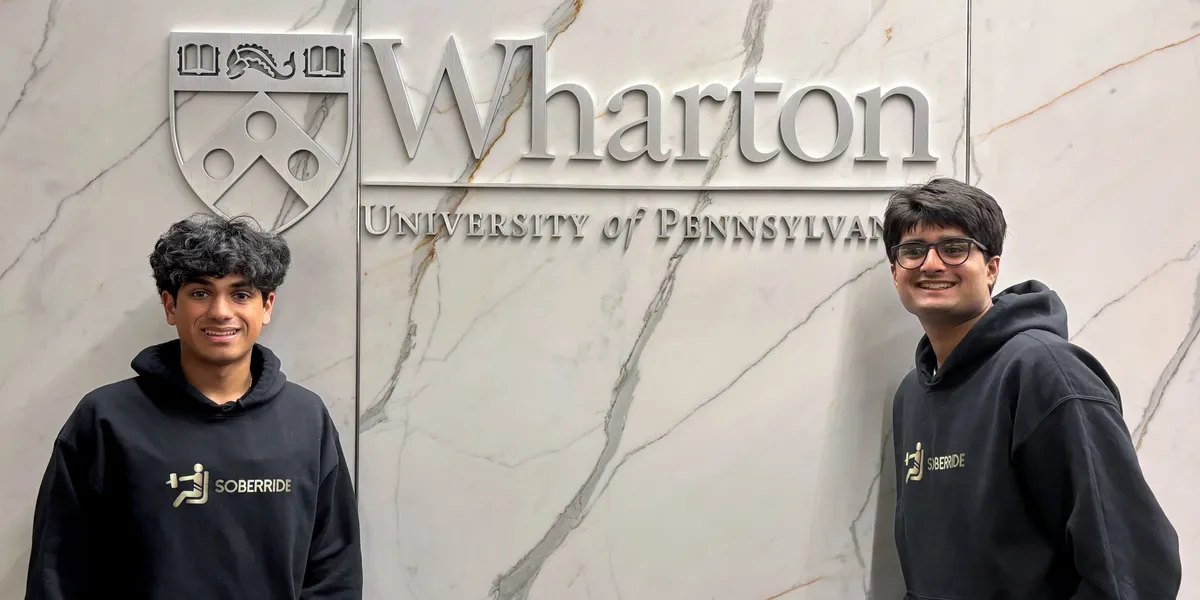
That’s not a hypothetical. Five high school juniors from North Carolina actually did it. They built a working AI system called SoberRide that detects signs of alcohol impairment before the driver starts the car.
These students didn’t just imagine a solution. They designed it, coded it, tested it, and presented it at international tech conferences. This is the kind of story that’s becoming more common as high school students explore AI in ways that actually matter.
Let’s look at what they built, why it works, and what it means for students who want to create their own impactful AI projects.
AI Project Built by High School Students to Stop Drunk Driving
The idea behind SoberRide came after a tragic crash took the life of someone close to the team. That loss sparked a question: What if there were a way to stop impaired driving before it started?
Led by 11th grader Swayam Shah and co-founders Shaurya Mantrala, Krithin Visvesh, Bhavik Kanumuri, and Aadi Bharadwaj, the team built a prototype using tools like Raspberry Pi, ethanol sensors, and a neural network trained to recognize visual signs of impairment.
Here’s how it works:
A camera monitors the driver’s face for red eyes, slow blinking, or pupil dilation
Ethanol sensors detect alcohol in the surrounding air
A trained AI model processes the data and makes a decision
If signs of intoxication are detected, the car doesn’t start
It’s simple in concept, but it requires a deep understanding of both AI and hardware integration. And it all came from a group of students who were still in high school.
How High Schoolers Took This AI Invention to Global Stages
SoberRide isn’t just a cool idea. It’s a functioning prototype with real traction.
The team has:
Presented their research at the MIT Undergraduate Research Technology Conference
Shared their project at the IEEE AI and Robotics conference in China
Earned recognition at CES, the Conrad Challenge, and other global student competitions
Filed a patent for their technology
Engaged with lawmakers who are exploring a policy requiring in-vehicle alcohol detection
Their success shows that high schoolers are capable of producing serious work in AI and engineering, even without a university lab or corporate funding. What they had was a meaningful goal and the willingness to figure things out.
Why Real-World AI Projects Matter for High School Students
When students apply their skills to problems that actually affect people, their learning becomes deeper and more relevant. They’re not just memorizing formulas or copying code from a tutorial. They’re solving problems, testing ideas, making mistakes, and trying again.
That’s how real learning happens. And that’s how real impact is made.
For students interested in AI, projects like SoberRide set the bar. This isn’t just about building another chatbot. It’s about using machine learning and data to address safety, health, climate, or education.
And for parents wondering how their kids can stand out in college applications, this is the kind of work that admissions officers notice. Not just because it’s impressive, but because it shows initiative, follow-through, and the ability to apply knowledge to the real world.
How to Start a Real AI Project in High School
Leah Morgan recently completed a project through BetterMind Labs where she built a Smart Fleet Management System using AI and GPS data. Her system predicts vehicle maintenance needs and optimizes routing to reduce emissions and save fuel.
What started as an interest in AI turned into a full-fledged project that combined environmental impact, business efficiency, and technical problem-solving. And she did it with guidance, feedback, and support.
The Takeaway for Students and Parents
AI projects for high school students are already shaping safer roads, smarter health tools, and more sustainable cities. From SoberRide to Leah’s fleet AI system, teens are proving they can do more than memorize—they can make real change.
If you’re a student with an idea, don’t wait. You don’t need permission to start learning and building. And if you’re a parent, your support can be the spark that helps your teen move from curiosity to action.
The students behind SoberRide didn’t wait for a college lab or a startup incubator. They saw a problem. They cared about it. And they built something that just might save lives.
Want your teen to do something like this? They absolutely can.
High schoolers are building powerful AI projects from wildfire detection to mental health tools. Here’s how students are learning to solve real problems with machine learning and data.
Artificial intelligence isn’t just changing industries; it’s changing what teenagers can do before they even apply to college.
In schools, after-school programs, and even bedrooms turned makeshift labs, high schoolers are building AI tools to tackle problems that are real, messy, and sometimes deeply personal.
And we’re not talking about toy chatbots or recycled code copied from GitHub. We’re talking about students using AI to fight wildfires, protect mental health, reduce bias, and improve healthcare.
Here’s what that actually looks like.
Table of Contents
Section 1: Why an AI Project by High School Students Matters More Than Ever
Section 2: Real Projects. Real Impact.
Section 3: How to Get Started (If You’re a Student or a Parent)
Section 4: FAQs
Section 5: Conclusion
Section 6: Relevant Links
Why an AI Project by High School Students Matters More Than Ever
AI used to feel like rocket science. Unless you had access to a university lab or a Silicon Valley internship, it was nearly impossible to learn or build anything substantial.
But that’s changed.
Tools like Python, TensorFlow, OpenCV, and Google Colab have flattened the learning curve. Free courses from platforms like Fast.ai, Coursera, and Hugging Face give motivated students the structure they need. Public datasets? Everywhere.
Suddenly, a student who cares deeply about climate change or healthcare inequity can go from idea to prototype in a matter of weeks.
Real Projects. Real Impact.
Let’s get specific. Here are a few standout projects built by high school students recently:
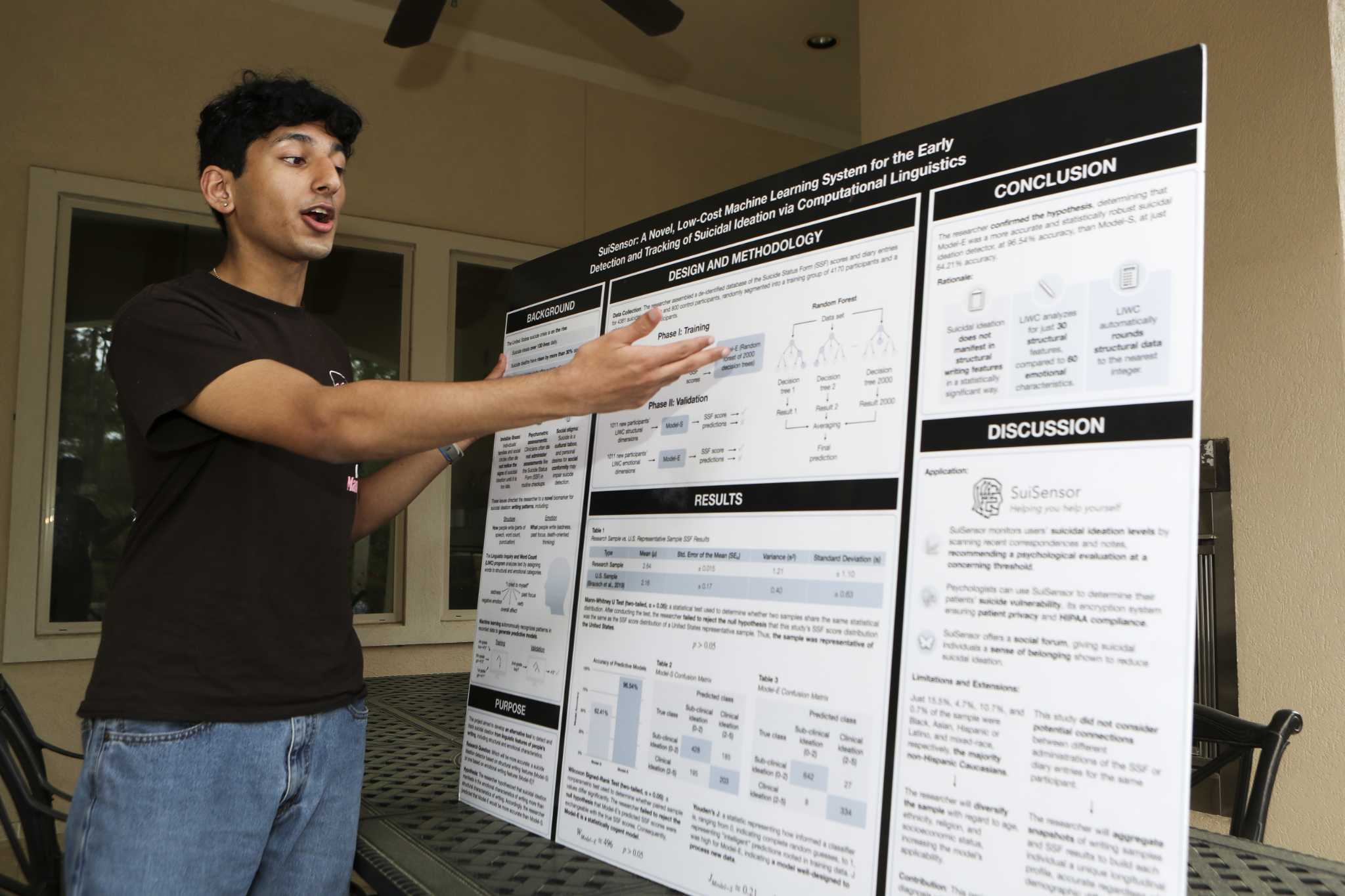
1. SuiSensor – Siddhu Pachipala, Texas
After seeing classmates struggle with mental health, Siddhu Pachipala, a high school senior in Houston, built SuiSensor, an app that uses natural language processing to identify early signs of suicidal ideation in written text. His model reached over 98% accuracy on validation tests.
The project earned him a top spot at the Regeneron Science Talent
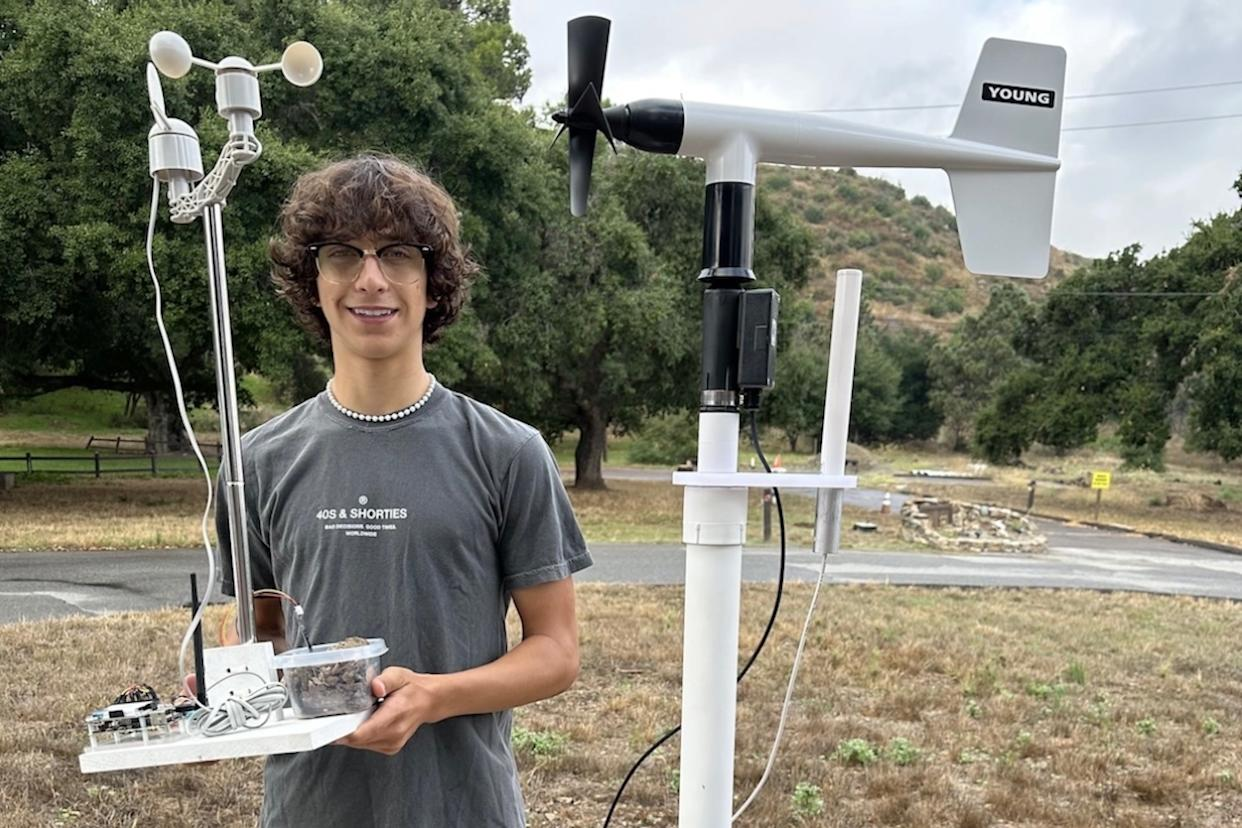
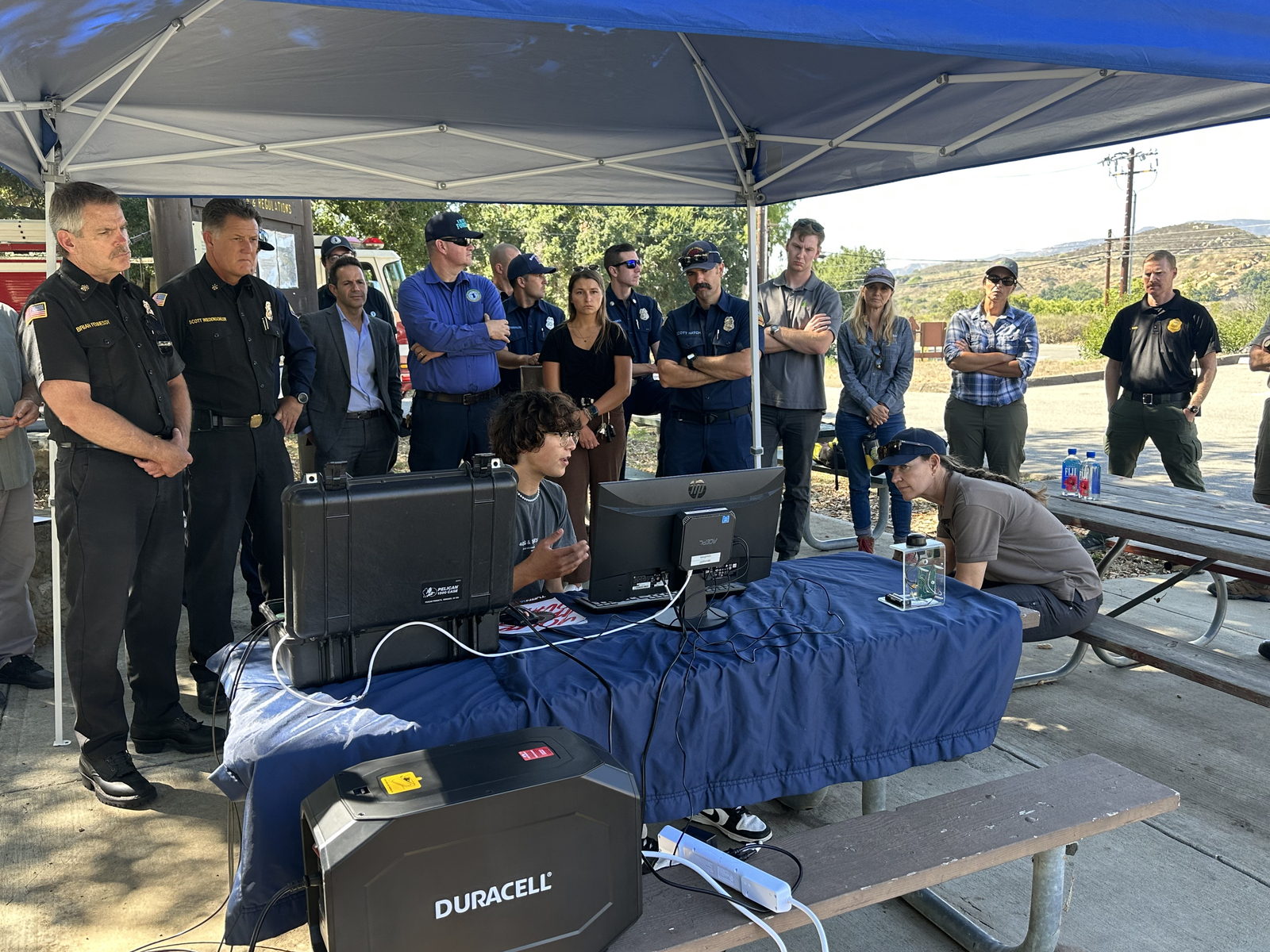
At just 14, Ryan Honary created a network of solar-powered wildfire sensorshttps://www.oneearth.org/climate-hero-ryan-honary/ that detect small fires using infrared and gas data, then send alerts in real time via AI-powered modeling.
His system is already deployed in Laguna Canyon, in partnership with the Orange County Fire Authority, and has the potential to drastically reduce wildfire damage in remote regions.
3. MoodMirror – Alex, New Jersey
His project, MoodMirror, is a lightweight AI tool that runs in the background while students work. It tracks patterns in typing speed, written tone, and screen time. When it senses emotional fatigue, long hours, stress-heavy language, or unusually negative phrasing, it gently prompts the user to pause and reflect.
It might ask: “You’ve been focused for 90 minutes, do you want a quick break?” Or: “Your last few journal entries sound more anxious than usual. Do you want to talk to someone?”
Alex built the first version as part of a program at BetterMind Labs, where students explore how AI can be integrated into different fields. MoodMirror isn’t flashy, but it’s personal. And that’s what makes it powerful.
Meet Vritee Agarwal, a BetterMind Labs student who started with basic Python — and ended up building a full-fledged Disease Prediction and Lifestyle Analysis App.
Her project uses machine learning models and Gemini AI to predict the likelihood of five major chronic diseases — heart disease, cancer, diabetes, asthma, and obesity — based on both clinical data and daily lifestyle choices.
What makes it special? Instead of a simple “Yes or No”, her AI provides personalized health insights, prevention tips, and lifestyle recommendations — making it a tool for awareness and early prevention.
Predict risk for diabetes, heart disease, asthma, or obesity using health + lifestyle data
Output personalized prevention insights via a simple web app
Strong fit for pre-med, public health, or data science applicants
A student-built model that predicts next-day stock movement teaches:
Time-series modeling
LSTM/RNN fundamentals
Market indicators (RSI, MACD, volatility)
Example from your library:
Vinay, Aniket, and Eeshanbuilt models that analyze trends, identify hype cycles, and forecast price movements.
How to Get Started (If You’re a Student or a Parent)
All you need is curiosity, consistency, and support.
Here’s a quick roadmap:
Learn the Basics – Python, basic data science, and machine learning concepts. Tons of free options online.
Pick a Problem – What frustrates you? What breaks your heart? What’s something your community struggles with?
Find a Mentor or Program – Whether it’s a school teacher, an online bootcamp, or a space like BetterMind Labs, because guidance matters.
Build. Break. Repeat. – Your first model will probably fail. That’s normal. That’s where the learning happens.
Tell Your Story – Document your journey. Explain your process. This will help with college apps, but also clarify your thinking.
FAQs :
What kinds of real-world problems can AI help solve?
AI can be applied to a wide range of challenges, including environmental monitoring, healthcare, education, accessibility, public safety, and sustainability.
How long does it take to complete an AI project?
The timeline varies depending on the project’s complexity, but many student projects can be completed within a few weeks to a few months with consistent effort and mentorship.
How can AI projects benefit high school students?
AI projects help students develop technical skills, problem-solving abilities, creativity, and a portfolio of work that can strengthen college applications and future career opportunities.
Do I need prior coding experience to build an AI project?
Not necessarily. Many students begin with little or no programming experience and learn the necessary skills while working on a guided project.
Conclusion :
The most inspiring AI projects aren’t just about technology—they’re about solving problems that matter. From addressing environmental challenges to improving health and well-being, today’s students are using AI to create meaningful impact in their communities and beyond.
As AI becomes an increasingly important part of every industry, the ability to identify real-world problems and build innovative solutions will be a valuable skill for the future. Programs like BetterMind Labs help students take that first step by combining mentorship, hands-on learning, and project-based experiences that turn ideas into reality.
If you’re curious about what you can build with AI, there’s never been a better time to start exploring.
Relevant Links:
Chaminade Wins 13th Medical Marvels Competition – Feinstein Institutes
That was the question a Princeton alum asked Samarth Jajoo during his alumni interview. He didn’t just list achievements—he shared one of his self-driven projects for high school students, an app that detects counterfeit medicine, which then led the conversation.
Samarth built the app after reading about the high number of fake pharmaceutical drugs in developing countries. He designed it to identify suspicious pill markings and packaging patterns using machine learning models trained on open-source pharmaceutical datasets. He tested it in collaboration with community clinics in India and presented it at science fairs and research conferences.
That project didn’t just sit on his resume. It became the narrative anchor of his application.
He got into MIT, Stanford, and Princeton.
Why Colleges Love Self-Driven Projects
According to the Harvard Admissions Office, students who demonstrate initiative, creativity, and genuine interest in learning stand out. When admissions officers review thousands of Common Apps, they look for evidence of independent thinking. That usually doesn’t come from a school assignment. It comes from what students choose to do in their free time.
In fact, the 2023 Harvard Crimson survey found that over 70 percent of admitted students pursued independent academic or creative projects outside the classroom.
What Counts as a Self-Driven Project for High School Students?
Let’s clear this up.
It’s not about building the next Facebook. It’s about authenticity, depth, and initiative.
Some great examples include:
Starting a blog that analyzes political events through the lens of history
Designing a mobile app that tracks water usage in your home
Launching a podcast that interviews small business owners in your community
Conducting original research on plant growth and submitting it to local science fairs
Creating a community tutoring network and tracking student progress over time
Real Students, Real Projects
Here are examples of real students whose self-driven projects became the centerpiece of their Common App:
Sriram – Stock Market Prediction Model (BetterMind Labs)
Sriram, a high school junior with no prior coding experience, joined BetterMind Labs AI and Innovation Lab out of curiosity about how AI could be applied to finance. Over the course of the program, he built a stock market prediction model using historical price data, trading volume, and basic sentiment analysis from financial news headlines. With mentorship from industry experts, he trained and tested regression models, visualized predictions, and even published his findings in a blog aimed at educating other teens about market dynamics. His project became a central focus of his Common App, highlighting his initiative, interdisciplinary thinking, and ability to learn technical concepts independently.
Brian – F1 Racing Video Game Project
Brian, a student passionate about computer science and robotics, independently designed and coded an F1-style racing video game. But it wasn’t just for fun. He made deliberate design choices to make the game more inclusive and accessible for a broader range of users, especially female gamers. He documented his process, tested the game in his school community, and used the project to spark interest in computer science among younger students. This project allowed him to demonstrate real-world coding skills, creativity, and initiative, all of which stood out during his application review.
Jessica – International Creative Publication
Jessica, an aspiring writer and literature enthusiast, launched an international online publication to give a voice to underrepresented and diasporic writers. Not only did she run the editorial process, but she also designed and delivered online writing courses to help younger contributors develop their voices. Her project had a meaningful impact on students from multiple countries and showed her leadership, empathy, and global perspective. It was a standout in her college applications and reflected her long-term commitment to equity through storytelling.
What Makes a Self-Driven Project Stand Out on the Common App?
First, initiative. Did you start it yourself or wait to be told? Colleges love it when students take the lead without external pressure.
Second, consistency. Was it a weekend idea or something you pursued for months? Projects with depth and ongoing effort always shine more.
Third, impact. Did it solve a problem, reach an audience, or bring something new to your community? Even a small-scale impact shows thoughtfulness and execution.
Finally, reflection. What did you learn, and how did it change you? Many students build things but forget to reflect. Colleges want thinkers, not just doers.
In the Activities section, be specific. Don’t just write “Started a blog.” Instead, try something like: “Founded and wrote a biweekly economics blog read by over 5,000 monthly readers, focusing on Gen Z financial literacy.”
In your Additional Information section or essays, go deeper. Talk about the process. Talk about the obstacles. Talk about how it shaped you. That’s where your story becomes unforgettable.
How to Start Your Own Project
Here’s the truth no one tells you. You don’t need a big passion to begin. You just need curiosity and the willingness to follow it consistently.
Here’s a simple roadmap:
Start by picking a topic you’re curious about. Think about what you spend hours reading or watching online. That’s often your best starting point.
Then look for real problems or gaps in that area. Ask yourself what annoys you or what’s missing. Great projects often begin with simple frustrations.
Start building in public. This means documenting your progress on Medium, Substack, GitHub, YouTube, or anywhere else your audience might be. Don’t wait to be perfect.
Keep showing up. Even thirty minutes a day can lead to something big over a few months. Most students stop early. The ones who stick with it are the ones colleges remember.
Finally, reflect and package it. Once it’s done or in progress, start thinking about how you’ll explain it on the Common App. What you built is important, but what you learned is even more powerful.
Don’t Wait for Permission
The biggest lie students believe is that someone has to tell them it’s okay to start. You don’t need a teacher, a club, or a competition to make your project legitimate.
One of the most successful student founders from the MIT Class of 2027 started with nothing more than a Google Doc and curiosity about decentralized voting systems. That turned into a patent application and a summer internship with a blockchain startup.
Final Thoughts
Your grades may get you considered. But it’s your self-driven projects that get you remembered.
The world’s most selective colleges are not just looking for perfect students. They’re looking for builders, thinkers, and storytellers. Start building yours.
Passion projects are self-initiated and meaningful projects that reflect an individual’s interests. You care deeply about passion projects and pursue them outside of school or work obligations.
Passion projects are vital for students personally because they allow them to grow in ways that traditional academics or jobs often don’t. Beyond boosting your resume or college app, passion projects have the power to change you from the inside out.
Table of Contents
Section 1: Here’s why they matter on a personal level
Section 2: Let’s discuss a few passion projects that have had an impact in real life
Section 3: Why They Matter for Top College Admissions
Section 4: FAQs
Section 5: Conclusion
Here’s why they matter on a personal level
You Discover Who You Are
A passion project can help you explore your field of interest. When you are working on something that you are truly interested in and something in which you find meaning, it hits differently.
You feel a sense of ownership
You do things not because you are assigned to do them but because you care about them. There is a sense of ownership in Passion projects that gives you direction, and it turns idle time into inspired action.
You build confidence
When you build something from scratch and it serves the purpose that you wanted it to, you gain a huge amount of confidence, which also helps you in the initial stage of your college life.
You learn to bounce back
You face hurdles when you work on something like a passion project, and you might face a setback, but come on! You only learn to come back when you face a setback.
You connect with people who have the same interests
The best part? You’re not alone. Whatever your project is, there’s likely a community out there on Discord, Reddit, Instagram, or even in your neighbourhood that cares about the same thing.
Passion projects help you build relationships around shared interests. It’s one of the most rewarding parts of the journey.
Let’s discuss a few passion projects that have had an impact in real life
During high school, Eeshan Khanduja started a passion project named “Reboot for Youth”, in which he scrounged for used laptops and restored them to give away to low-income students who had no access to a computer at home. What began as a one-man operation became a non-profit organization that has given away more than 1,000 computers in several states, closing the digital divide and equipping students with the tools of success. His project not only had an impact in the real world but also showed how passion, purpose, and initiative can create meaningful change, even before college.
Revolutionizing Lung Disease Detection.
This project came from Abhi, a student at BetterMind Labs (blog.bmldesk.com/). It started with a simple yet powerful question: “Why are so many lung diseases caught too late?”
Abhi wanted to make a difference. He aimed to create a tool that helps doctors detect lung diseases earlier using X-ray images. He worked with actual medical image data and trained a system to identify signs of various conditions, including COVID-19, pneumonia, and other serious lung problems.
The journey was challenging. There were obstacles at every turn, but Abhi didn’t face them alone. With continuous support and guidance from his mentors at BetterMind Labs, he managed to make tough decisions, stay focused, and overcome barriers.
In the end, this wasn’t just a technical achievement. It became a valuable learning experience that helped Abhi grow as a thinker, builder, and problem-solver, all while working on something that could one day help save lives.
Why They Matter for Top College Admissions
Top colleges like Harvard, Stanford, and MIT receive thousands of applications yearly from students with perfect GPAs, test scores, and a long list of extracurriculars. So, how do admissions officers decide who stands out?
The answer is a Passion project, I know it’s unexpected, yet it’s deeply personal. Now, let’s explore why passion projects can make a powerful difference in your college applications.
Passion projects show you’re a self-starter
Colleges and admissions officers love students who take initiative. When you start your project, it reflects that you are proactive. Whether you launch a climate awareness campaign in your city or start a tutoring service for middle schoolers, you show leadership, independence, and drive, qualities that top universities value highly.
Passion projects uncover the values and vision that define you as a person
GPAs, test scores, and grades don’t tell the full story about the student. A passion project gives admissions officers a glimpse into your real interests and personality. Are you passionate about sustainability? Social justice? Artificial intelligence? Your project helps them understand what motivates you, and that makes your application more impactful and gives you a competitive edge against other students.
Passion projects demonstrate real-world impact
Passion projects show that you are a future changemaker, and that’s what universities are looking for. If your project has created even a small ripple of change, like organizing a mental health workshop at your school or building an app that helps seniors with tech, it shows you’re already making a difference in the world. That’s powerful.
Passion projects strengthen your application story
A passion project becomes a thread that ties everything together: your essays, your activities list, even your letters of recommendation. Instead of appearing scattered, your application shows focus, purpose, and depth. And that kind of narrative is exactly what admissions officers remember.
Passion projects make you stand out
In a pool of overachievers, it’s hard to be unique. But students who create meaningful, personal projects stand out not because they did more, but because they did something that mattered. Passion projects show creativity, heart, and vision, and that’s something no standardized test can measure.
FAQs :
What actually qualifies as a “passion project” in college admissions?
It is a self-directed, long-term endeavor driven by personal interest rather than a school requirement. It isn’t just joining a club or taking a class; it’s taking independent action. Examples include launching a community service initiative, conducting independent scientific research, writing a novella, or building an app to solve a local problem.
How do admissions officers verify if a student actually did the work?
Through specific details, recommendations, and evidence of execution. Your essays will naturally sound different if you actually lived the project versus if you made it up. Furthermore, if your counselor or a mentor mentions the project in their recommendation letters, or if you can link to a live website, app, published paper, or art portfolio, the authenticity is solid.
What is the biggest mistake students make when starting a project?
Choosing a topic based on what they think colleges want to see, rather than what they actually care about. If you hate coding but try to build an AI tool just to look tech-savvy, your lack of enthusiasm will show. The best projects are an organic extension of your genuine curiosity because your natural drive is what ultimately sustains the project and makes it successful.
When is the ideal time for a high school student to start a passion project?
The earlier, the better—ideally during freshman or sophomore year. A project that spans two or three years shows sustained commitment, resilience, and evolution. If you start a project in the fall of senior year, just weeks before applications are due, admissions officers will likely view it as a superficial attempt to pad your resume.
Conclusion :
A passion project isn’t just something that you “add” to your college application; it’s something that defines you.
A passion project not only helps you get into Top universities, but it also helps you explore and understand yourself. So if you’ve got an idea in which you find purpose and meaning, start working on it.
You might face challenges along the way, but with resources like Google’s AI Essentials, AI for Anyone, or the BetterMind Labs AI/ML Program (blog.bmldesk.com/), which offers structured guidance, personal mentorship, and internship certification, you’ll have the support you need to complete your project.
What separates a college applicant who “took AP Computer Science” from one who actually built something? Most high school students with coding experience list the same courses, the same clubs, and the same scores. Admissions readers at top universities have confirmed it plainly: a GPA and a transcript tell them what a student studied; a real project tells them what a student can do.
Python projects for high schoolers are not just resume filler. They are the fastest, most accessible way to move from passive learning to active creation. Python’s readable syntax removes the friction that stops beginners, while its professional-grade libraries power everything from NASA data tools to Google’s internal scripts. The five projects below are specifically chosen because each one teaches a transferable concept, produces a working artifact, and opens a clear path to more advanced AI and machine learning work — the kind that actually differentiates applicants in 2025 and beyond.
Table of Contents
Why Python Is the Perfect First Language for High Schoolers
Five Fun Python Projects for High Schoolers
Student Spotlight: Trisha Rai’s Code Efficiency Web App
Frequently Asked Questions
Why Python Is the Perfect First Language for High Schoolers
Python is consistently ranked the most popular programming language in the world. According to the 2024 Stack Overflow Developer Survey, Python has held its position as the most-used language among learners for the third consecutive year, with over 51% of respondents who are learning to code choosing it as their primary language. Its clean syntax means beginners spend less time debugging punctuation and more time learning how programs actually think.
For high schoolers specifically, Python’s ecosystem is unmatched. A student can move from a two-line “Hello, World” program to a functioning data visualization or a working chatbot within weeks. That trajectory matters. The Google for Education research team notes that students who complete self-directed coding projects demonstrate measurably stronger computational thinking skills than those who complete only structured coursework alone.
The projects below are sequenced intentionally: each one introduces a new programming concept while building on the previous one. Together, they form a cohesive portfolio.
Want to see where these skills lead? Explore how Texas students are already applying them in real-world AI projects.
Five Fun Python Projects for High Schoolers
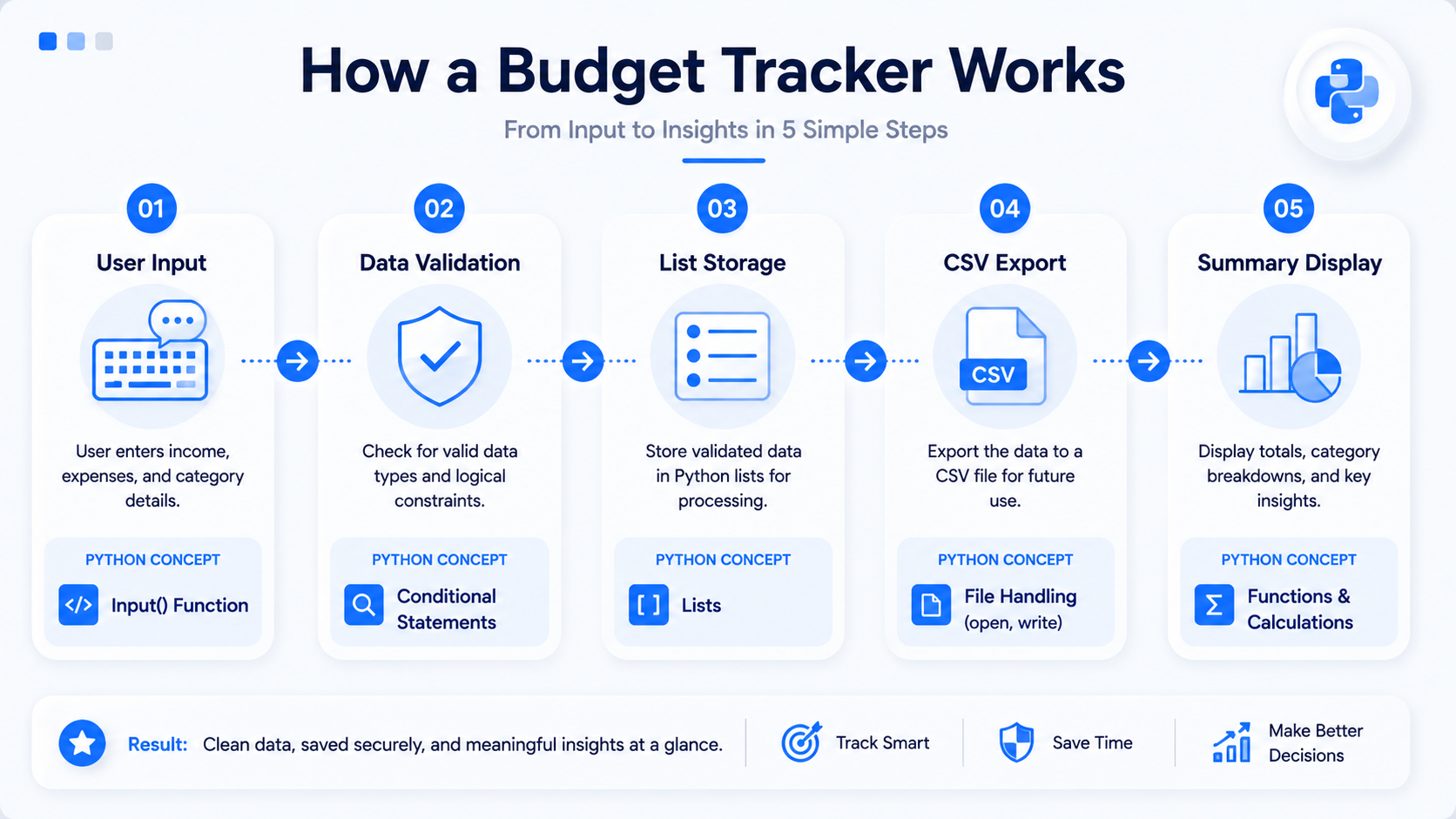
Project 1: Build a Personal Budget Tracker
A budget tracker is one of the best first Python projects because it teaches input handling, lists, loops, and file storage, all in a single, genuinely useful program. Students typically complete a working version in four to six hours.
What you’ll learn: Variables, lists, conditional logic (if/elif/else), and basic file I/O with .csv files.
How it works: The program prompts the user to enter income and expense categories, stores them in a Python list, performs running calculations, and saves the data to a CSV file that can be opened in Excel or Google Sheets.
Key concepts this project covers:
input() for collecting user data
float() and int() for numeric conversions
csv module for reading and writing structured data
while loops for menu-driven interfaces
A common student extension is connecting this to a Google Sheets API, which introduces the concept of third-party library integration, a direct prerequisite for more advanced AI/ML work. The logic of “take in data, process it, output a structured result” is the same architecture used in production machine learning pipelines.
This project is deceptively simple on the surface. The act of designing a user-facing program, thinking about error handling, clear output formatting, and data persistence, builds the product mindset that distinguishes strong engineers from hobbyists. That mindset feeds directly into the next project’s challenge.
Project 2: Create a Weather Data Visualizer
A weather data visualizer introduces students to APIs and data visualization libraries, two skills that appear in virtually every data science and machine learning workflow. A basic working version can be built in a weekend using publicly available weather data.
What you’ll learn: API calls with the requests library, JSON parsing, and data visualization with matplotlib or plotly.
How it works: Students query the OpenWeatherMap API (which offers a free tier) to pull real-time or historical weather data for any city, then generate line charts, bar graphs, or scatter plots from that data.
Steps to build it:
Register for a free OpenWeatherMap API key
Use requests.get() to fetch JSON weather data
Parse the JSON response to extract temperature, humidity, and wind speed
Use matplotlib.pyplot to plot the data across a date range
Add pandas for optional data cleaning and aggregation
This is the first project that pulls live, real-world data, and that shift changes how coding feels. Students stop working with invented numbers and start working with the same data feeds that professional meteorologists, climate researchers, and urban planners use.
The jump from static data to live APIs is significant. Once a student understands API calls, they can query virtually any dataset on the planet, stock prices, sports statistics, NASA satellite imagery, or public health records. That realization tends to accelerate motivation considerably.
Project 3: Design a Simple Chatbot
A rule-based chatbot teaches control flow, string manipulation, and program architecture, and it provides a clear conceptual foundation for understanding how large language models like GPT-4 actually work at a higher level.
What you’ll learn: String methods, dictionaries, function definitions, and basic natural language pattern matching.
How it works: Students build a chatbot that responds to user input by matching keywords to pre-written responses stored in a Python dictionary. More advanced versions use nltk (Natural Language Toolkit) for basic text processing.
A minimal version needs only these components:
A dictionary mapping keywords to responses
A while loop that keeps the conversation running
String .lower() and .split() methods for basic normalization
A default fallback response for unrecognized input
What makes this project particularly educational is the gap between what it does and what modern AI chatbots do. A rule-based chatbot is deterministic; a GPT-style model is probabilistic. Seeing that difference firsthand, understanding why “if the user types ‘hello’” is fundamentally different from a model that learned from 500 billion tokens, is one of the most effective introductions to AI theory available. Students who have built this project tend to ask dramatically better questions when they begin exploring machine learning.
The chatbot project is also naturally extensible. A Streamlit front end turns it into a shareable web app. A Gemini or OpenAI API integration replaces the rule engine with a real language model. That progression mirrors exactly what professional developers do when prototyping AI products.
Project 4: Build a Quiz Game with a Leaderboard
A quiz game with a persistent leaderboard combines object-oriented programming, file handling, and user experience design in a single project. It is one of the most complete beginner applications a student can build independently.
What you’ll learn: Classes and objects, JSON file storage, randomization, and basic game loop design.
How it works: The game presents multiple-choice questions from a JSON file, tracks correct answers, calculates a score, and writes the result to a leaderboard file sorted by high score.
This project introduces object-oriented programming (OOP), which is the architectural pattern behind most production software.
Concepts include:
Defining a Question class with attributes and methods
Using random.shuffle() to randomize answer order
Reading and writing leaderboard data with json.dump() and json.load()
Sorting leaderboard entries with Python’s built-in sorted() function
Students who finish this project often realize they have accidentally learned software architecture. A quiz game has a data layer (the JSON questions file), a logic layer (the scoring and randomization), and a presentation layer (the terminal interface). That three-layer structure appears in every major application framework from Django to React. The leap from quiz game to real-world app is shorter than most students expect, as projects built during winter break have shown students who push further each season.
Project 5: Make a Basic Web Scraper
A web scraper collects structured data from public websites automatically, and it teaches students how the internet actually works while giving them a powerful tool for research, journalism, sports analytics, and more.
What you’ll learn: HTTP requests, HTML structure, BeautifulSoup parsing, and ethical data collection practices.
How it works: Students use the requests library to download a web page’s HTML, then use BeautifulSoup to parse the document tree and extract specific data points, prices, headlines, sports scores, or any other public information.
A beginner-friendly starting point is scraping a public data source such as:
Wikipedia tables (using pd.read_html() for tabular data)
Public government data portals that lack direct CSV downloads
This project also introduces one of the most important concepts in data science: data acquisition. A model is only as good as the data it trains on. Students who have built web scrapers understand firsthand why data collection, cleaning, and validation are the most time-consuming parts of any real-world ML project. That practical understanding is something no textbook chapter adequately conveys.
The ethical dimension matters too. Discussing robots.txt files, rate limiting, and terms of service teaches responsible engineering, a quality that stands out in any application or internship interview.
Student Spotlight: How Trisha Rai Built a Real AI-Powered Tool
These five projects are powerful starting points. But what happens when a student takes these foundational skills and pushes them into genuine AI territory?
Trisha Rai, a student enrolled in the BetterMind Labs program, built a Code Efficiency Web App that demonstrates exactly that progression. Her application checks Python code for errors and common inefficiency patterns using two professional-grade technologies:
Streamlit — a Python framework for building interactive web apps without needing to write HTML or JavaScript
Gemini API — Google’s multimodal AI model, used here to analyze code and provide intelligent feedback
The app takes a Python code snippet as input, sends it to the Gemini API with a structured prompt, and returns a formatted analysis identifying bugs, anti-patterns, and optimization opportunities. It is a genuine AI-powered developer tool — the kind of project that could be expanded into a standalone product.
What makes this project significant is not its technical complexity alone, but its arc. Trisha started with the same foundational Python skills covered above. Structured mentorship, a clear curriculum, and a real project brief gave her the scaffolding to go from “I know some Python” to “I built a working AI tool.” That gap, from learner to builder, is the one that changes how admissions officers read a resume.
Frequently Asked Questions
Q1: What Python projects for high schoolers are best for college applications? Projects that solve a real problem and use a third-party API or library carry the most weight. A weather visualizer, a web scraper, or an AI-powered tool built with Streamlit and a language model API shows genuine initiative. Admissions readers value demonstrated output over coursework claims.
Q2: Do I need any prior coding experience to start these projects? No prior experience is required for Projects 1 and 4. A free Python course on Khan Academy or Codecademy covers all prerequisites in under ten hours. The projects are sequenced so each one builds on the skills from the last.
Q3: How does structured mentorship improve the quality of a student’s Python project? Mentorship cuts debugging time by 60 to 70 percent according to research from the University of Washington’s CS Education Lab. A mentor helps students make architectural decisions early, preventing common structural mistakes that would require rebuilding later. The result is a cleaner, more defensible project.
Q4: Can these projects lead to actual AI or machine learning work? Yes, directly. The chatbot project introduces NLP concepts; the weather visualizer introduces data pipelines; the web scraper introduces data acquisition. These are the three foundational skills for any ML project. Students who want to go further can explore hands-on AI project ideas as clear next steps.
Q5: How important is project-based learning for developing real programming skills? Extremely important. A 2023 meta-analysis published in Computers & Education found students who learned programming through project-based curricula demonstrated 34% stronger problem-solving transfer than lecture-only cohorts. Building something forces a student to resolve ambiguity independently, which is the core skill of professional software development.
Q6: How long does it take a high schooler to finish one of these Python projects? Projects 1 and 4 typically take one focused weekend (six to ten hours). Projects 2, 3, and 5 take two to three weeks with two to three hours of daily work. Adding mentorship and a structured brief can reduce completion time by roughly half, while also improving final code quality.
Conclusion
A Python tutorial finished is not a Python project built. The difference between a student who completed a course and one who shipped a working application is the difference between potential and evidence. Top universities and competitive internship programs are not running short on applicants who took computer science. They are genuinely short on applicants who did something with it.
The five projects above provide a concrete starting path. Trisha Rai’s Code Efficiency Web App demonstrates where that path leads when a student pairs foundational skills with expert guidance, a structured curriculum, and a real project brief. That combination is not accidental.
BetterMind Labs builds exactly that structure for 8th through 12th grade students. The program pairs students with mentor engineers, delivers project-based AI and ML curriculum, and guides each student to a completed, deployable project they genuinely own. No generic coursework. No passive video lectures. Real tools, real mentors, real outcomes.
If you are ready to move from learning Python to building with it, explore the BetterMind Labs program at blog.bmldesk.com/. Your project brief is waiting.