Introduction

Marketing has always been about understanding people — but in 2027, it’s also about how well companies use technology to scale that understanding. The rise of marketing technology (martech) has completely reshaped the industry. According to MarketsandMarkets, the global martech market is projected to grow from $175.95 billion in 2025 to $296.88 billion by 2030, at a CAGR of 11%. That growth is being fueled by artificial intelligence (AI), which has gone from a nice-to-have feature to the very backbone of modern marketing.
In this blog, we’ll break down what martech companies are, how AI is transforming them, which tools are leading the way, and what trends you should be watching if you’re considering a career or investment in this space.
Table of Contents
-
Section 1: What Are Martech Companies?
-
Section 2: How AI is Revolutionizing Martech
-
Section 3: Conversational AI and Customer Engagement
-
Section 4: Leading AI-Powered Martech Platforms in 2025
-
Section 5: Key Trends Shaping AI-Driven Martech
-
Section 6: FAQs
-
Section 7: Conclusion
What Are Martech Companies?
Martech companies (short for marketing technology companies) build the platforms that help marketers automate, analyze, and personalize at scale. They create the backbone of modern digital marketing operations. Some of the most common categories include:
-
Customer Data Platforms (CDPs): Systems that unify data from multiple touchpoints.
-
Marketing Automation Platforms: Tools that manage email campaigns, lead nurturing, and workflows.
-
Analytics Platforms: Solutions like Google Analytics, Tableau, or Power BI that provide actionable insights.
-
Content Management Systems (CMS): Platforms to create and manage content.
-
Social Media Management Tools: Scheduling and analytics platforms like Sprout Social.
For more context, check out this guide from Amazon Advertising and Martech.org.
How AI is Revolutionizing Martech
AI is not just another tool layered on top of martech — it’s redefining how these platforms operate. Here are the four biggest ways AI is transforming martech companies in 2027:
1. Enhanced Personalization at Scale
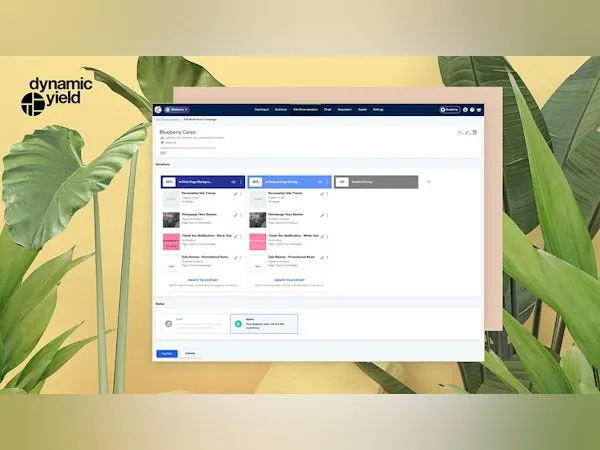
AI makes it possible to analyze thousands of customer signals in real-time and tailor experiences instantly. Platforms like Dynamic Yield and Adobe Target now deliver:
-
Real-time personalized product recommendations.
-
Adaptive website layouts based on device type and browsing history.
-
Location-aware offers and promotions.
Impact: According to Martechify, companies that use AI-driven personalization report up to 25% higher conversion rates.
2. Intelligent Content Generation and Automation
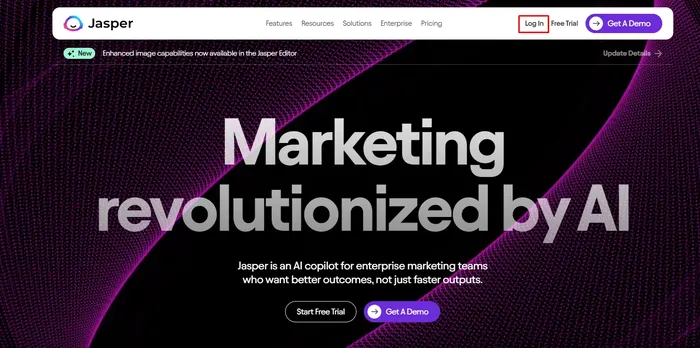
Generative AI has become a game-changer for marketers. Platforms like Jasper AI and Copy.ai can now:
-
Write blog posts, ad copy, and email subject lines.
-
Generate branded visuals and videos with tools like Canva.
-
Instantly translate campaigns into multiple languages.
Impact: A Sprinklr study found that 75% of social marketers plan to implement generative AI tools in 2025. Businesses using these tools report a 40% reduction in workload and 25% higher engagement.
3. Predictive Analytics and Customer Intelligence
Instead of reacting to what customers did, AI helps companies predict what they will do next. This includes:
-
Lead scoring models that show which prospects are most likely to convert.
-
Forecasting customer lifetime value (CLV).
-
Anticipating churn risk.
Companies like Salesforce and HubSpot now integrate predictive planning into their CRM systems. IBM also highlights predictive analytics as one of the top areas where AI drives ROI.
Impact: Companies using AI-powered predictive analytics see ROI increases of 300% within the first six months (Sprinklr Automation Report).
4. Automated Campaign Optimization
AI doesn’t just launch campaigns — it continuously learns and adapts. With reinforcement learning, systems test variations and automatically shift budgets to what’s working.
-
Real-time A/B testing at massive scale.
-
Dynamic pricing based on demand and competitor data.
-
Budget allocation is optimized automatically.
Impact: AI-powered automation allows companies to increase efficiency while cutting costs, delivering measurable performance boosts.
Conversational AI and Customer Engagement
Another frontier of AI in martech is Conversational AI. Natural Language Processing (NLP)-powered chatbots and virtual assistants:
-
Provide 24/7 customer support.
-
Collect insights while engaging in real conversations.
-
Handle transactions, fraud checks, and personalized recommendations.
According to McKinsey, these AI agents are becoming core to customer engagement strategies.
Leading AI-Powered Martech Platforms in 2025
Here’s a breakdown of leading platforms and their AI strengths:
|
Category |
Leading AI-Enabled Platforms |
Key AI Capabilities |
|
Marketing Strategy |
Robotic Marketer, HubSpot, Salesforce |
AI-driven strategy, competitor analysis, predictive planning |
|
Content Creation |
Jasper AI, Copy.ai, Canva, Grammarly |
Automated content + visuals, multi-language support |
|
Analytics |
Google Analytics, Tableau, Power BI |
Predictive insights, real-time optimization |
|
Customer Engagement |
Sprout Social, Meltwater, Cision |
Sentiment analysis, automated PR, social listening |
|
Personalization |
Dynamic Yield, Optimizely, Adobe Target |
Real-time personalization, behavioral targeting |
Key Trends Shaping AI-Driven Martech
Looking ahead, here are the biggest trends shaping martech:
-
Homegrown Solutions Surge: Nearly 25% of organizations plan to build custom AI-powered martech solutions in 2025 (Martech.org).
-
Generative AI Adoption: 68.6% of organizations now use generative AI tools — making them one of the top 6 martech categories (IBM Generative AI).
-
Agentic AI Integration: Teams are adopting autonomous AI agents to manage complex workflows independently (SuperAGI Case Studies).
-
Responsible AI: Ethical AI practices, transparency, and privacy are becoming non-negotiable.
FAQs :
What exactly are MarTech companies?
MarTech (Marketing Technology) companies build software that helps businesses attract, engage, and retain customers. This includes everything from email marketing platforms (like Mailchimp) and Customer Relationship Management systems (like Salesforce) to analytics software and social media schedulers. Essentially, if a digital tool is used to execute or measure a marketing campaign, it’s MarTech.
What are “Autonomous Marketing Agents,” and how do they work?
They are AI programs designed to run end-to-end marketing tasks on a brand’s behalf. Instead of a marketer manually setting up an audience segment, writing an email, and running an A/B test, an autonomous agent can monitor live customer behaviors, independently rewrite ad copy, shift budgets between channels, and optimize a live campaign in real time to maximize conversions.
Will AI disruption eliminate the need for human marketers?
No, but it fundamentally shifts their responsibilities. AI is excellent at heavy lifting—predictive analytics, data sorting, media buying, and scaling asset production. This eliminates the tedious “grunt work,” allowing human marketers to step away from repetitive campaign operations and focus entirely on high-level strategy, human empathy, creative direction, and brand authenticity.
How is AI changing how brands show up in online searches?
It is forcing a shift from Search Engine Optimization (SEO) to Answer Engine Optimization (AEO). Because users are increasingly getting direct answers from AI platforms (like ChatGPT, Perplexity, or Google Gemini) instead of clicking traditional website links, MarTech tools are adapting. New software focuses on formatting brand data so AI models can easily read, trust, and cite it when answering user queries.
Conclusion :
The martech industry is in the middle of a major transformation — and AI is leading the charge. What used to be manual, repetitive work is now automated, intelligent, and adaptive. Companies that leverage AI in martech report higher ROI, lower workloads, and stronger customer engagement.
For marketers, the takeaway is clear: AI isn’t replacing you, it’s empowering you. The future of marketing belongs to those who can combine creativity with AI-driven insights.
If you’re in marketing or looking to enter the field, start exploring these tools now. Understanding platforms like Jasper AI, HubSpot, or Salesforce isn’t just an advantage -it’s becoming a requirement in the AI-first martech era.
At BetterMind Labs, students work on mentor-guided AI projects that help them understand emerging technologies through real-world applications. Explore our AI programs and start building skills for the future.